




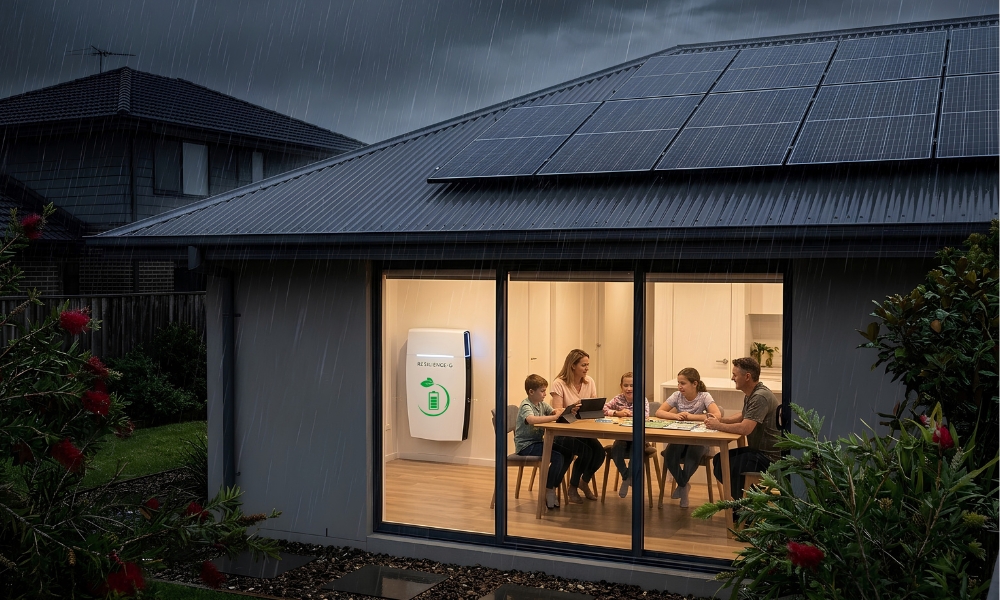
Australia’s extreme weather can turn a comfortable home into a vulnerable one within hours. From severe thunderstorms and damaging winds to heatwaves, bushfires, and floods, power interruptions can affect refrigeration, communications, medical equipment, and everyday household safety.
Building energy resilience extreme weather Australia homeowners can rely on means preparing for more than just lower electricity bills. It means having a practical strategy to maintain essential power when the grid is unavailable, including a combination of solar generation, battery storage and emergency planning. Start by exploring residential solar battery systems and understanding what backup options your property can support.
For Australian households, the goal is straightforward: keep essential services running, reduce exposure to outages and make informed investments in long-term home energy resilience.
Quick answer
- Energy resilience extreme weather Australia: A combination of rooftop solar, battery storage, efficient appliances and a reliable backup plan can help households maintain essential electricity during severe weather and grid outages.
- Solar alone is not enough: Most standard grid-connected solar systems automatically shut down during a blackout. A compatible battery and backup-enabled inverter are needed to keep selected circuits running.
- Prepare before the next storm: Review your household’s critical energy needs, check your system’s backup capabilities and consider battery storage, emergency supplies and a suitable backup power source.



What is energy resilience and why should Australian homeowners care?
Energy resilience is a household’s ability to withstand, respond to and recover from disruptions to its electricity supply. It combines reliable energy equipment, efficient consumption, backup arrangements, and emergency preparation.
For homeowners, it means having enough power to keep essential appliances running and a plan for when electricity cannot be restored immediately.
The key facts
- Grid reliability: Electricity networks are designed to provide reliable service, but storms, bushfires, flooding, equipment failures and other events can still cause outages.
- Solar and storage: Rooftop solar can generate electricity during daylight, while a suitable battery can store surplus generation for later use.
- Backup capability: A battery system must have appropriate backup functionality and electrical configuration to supply power during a grid outage.
- Energy efficiency: Reducing unnecessary electricity use can extend how long a battery can support essential household loads.
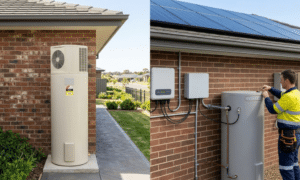
Embrace the energy-efficiency revolution by upgrading your solar system with Energy Matters, adding a battery, solar inverters, and more.
Energy Matters recommends switching to energy-efficient appliances now for smarter savings and a more environmentally friendly lifestyle.
Why energy resilience in extreme weather in Australia matters right now
Australia’s exposure to heatwaves, bushfires, severe storms and flooding makes household energy preparedness increasingly relevant. The Bureau of Meteorology’s climate reporting documents long-term changes in extreme heat and fire weather, while the Australian Energy Market Operator (AEMO) identifies weather-related risks as an important consideration in electricity system planning.
In January 2025, severe weather and widespread outages in parts of Australia also demonstrated how quickly disruptions can affect communities. Households that rely on electrically powered medical devices, refrigeration or communications need to consider these risks before an emergency occurs.
Expert insight: Energy resilience is not simply about installing the largest battery available. It starts with understanding which appliances must remain operational, how long they may need power and whether the home can safely isolate itself from the electricity grid during an outage.
How energy resilience in extreme weather works in Australia
A resilient home energy system combines electricity generation, storage, intelligent energy management and a safe backup arrangement. Its design depends on household demand, the local electricity network and the types of extreme weather a property may experience.
Technical explanation
A typical grid-connected solar system produces electricity when sunlight reaches its panels. The inverter converts the panels’ direct current into alternating current that household appliances can use.
However, standard grid-connected inverters generally shut down when the electricity network fails. This safety measure prevents electricity from being exported into lines that network workers may be repairing.
To achieve backup power, homeowners generally need:
- Solar panels that can generate electricity in suitable weather.
- A compatible battery that stores surplus electricity.
- An inverter or system designed to provide backup power.
- A changeover or isolation arrangement that safely separates the home from the grid.
- An appropriately designed backup circuit or whole-home backup system.
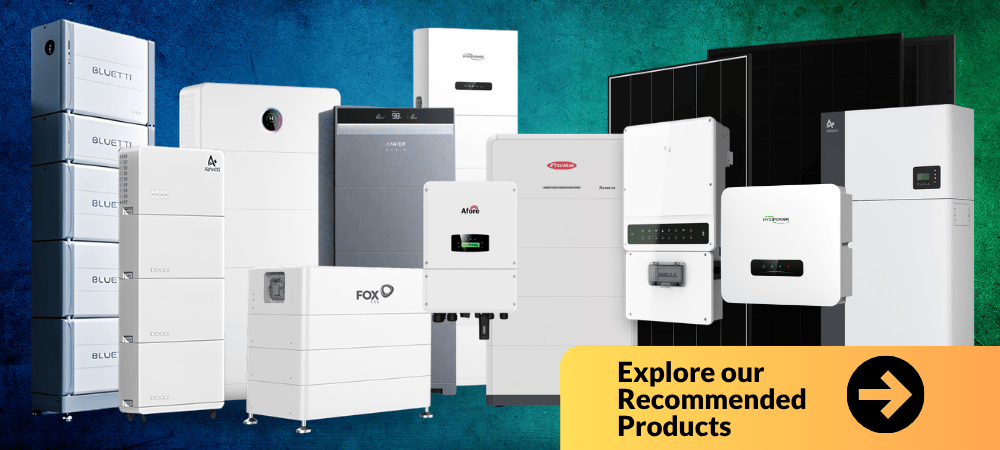
During an outage, a correctly configured system can isolate the household from the grid and supply selected circuits from the battery, and potentially from solar generation when conditions allow. Check our page for our recommended solar products.
Australian examples and data in energy resilience in extreme weather
AEMO’s 2025 planning documents highlight the importance of a reliable and flexible electricity system as Australia’s energy supply changes. The agency’s Integrated System Plan considers a range of future scenarios involving renewable generation, storage, transmission and changing electricity demand.

What does energy resilience in extreme weather mean for your electricity bills?
Investing in home energy resilience can affect electricity costs in several ways. Solar panels and batteries may reduce grid electricity purchases, but the financial outcome depends on installation costs, electricity tariffs, battery use, available incentives and how often the household experiences outages.
Short-term impact
The upfront cost of a solar and battery installation can be substantial. Homeowners should compare the total installed price, potential government incentives, expected savings and the additional value of backup electricity.
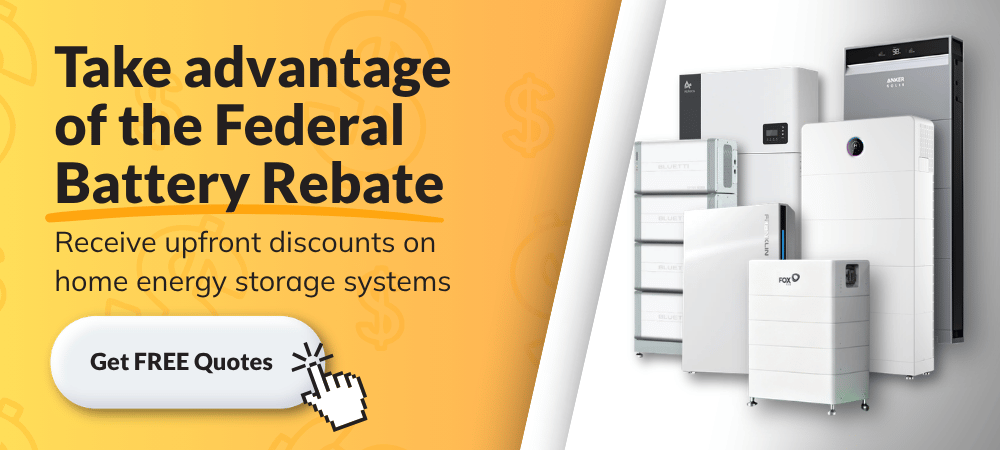
The Australian Government’s Cheaper Home Batteries Program offers eligible households a discount of around 30% on qualifying small-scale batteries. Changes to the scheme took effect on 1 May 2026, including adjustments to the certificate calculations and eligible battery capacity. The current discount depends on the system and its eligibility.
A battery can also help reduce electricity purchases during expensive evening periods by storing solar energy generated during the day. However, the financial benefit varies with the household’s consumption pattern and electricity plan.
Long-term implications
Over the longer term, home energy resilience may offer several benefits:
- Reduced reliance on grid-purchased electricity.
- Greater ability to manage household electricity use during peak pricing periods.
- More flexibility to participate in eligible virtual power plant (VPP) programs.
- A potential reduction in the disruption and inconvenience caused by outages.
- Greater control over how and when you use stored solar energy.
Don’t treat a battery as an automatic financial investment with guaranteed returns. Its value depends on how you configure and use it, electricity costs, export rates, maintenance, and your household’s actual backup needs.
Build your home energy resilience
Discover how solar and battery storage could help your household prepare for extreme weather, improve energy independence and maintain essential electricity during outages.
What can Australian homeowners do right now to build energy resilience in extreme weather?
Preparing for extreme weather starts with practical changes you can make before investing in new equipment. Households can improve their ability to cope with outages by identifying essential loads, checking existing solar systems and developing a clear emergency plan.
Actionable steps
- Identify essential appliances: List the equipment that needs to remain operational during an outage. This might include a refrigerator, selected lights, mobile phone chargers, internet equipment, medical devices and a small fan.
- Check your existing solar system: Ask your installer whether your current inverter supports battery integration and backup operation. Find out whether your solar system can continue generating electricity during a blackout.
- Consider critical-load backup: A critical-load circuit can supply essential appliances without attempting to power the entire home. This can help extend the time your battery lasts during an extended outage.
- Prepare an emergency electricity kit: Keep charged power banks, torches, spare batteries, a battery-powered radio and essential contact information in an accessible location. Consider how household members will communicate if mobile networks are disrupted.
- Protect your solar equipment: Have a qualified installer check panel mounting, wiring, inverter placement and battery protection. For properties in bushfire-prone areas, consider appropriate equipment locations and access for emergency services.
- Monitor weather and outage warnings: Follow the Bureau of Meteorology, your local emergency service and electricity distributor. Charge essential devices and adjust battery settings ahead of forecast severe weather where your system allows it.
- Size your battery according to your needs: Compare usable battery capacity, maximum continuous power output and backup duration. Remember that a battery’s ability to supply electricity depends on both its stored energy and the power demanded by connected appliances.
Use Energy Matters’ easy-to-use solar power and solar battery storage system calculator to determine the right size for your solar system with storage. Our solar calculator will generate performance information and potential savings.
We can send this information to 3 pre-vetted, trusted local installers in your area so they can provide obligation-free solar quotes and help you take the first step toward true energy independence!

Questions to ask your installer or retailer about energy resilience in extreme weather
Before signing a solar and battery contract, ask:
- Does the proposed system provide backup power automatically, or does it require manual operation?
- Which circuits will continue working when the grid goes down?
- Can the battery recharge from solar during a blackout?
- How much usable energy will remain if the outage lasts overnight?
- Can the system start and operate essential appliances with high initial power demand?
- What happens if the battery is nearly empty when the outage begins?
- What are the battery’s warranty terms, expected lifespan and maintenance requirements?
- Are all components eligible for applicable government incentives?
- Does the quote include electrical upgrades, backup switching and installation costs?
State-by-state considerations
Australia’s weather risks, electricity arrangements and household incentive options differ across states. Homeowners should consider local hazards, network requirements and current government programs when planning energy resilience.
| State | Main considerations | What homeowners can do |
| Victoria (VIC) | Bushfires, heatwaves, severe storms and occasional flooding | Check bushfire-related installation requirements, battery placement and current Victorian household energy support. |
| New South Wales (NSW) | Severe thunderstorms, flooding, bushfires and heatwaves | Review local emergency alerts, electricity distributor outage information and current state energy programs. |
| Queensland (QLD) | Tropical cyclones, flooding, severe storms and extreme heat | Consider cyclone-rated mounting where relevant, flood exposure, battery location and backup cooling needs. |
| South Australia (SA) | Heatwaves, bushfires, storms and high summer electricity demand | Assess cooling loads, battery performance in hot weather and current state energy initiatives. |
| Western Australia (WA) | Extreme heat, bushfires, storms and cyclone risks in northern regions | Check the applicable electricity network requirements, battery compatibility and regional weather hazards. |
Expert insight: A resilient system should reflect local conditions, not just national averages. A home exposed to cyclones, for example, needs different physical protection and preparation from a home in a bushfire-prone area or one that regularly experiences heat-related outages.
For all states, the federal Cheaper Home Batteries Program is an important starting point for checking current eligibility. State and territory offers can change, so confirm the rules and availability directly with the relevant government before making a purchase.
Expert predictions for 2027 and beyond
Australia’s energy system is moving toward a greater share of renewable generation, more battery storage, and increased household participation in flexible energy programs. AEMO’s 2026 planning publications and its 2025 reliability outlook provide a framework for understanding the infrastructure investment and coordination required to maintain electricity reliability as demand and generation change.
More household battery adoption
The federal battery discount, introduced in 2025 and revised in 2026, is intended to make eligible storage systems more accessible. Its future value will depend on program settings, battery prices and eligibility requirements.
Smarter home energy management
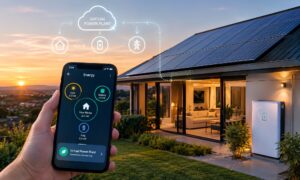
Energy management systems can coordinate solar generation, battery charging, household consumption and electricity tariffs. As more homes adopt smart energy technology, households may gain more flexibility to manage their electricity use and participate in suitable energy programs.
Greater interest in virtual power plants
Virtual power plants connect participating household batteries through a coordinated system. Depending on the program, participants may receive financial benefits or other incentives in exchange for allowing some stored energy to be dispatched when needed.
A VPP is not a substitute for a household’s own emergency plan. Before joining one, homeowners should understand how much battery capacity remains available for backup, when the provider can control charging or discharging and whether participation affects their electricity bill.
Backup-ready systems become a key consideration
As households increasingly install batteries, the difference between ordinary energy storage and a genuine backup system will remain important. Homeowners should expect greater attention to backup switching, critical-load configuration, and integrating solar generation with storage.

How to prepare your home for an extended power outage
A practical how-to checklist for Australian households. Your home resilience checklist
- Identify essential appliances and their electricity requirements.
- Check whether your existing solar system supports blackout operation.
- Obtain a battery and backup installation assessment, if required.
- Prepare emergency lighting, charged power banks and a battery-powered radio.
- Check local emergency alerts and electricity distributor outage information.
- Review your backup arrangements and test your system with your installer.
Energy resilience in extreme weather: Frequently asked questions
1. Can solar panels keep my home powered during a blackout?
Most standard grid-connected solar systems shut down during a blackout to protect the electricity network and workers. To maintain power, you generally need a compatible battery or another approved backup arrangement, along with appropriate isolation equipment and electrical configuration.
2. How long can a solar battery power my home during a storm?
Backup duration depends on the battery’s usable capacity, the appliances connected and whether solar generation can continue. A system supplying only essential circuits can last much longer than one trying to power an entire home, especially if you switch off heavy appliances.
3. Is a battery worth installing if I already have solar panels?
A battery may help households store surplus solar generation for use at night, reduce grid purchases and provide backup during outages if configured accordingly. Whether it is financially worthwhile depends on installation costs, tariffs, energy use, available incentives and the value of backup power to the household.
4. Can I recharge my battery using solar panels during a blackout?
Some solar and battery systems can continue generating and recharging during a blackout, provided the inverter and backup configuration support this operation. The system may have limits on solar output, battery charging and connected loads, so confirm the capability with your installer.
5. What is the best way to stay powered during a storm in Australia?
Start with an emergency plan, charged mobile devices, backup lighting and a list of essential appliances. A properly installed solar battery system with backup capability can add resilience, but it should match local weather risks and the household’s electricity needs.
6. Are there government rebates for home batteries in Australia in 2026?
The Australian Government’s Cheaper Home Batteries Program provides a discount for eligible systems connected to new or existing solar installations. The program changed on 1 May 2026, so check the latest eligibility rules, approved products and installation requirements before purchasing.
Key takeaways
- Plan for outages before they happen. Identify essential appliances and prepare an emergency electricity kit.
- Understand your solar system’s limitations. Standard grid-connected solar generally cannot operate independently during a blackout.
- Choose storage for your actual needs. Battery capacity, inverter power and backup circuit design all influence how long your home can stay powered.
- Check incentives and installation requirements. The federal Cheaper Home Batteries Program and relevant state initiatives may help reduce eligible installation costs.
- Maintain a backup plan beyond batteries. Follow local emergency advice, protect your equipment and plan for outages that last longer than your available stored energy.
Build your home energy resilience before the next storm
Energy resilience extreme weather Australia households can build starts with preparation, not just technology. Solar panels, battery storage, and efficient energy use can reduce reliance on the grid, but a properly configured backup system and a practical emergency plan are essential to keep critical appliances running.
Whether you’re upgrading an existing solar installation or planning a new system, Energy Matters can help you explore your options. Get a free solar + battery quote from SAA-accredited installers and take the next step towards a more resilient home.
Explore solar and battery options for your household, compare installation requirements, and learn how to prepare for extreme weather.