


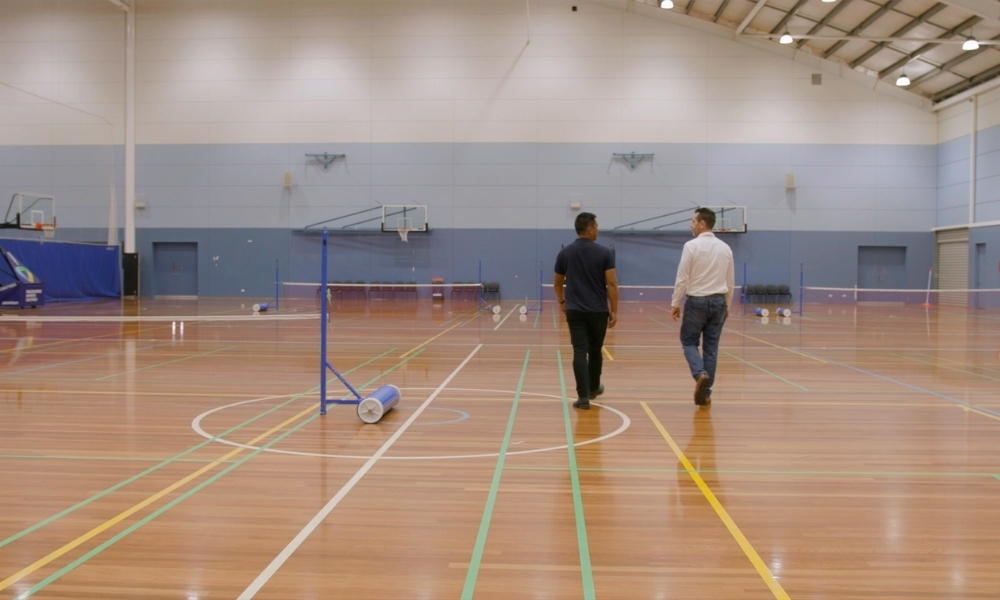
At Melbourne Sports and Aquatic Centre, the important moments happen every day. A child gains confidence in the pool. A basketball team finds its rhythm. An aspiring athlete takes another step towards a dream.
Keeping a place like this running takes people, dedication, and a considerable amount of electricity.
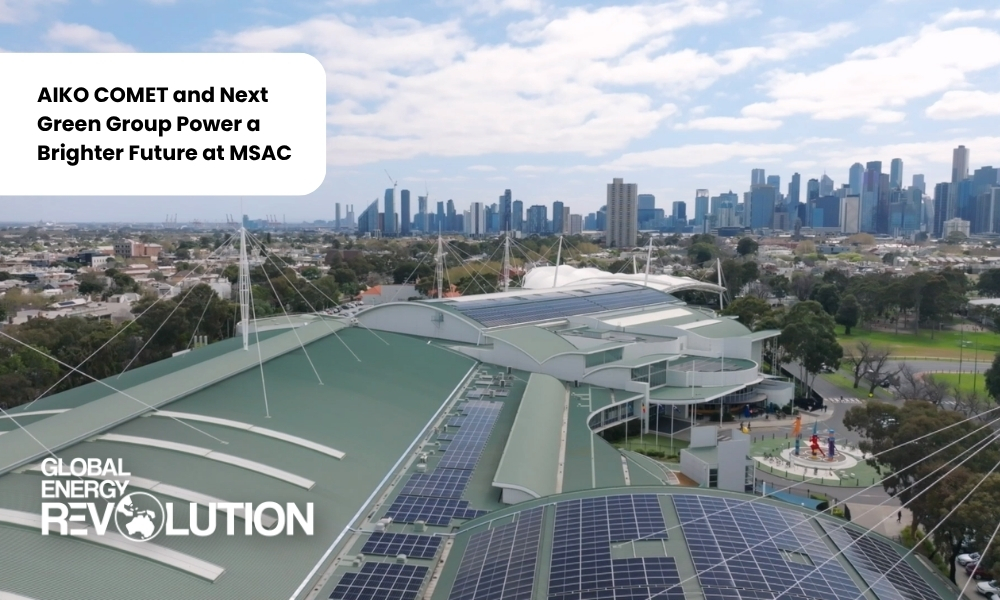
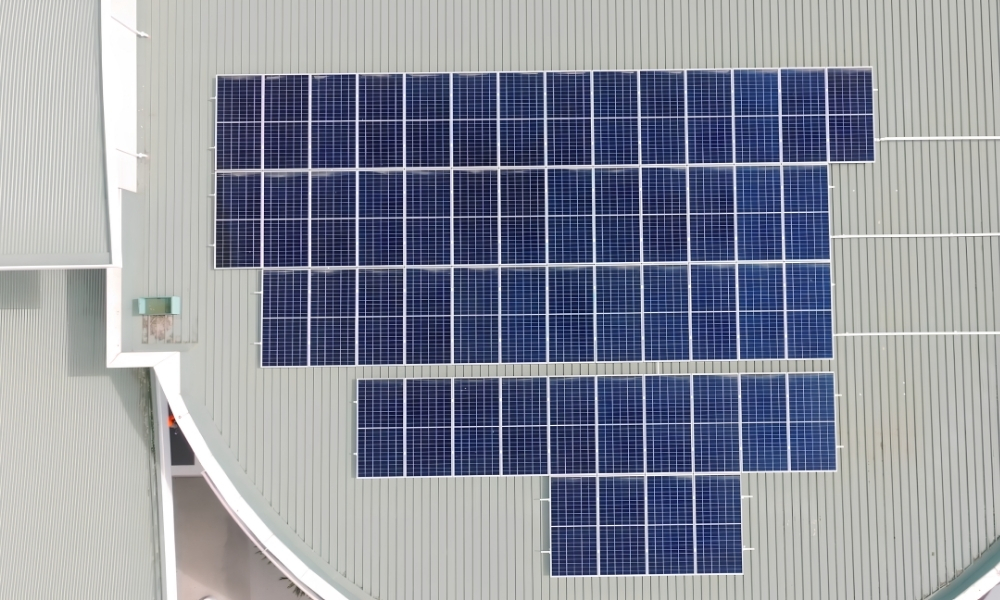
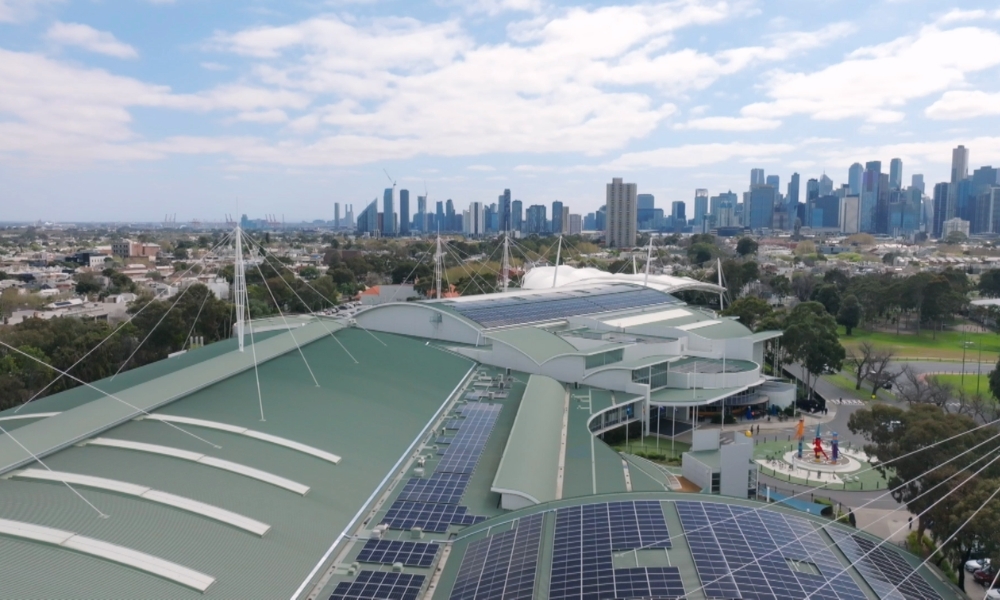
Now, above the pools and courts, 2,016 AIKO COMET solar panels are helping supply that electricity.
Delivered by Next Green Group, the 1.3 MW rooftop solar installation demonstrates what happens when capable engineering meets advanced panel technology.
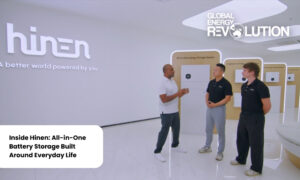
Featured in Global Energy Revolution Season 2, the project takes viewers beyond the panels to explore the planning behind a major commercial installation.
For businesses, facility managers, and community organisations, it offers a compelling lesson: a challenging roof can still hold significant opportunity.
For the people using MSAC, it supports something more familiar: a much-loved place to swim, compete, connect, and belong.
TL;DR: A commercial solar project with community at its heart
- Next Green Group delivered MSAC’s 1.3 MW solar installation, increasing capacity by approximately 53% over the original 850 kW tender.
- AIKO COMET panels helped address roof-space and weight constraints, alongside careful planning for the building’s distinctive design.
- AIKO’s NEOSTAR 3 residential range brings ABC technology to Australian homes, including compact panels reaching 25% efficiency.
A Melbourne landmark puts its roof to work
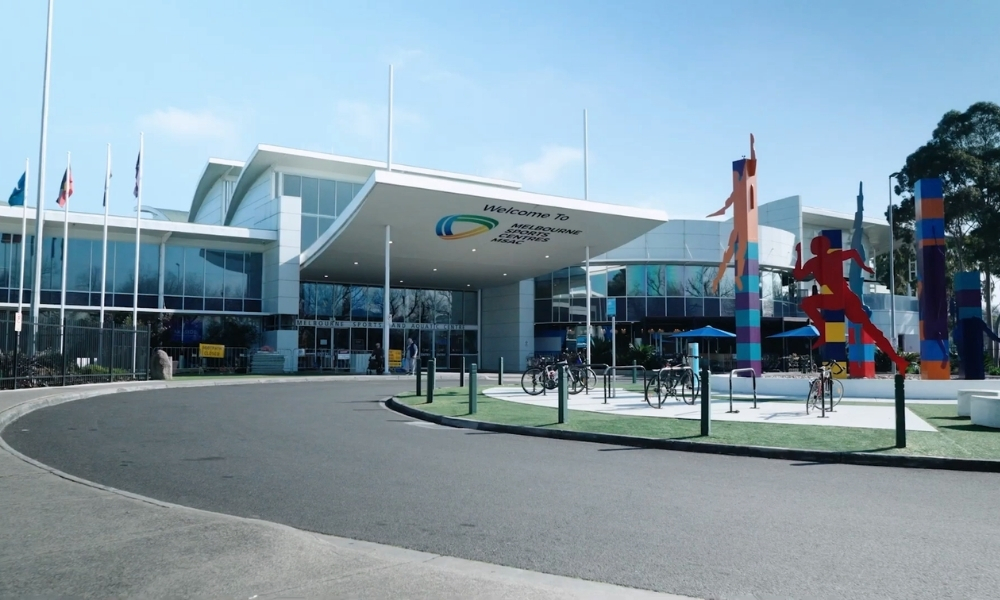
For many Victorians, Melbourne Sports and Aquatic Centre, or MSAC, represents much more than a sporting venue.
It is somewhere to learn, train, compete, and spend time with others.
Those activities depend on an extensive network of facilities and services. Pools, ventilation, lighting, scoreboards, and other equipment all contribute to the centre’s energy demand.
The new rooftop solar system is expected to supply around one-quarter of MSAC’s electricity needs.
Victorian Government estimates put annual generation above one million kilowatt-hours, with energy savings of approximately $70,000 each year. These are projected outcomes, rather than a full year of measured results. Premier
For a facility serving its community, managing operating costs matters.
Reducing electricity spending can ease pressure on the budget behind those everyday activities. Generating electricity onsite also reduces the amount the centre needs to purchase from the grid.
It gives the roof a practical role in supporting the building beneath it.
Next Green Group: The team behind the transformation
A project of this scale needs much more than panels. It requires people who understand buildings, electricity, installation logistics, and the responsibilities involved in working at a major public facility.
Next Green Group designed and built the MSAC system and continues supporting it through a five-year maintenance agreement.
The company’s role extended from investigating the site to delivering a system suited to its unusual roof. That work deserves attention because commercial solar success often begins well before installation.
A capable contractor needs to understand what the client wants, what the building can support, and where the design can improve.
At MSAC, Next Green Group explored those questions in detail.
Looking beyond the original brief
The original tender called for an 850 kW system. Through planning, engineering, and design development, Next Green Group proposed increasing that capacity to 1,300 kW.
That is approximately 53% more installed solar capacity than originally tendered.
It demonstrates the value of assessing a site thoroughly, rather than simply filling an available area with panels.
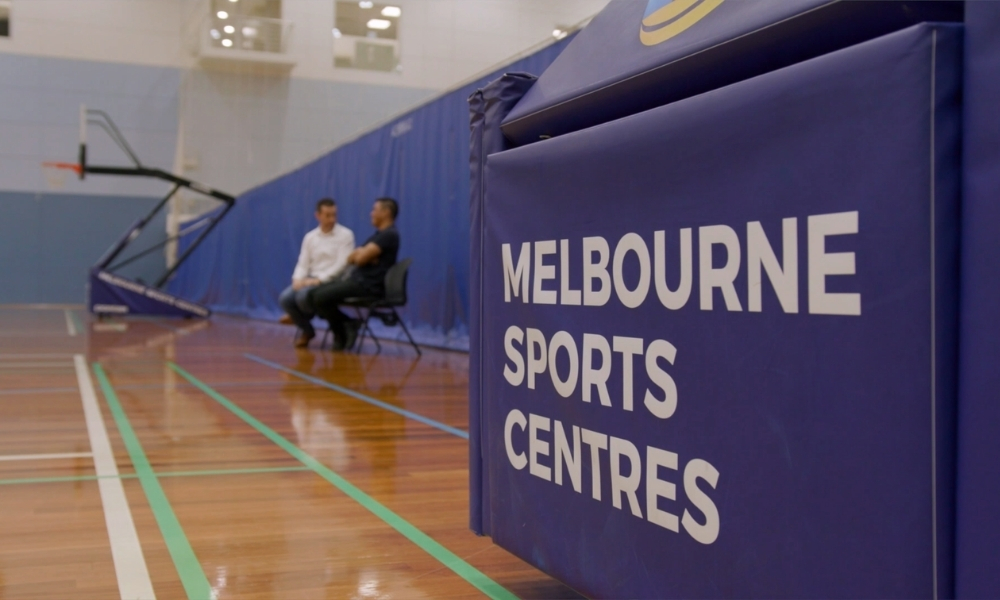
During the episode, the team explains how it worked through the design with MSAC, demonstrating the benefits of a larger installation. The process needed to account for the building’s shape while respecting its appearance.
For commercial property owners, that is an important distinction. The strongest proposal considers the building as a whole.
Making a complex roof work
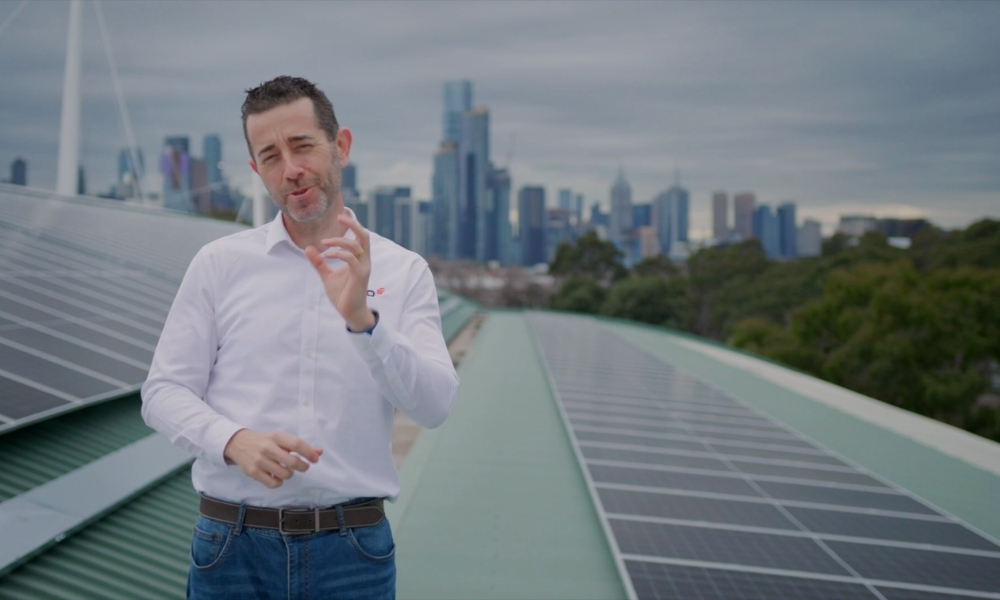
MSAC’s curved roof presented challenges involving geometry, shading, and structural loading. Next Green Group used a flush-mounted arrangement that followed the roof, supported by mounting trials and wind and structural assessments.
The finished installation combined suitable equipment with a design developed around the site’s particular constraints.
In the episode, the team also discusses the logistics of getting thousands of panels onto the building. Each panel weighed approximately 28 kg, creating a combined module weight of roughly 56 tonnes.
That figure excludes other system components, which also require consideration during structural assessment. Moving and installing that equipment demands careful sequencing, access planning, and communication.
These are the details that turn an ambitious concept into a functioning commercial asset.
Supporting the system after installation
Commercial solar is a long-term investment. Its value depends on continued operation, suitable maintenance, and attention to performance.
Next Green Group’s ongoing involvement gives the project continuity beyond commissioning.
For businesses comparing installers, that is worth considering alongside price and panel specifications. Ask who will monitor the system, investigate faults, and coordinate maintenance. Understand how responsibilities continue after the installation team leaves.
Good equipment needs good support around it.
Get FREE Quotes for AIKO Solar Panels
Why AIKO COMET panels suited the project
The AIKO COMET series targets commercial and industrial applications, where roof area, structural capacity, and project economics all matter.
At MSAC, the panel selection needed to work within a demanding combination of conditions. The project required strong output from the available roof space, while managing the weight installed above a busy sporting facility.
COMET’s role becomes clearer when those requirements are considered together.
More power from usable roof space
Commercial roofs can look enormous from the ground. The area suitable for solar is often smaller than it appears.
Access requirements, equipment, shaded sections, and structural limitations can all affect the layout. That makes power density, or the amount of panel capacity within a given area, commercially important.
A higher-efficiency panel converts more of the sunlight reaching its surface into electricity under the same conditions. For a constrained roof, that can help designers install more generating capacity within the usable area.
At MSAC, panel performance formed part of the decision to make better use of the roof.
Weight matters as much as wattage
A roof has structural limits. Panel selection must respect them.
In the episode, AIKO discusses COMET’s single-glass construction and the importance of panel weight relative to power output. This relationship is particularly relevant when a project needs substantial generating capacity without unnecessary additional loading.
The aim is to achieve an appropriate balance between output, weight, durability, and installation requirements. Next Green Group’s engineering work connected those product characteristics with the realities of MSAC’s building.
A panel’s commercial value depends on how well it fits the project around it.
Managing the effects of partial shading
Commercial rooftops often share space with equipment, raised structures, and other obstacles. Shading can therefore influence both the layout and the expected generation.
AIKO’s ABC technology is designed to reduce certain losses associated with partial shading. At MSAC, that capability formed part of the design response to unavoidable shadows.
It does not mean shaded panels produce the same electricity as unshaded panels. Shading still matters, and its effect changes with the location, timing, and pattern of the shadow.
The commercial opportunity lies in modelling those conditions carefully and selecting equipment that responds appropriately.
What is AIKO’s ABC solar technology?
ABC stands for All Back Contact.
The technology places the cells’ electrical contacts on the rear, rather than across the light-facing surface. Removing front-side contact shading allows more of that surface to receive sunlight.
AIKO uses this architecture across its panel families, including COMET and NEOSTAR.
For customers, the important outcome is how that technology contributes to panel efficiency and the completed system’s performance. The panel is one part of the equation. Orientation, shading, temperature, inverter selection, installation quality, and maintenance also influence electricity generation.
That is why the MSAC story gives equal attention to equipment and engineering. The two need to work together.
COMET panels in the Australian commercial market
Australian suppliers list 650 W COMET 2U panels, illustrating the high-output format available within the commercial range.
However, COMET includes different models and specifications. The exact datasheet should always match the panel proposed for a project.
A high wattage figure describes a panel’s rated output under standard test conditions. It does not, by itself, establish which panel will deliver the strongest commercial outcome.
Businesses should also compare:
- Panel dimensions and the layout they allow.
- Weight and the building’s structural requirements.
- Expected generation under the site’s conditions.
- Product and performance warranty terms.
- Installation, maintenance, and whole-system costs.
At MSAC, those considerations came together through the design process.
The result shows why selecting a panel and selecting an installer are closely connected decisions.
The commercial model behind MSAC’s savings
The MSAC installation also demonstrates that accessing solar does not always require purchasing the equipment outright.
The SEC owns and operates the system under an agreement with the State Sport Centres Trust, which manages MSAC. The SEC sells the electricity generated onsite to the centre at a lower cost than grid electricity.
This arrangement allows MSAC to access the system’s benefits without funding the substantial upfront installation cost itself. For other organisations, suitable funding and ownership arrangements will depend on the project.
The broader lesson is to assess the commercial structure alongside the technical design. A good solar proposal needs to explain both how the system works and how the organisation benefits.
What businesses can learn from the MSAC installation
Most commercial projects will be smaller than MSAC. Many will face similar questions.
How much roof space is genuinely usable? When does the business consume electricity? What can the building support? Who will maintain the installation?
The answers shape whether solar delivers useful value.
Start with electricity consumption
A business using substantial electricity during daylight hours may have strong opportunities to consume solar generation onsite. However, consumption varies across weekdays, weekends, and seasons.
A useful assessment considers interval data and operating patterns, rather than relying only on an annual bill. That helps establish how much generated electricity the site could use.
Treat roof constraints as design questions
A difficult roof needs investigation. Curves, shading, access limitations, and structural requirements can change the available options.
MSAC demonstrates the value of asking an experienced contractor to assess those constraints in detail.
Some limitations will remain. Others may allow a different design or equipment choice.
Compare complete proposals
A low price per watt tells only part of the story. Commercial buyers should understand the expected generation, assumptions, installation scope, maintenance arrangements, and financial model.
They should also know how the contractor will manage the building’s specific requirements.
Expert tip: Ask installers to explain why they selected each major component for your site.
Clear answers reveal whether the proposal responds to your building and operations.
AIKO’s residential panels: Which range should homeowners consider?
The technology story extends beyond commercial rooftops.
For Australian homeowners, AIKO’s NEOSTAR 3 range offers several current options using ABC cells.
The strongest choice depends on what “best” means for the roof.
A compact panel with high efficiency can suit limited space. A larger panel can offer more watts per module, provided the dimensions work.
NEOSTAR 3P54: High efficiency in a compact format
The NEOSTAR 3P54 mono-glass range is a strong residential option where usable roof area matters.
AIKO’s Australian specifications list:
- 475 W to 500 W rated output.
- Up to 25% module efficiency.
- A 25-year product warranty.
- A 30-year performance warranty.
- A power temperature coefficient of −0.26% per degree Celsius.
The efficiency figure is particularly relevant when comparing panels of different sizes.
A larger wattage number can sometimes come from a larger panel. Efficiency helps explain how effectively the panel uses its area.
For homeowners, the useful comparison is the capacity and projected generation achievable across the whole roof.
NEOSTAR 3P+60 and 3S+60: More output per panel
AIKO’s Australian range also lists the NEOSTAR 3P+60 and NEOSTAR 3S+60 dual-glass models. Both have published output ranges of 530 W to 550 W, with efficiency reaching 24.8%.
Their Australian product pages list 25-year product warranties and 30-year performance warranties.
These larger-format panels provide another option where roof dimensions allow.
They are worth assessing alongside the compact 3P54, rather than assuming the highest panel wattage automatically produces the strongest roof layout.
An installer should confirm local stock, exact model specifications, and how the proposed panels fit the property.
COMET and NEOSTAR: Different panels, shared principles
| Consideration | AIKO COMET | AIKO NEOSTAR 3 |
| Primary focus | Commercial and industrial projects | Residential rooftops and suitable smaller applications |
| Design priorities | High output, roof utilisation, and project economics | Efficiency, roof fit, appearance, and household generation |
| Shared technology | ABC cell architecture | ABC cell architecture |
| Key selection question | How does the panel fit the building’s engineering and energy requirements? | Which model creates the most suitable layout for the home? |
Both ranges benefit from thoughtful system design. A commercial facility needs an assessment reflecting its operations and building. A homeowner needs the same attention at a different scale.
The principle remains consistent: match the technology to the people and place using it.
A solar installation with people beneath it
The MSAC system is impressive in megawatts and module numbers. Its purpose becomes clearer when you think about what happens underneath.
Children learn to swim. Teams train after school. People return for exercise, competition, and company. Energy supports all of those experiences.
Managing its cost helps support the practical work of operating a major community facility.
AIKO supplied the panels. Next Green Group brought the engineering, installation capability, and ongoing support needed to put them to work. Together with the SEC and State Sport Centres Trust, they have helped give a familiar Melbourne roof a new role.
It now contributes to the electricity needs of a place where people build confidence, friendships, and lifelong habits.
That is a worthwhile return to see alongside the financial one.
Get FREE Quotes for AIKO Solar Panels
Put your commercial rooftop to work
Could your building generate some of the electricity your organisation uses?
The MSAC project shows why a detailed assessment matters, particularly where roofs present unusual challenges.
Next Green Group works across commercial energy solutions, including solar, storage, and other efficiency opportunities.
Watch the MSAC installation story in Global Energy Revolution Season 2 to discover the thinking behind this major Melbourne project.
Key takeaways
- Next Green Group’s engineering increased the project’s capacity beyond the original tender.
- AIKO COMET panels supported the design’s output and structural priorities.
- Commercial solar needs a complete assessment, covering consumption, roof conditions, equipment, and financial arrangements.
- NEOSTAR 3 offers current residential options, with different formats suited to different roofs.
- Community infrastructure benefits from thoughtful energy planning, connecting operating savings with the places people use every day.
Frequently asked questions
Who installed the solar system at MSAC?
Next Green Group designed and built the 1.3 MW rooftop solar system at Melbourne Sports and Aquatic Centre. The installation features 2,016 AIKO COMET panels. Next Green Group also supports the system through a five-year maintenance agreement, extending its involvement beyond the initial installation.
Why were AIKO COMET panels selected for MSAC?
The project needed panels suited to a curved roof with structural and shading constraints. AIKO COMET panels offered characteristics supporting the design, including strong power density and a suitable power-to-weight relationship. Next Green Group assessed the equipment alongside the building’s requirements to develop the final installation.
How much electricity will MSAC’s solar system generate?
Victorian Government estimates indicate generation above one million kilowatt-hours annually, supplying around one-quarter of MSAC’s electricity needs. Estimated annual energy savings are approximately $70,000. Actual results will depend on generation, electricity consumption, and the project’s supply arrangement over time.
Which AIKO residential panels should Australian homeowners consider?
AIKO’s NEOSTAR 3 range includes the compact 3P54, reaching 500 W and 25% efficiency. Larger dual-glass 3P+60 and 3S+60 models reach 550 W. The appropriate choice depends on roof dimensions, layout, budget, and availability, with an installer assessing the completed system.
Can solar work on a commercial building with a difficult roof?
Potentially, but the roof needs a detailed assessment. Structural capacity, geometry, shading, access, and electrical infrastructure all influence feasibility. MSAC demonstrates how specialised engineering can identify opportunities. An experienced commercial contractor should explain the options, limitations, expected generation, and ongoing responsibilities before work begins.