





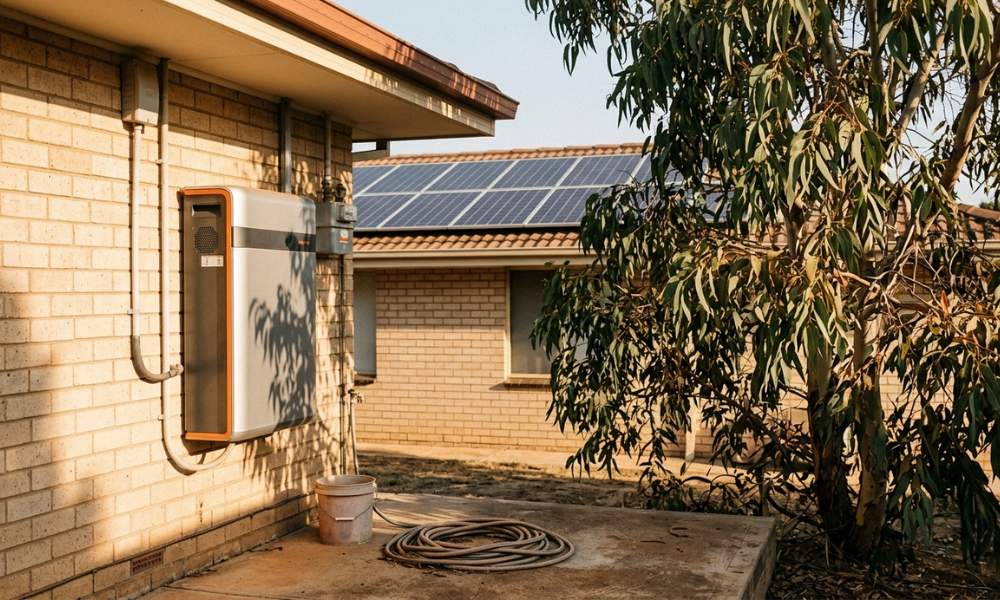
The Bureau of Meteorology officially declared an El Niño on 16 June 2026, and solar retailers have been quick to frame it as a straightforward win: clearer skies, more sunshine, bigger savings. That’s true, to a point. But the same climate pattern driving those clearer skies is also the one the Bureau and CSIRO are watching closely for a very different reason: an elevated risk of drought, extreme heat, and bushfires across eastern Australia this coming season. For anyone with solar and a battery, both halves of this story matter, and most of what’s being published only covers one of them.
Quick Summary
- Solcast’s own data shows eastern Australia typically sees about 5% above-average irradiance during strong El Niño events, well below some retailer marketing quoting figures as high as 20%, and even that gain is inconsistent year to year.
- The same El Niño declaration carries an elevated risk of drought, heatwaves, and bushfires, conditions that increase the odds of grid outages during the exact season your battery matters most for backup.
- A modest daytime generation bump isn’t a strong reason to buy a bigger system. Backup resilience for a higher-risk fire season is the more practical thing to plan around this year.
The generation boost is real, but smaller than some marketing suggests
Solcast, the satellite-based forecasting company whose data underpins most seasonal solar outlooks in Australia, reports that during past strong El Niño events, eastern Australia has typically seen irradiance around 5% above average from July to September. That’s a genuine, measurable gain, but Solcast’s own analysis flags it as one of the less consistent regional effects globally, with places like Toowoomba in southeast Queensland showing some strong El Niño years landing above the historical range and others sitting close to average. Across their broader historical dataset, the largest regional irradiance swings during this window have topped out around 10%.
That’s worth knowing because some solar industry commentary this year has quoted figures as high as 20% above average for parts of northern Australia, sourced back to Solcast’s own seasonal outlooks. It’s possible that figure reflects a specific, higher-variability pocket like the far north or Coral Sea rather than a misquote, but it sits well above what Solcast’s own published Australia-wide analysis describes for the eastern seaboard where most Australian households actually live. If you’re reading a forecast promising a large, guaranteed seasonal boost, it’s worth checking whether that number reflects your actual region or a more favourable pocket elsewhere on the continent.
Expert Tip:
If you want to check how El Niño is actually tracking in your specific area rather than a national average, look up your postcode on Solcast’s public irradiance tools or your own solar monitoring app’s historical data, and compare this July against last July directly, rather than relying on a single quoted percentage.
The part of the story that’s getting less attention
El Niño events are also historically associated with reduced rainfall, extreme heat, and elevated bushfire risk across large parts of eastern and northern Australia, according to both the Bureau of Meteorology and CSIRO. The Bureau has already recorded drier-than-average conditions since January across northeast NSW into southern Queensland this year, and has flagged an increased risk of heatwaves and extreme temperature shifts as this event develops through the back half of 2026.
This matters directly for battery owners, because the same conditions driving marginally clearer skies during the day are also the conditions that raise the odds of bushfire-related outages and load-shedding events during summer. A battery’s ability to keep your home running through an outage is arguably a more consequential feature this particular year than a few extra percentage points of daytime charging.
Expert Tip:
If bushfire risk is elevated in your area this season, check your battery’s backup or “storm watch” mode settings now, before summer, rather than during an actual emergency. Many systems let you set a higher minimum reserve automatically ahead of forecast extreme weather, but this usually needs to be configured in advance through the manufacturer’s app.
Why a modest sunshine bump isn’t a strong reason to size up
A 5% regional irradiance gain, even where it holds, doesn’t translate directly into a 5% bill saving for most households. Extra daytime generation only has value if you can either use it in real time or store it, once your battery is full and your daytime appliances are satisfied, additional generation is simply exported at whatever your feed-in tariff pays, typically a fraction of the retail rate you’d otherwise avoid. In practical terms, a modest, inconsistent seasonal irradiance gain is a poor basis for choosing a larger battery than your actual daily usage supports.
The more useful question this El Niño raises isn’t “how much bigger should my battery be to catch more sun,” it’s “how confident am I that my battery will actually back up my home if the grid goes down during a fire-risk event this summer.” Those are different sizing and configuration questions, and the second one is the one this particular climate pattern should really be prompting.
Expert Tip:
Rather than upsizing for a marginal generation gain, check your battery’s reserve settings and confirm your system includes backup circuits for essential loads (fridge, lighting, medical equipment) if you don’t already have them. That’s a more direct way to prepare for what this specific El Niño season is actually bringing.
Frequently asked questions
Is it true El Niño will boost my solar output by 20% this year? Solcast’s own published data shows eastern Australia typically sees roughly 5% above-average irradiance during strong El Niño events, and even that gain is inconsistent year to year. Figures as high as 20% likely reflect specific higher-variability regions rather than a typical eastern Australian household’s experience.
Does El Niño affect how well my home battery works? El Niño doesn’t affect battery hardware directly. It can mean slightly more daytime solar generation to charge from, but the more relevant effect this year is the associated increase in bushfire and blackout risk, which makes your battery’s backup function more important than usual.
Should I upgrade my battery because of El Niño forecasts? Not primarily for the modest and inconsistent generation gain. It’s more useful to check your battery’s reserve and backup settings ahead of a higher-risk fire season than to upsize purely to capture a few extra percentage points of daytime sun.
Why is Australia’s east coast at higher bushfire risk this El Niño? El Niño is historically associated with reduced rainfall, drought, and extreme heat across eastern and northern Australia. The Bureau of Meteorology has already recorded drier-than-average conditions in parts of NSW and Queensland since January 2026, ahead of the event’s expected peak later in the year.
How can I check if El Niño is actually affecting my area’s solar output? Compare your own system’s monitoring data for this July against last July, or check postcode-level irradiance data through tools like Solcast, rather than relying on a single national or regional percentage figure quoted in marketing material.
Get FREE Quotes Here
Key takeaways
- Eastern Australia’s actual El Niño irradiance gain is typically around 5%, smaller and less consistent than some marketing suggests, with figures as high as 20% likely reflecting specific regional pockets, not a typical household’s experience.
- The same El Niño event carries a real, separate risk: drought, extreme heat, and elevated bushfire risk across eastern Australia this coming season, according to the Bureau of Meteorology and CSIRO.
- That combination makes battery backup resilience, not extra daytime generation capacity, the more relevant thing to prepare for this particular year.
- A modest, inconsistent irradiance gain is a weak basis for upsizing a battery; checking your reserve and backup settings ahead of summer is a more direct response to what this El Niño is actually bringing.
- Check your own system’s historical generation data or postcode-level irradiance tools directly, rather than relying on a single quoted percentage, to understand how El Niño is really affecting your area.
Sources: Solcast (a DNV company), seasonal irradiance analysis as reported in pv magazine Australia, “Developing El Niño set to reshape global solar resource,” 22 June 2026; Australian Bureau of Meteorology, “El Niño: what it means for Australia’s climate”; CSIRO, “Expert commentary: El Niño,” 17 June 2026; PSC Energy, “What El Niño Means for Your Solar Panels and Battery This Australian Winter,” 21 May 2026.