





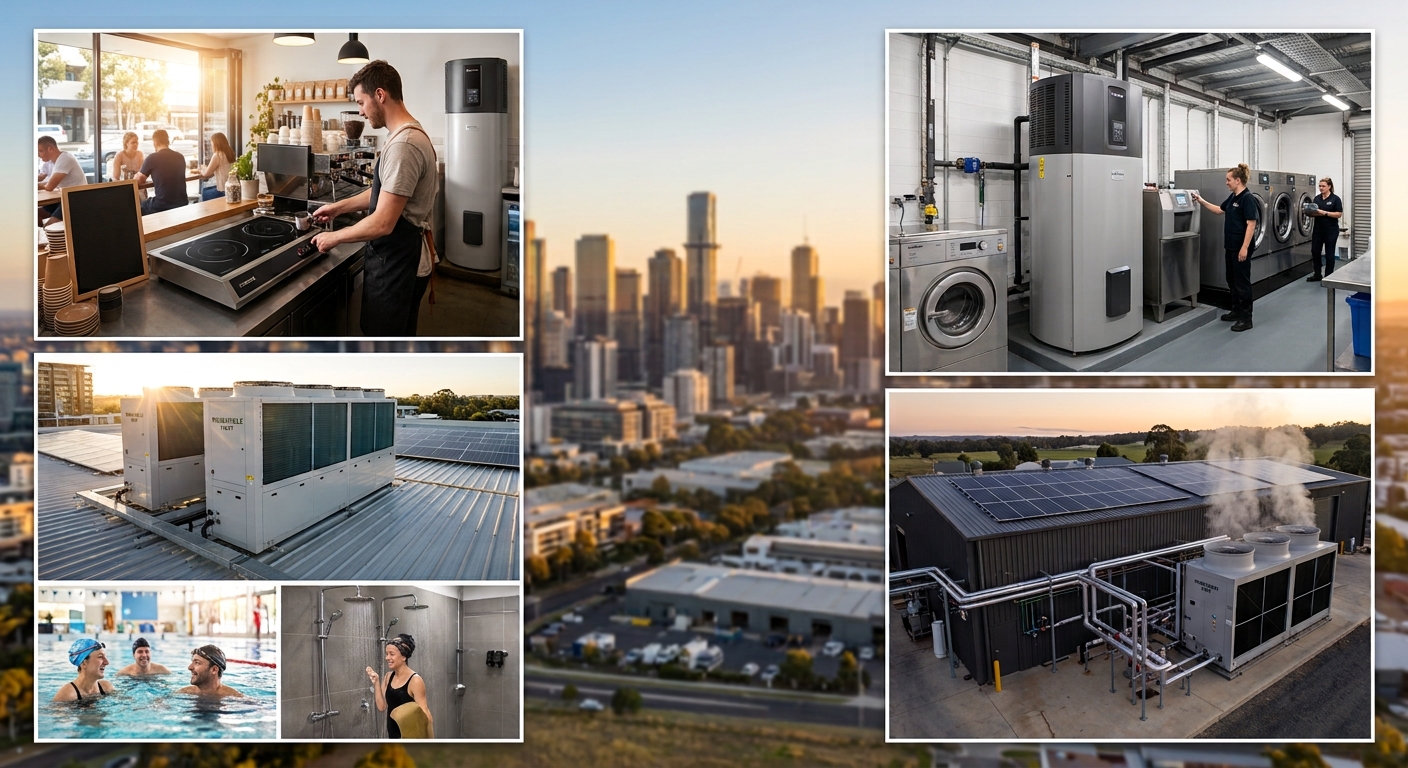
Australian industry uses 44% of the nation’s end-use energy, and more than half of that goes to process heat. That heat is worth around $8 billion a year and is mostly produced by burning gas. For many businesses, that makes gas one of the biggest and least predictable costs on the books.
Business electrification in Australia is now a practical option for a growing range of businesses, not just big manufacturers. The International Energy Agency’s new Special Report on Electrification, co-commissioned by Australia, estimates that around 40% of energy used for low- and medium-temperature industrial heat worldwide can already be electrified cost-effectively.
The key word is temperature. If your business uses gas to make hot water, warm a building or run processes below about 90°C, electric heat pumps are a proven alternative. This guide explains which businesses are best placed to switch, how to plan it, and what support is available.
Quick summary
- Heat pumps are proven for business heat below about 90°C, which covers hot water, space heating, washdown and many food processes.
- Cafés, hotels, gyms, aquatic centres, laundries, breweries and food processors are often the best early candidates.
- Pairing heat pumps with commercial solar, batteries and thermal storage improves the economics, and federal and state funding can reduce upfront costs.
Why business electrification is back on the agenda
Gas has become harder to budget for. During the Strait of Hormuz disruption earlier this year, IEEFA reported that global crude oil prices rose 51% and LNG prices rose 77% in less than two weeks. Australian businesses on gas contracts feel those swings, even in a country that produces gas.
Electrification reduces that exposure. Electricity can be generated on your own roof, contracted through a power purchase agreement, or shifted to cheaper times of day. Gas can only be bought.
The pace of change in commercial buildings is still slow. According to the Australian Alliance for Energy Productivity (A2EP), commercial buildings burn more than 40 PJ of gas each year, mostly for space heating, but only around 20 buildings a year are retrofitted with heat pumps. That leaves a large opportunity for businesses willing to move early.
Expert tip: Pull 12 months of gas and electricity bills before talking to installers. Gas use that spikes in winter usually points to space heating. Steady year-round use usually points to hot water or process heat. Knowing which you have shapes every recommendation that follows.
Which businesses can electrify first?
The temperature you need is the single biggest factor. ARENA-funded feasibility studies found industrial heat pumps are economically and technically feasible for heating applications below 90°C, particularly where a site also has cooling loads that can be integrated.
| Business type | Typical gas use | Electric alternative | Suitability |
| Cafés and restaurants | Hot water, cooking | Heat pump hot water, induction cooking | High |
| Hotels, motels and aged care | Hot water, space heating | Commercial heat pumps, reverse-cycle HVAC | High |
| Gyms and aquatic centres | Pool heating, showers | Pool heat pumps, heat pump hot water | High, with large savings potential |
| Commercial laundries | Hot water, dryers | Heat pump water heating, heat pump dryers | High |
| Breweries and food processors | Washdown, cleaning, pasteurising | Industrial heat pumps with heat recovery | Medium to high |
| Heavy manufacturing | Steam and high-temperature heat | High-temperature heat pumps, electric boilers | Case by case |
Businesses that need both heating and cooling are especially good candidates. A heat pump can recover heat that refrigeration would otherwise dump outside and reuse it for hot water.
Expert tip: Ask whether your process actually needs its current temperature. Many sites heat water hotter than required out of habit. A2EP’s research found that reducing heating hot water below 70°C avoids the need for more complex two-stage heat pumps, which lowers equipment costs significantly.
How commercial heat pumps cut energy use
A gas boiler burns fuel to make heat. A heat pump moves heat that already exists in the air, water or waste streams, so it delivers several units of heat for each unit of electricity it uses.
In ARENA’s analysis, an industrial heat pump can move up to 6 kW of heat for every 1 kW of electricity, while a typical steam system runs at less than 60% efficiency. That’s roughly a tenfold improvement in how efficiently the energy is used.
Real projects show what this looks like in practice. Blackmores received ARENA funding to replace a gas boiler at its Braeside facility in Victoria with a high-efficiency heat pump and hot water buffer tank. The heat pump draws heat from the site’s refrigeration condensate water and is expected to cut the facility’s gas use by about 25%.
Expert tip: Look for waste heat first. Refrigeration condensers, air compressors and cool rooms all reject heat that a heat pump can reuse. Sites that combine heating and cooling get the best return from electrification.




Pairing electrification with commercial solar and batteries
Most businesses use the most energy during the day, which is when solar generates. That makes commercial solar a natural partner for electrification: a heat pump running at midday on your own solar is far cheaper to operate than one running on grid power.
Thermal storage stretches that further. ARENA’s studies found that with good energy data, waste heat recovery and a thermal battery, businesses can install a smaller heat pump, cutting both capital and operating costs and potentially earning revenue from demand response.
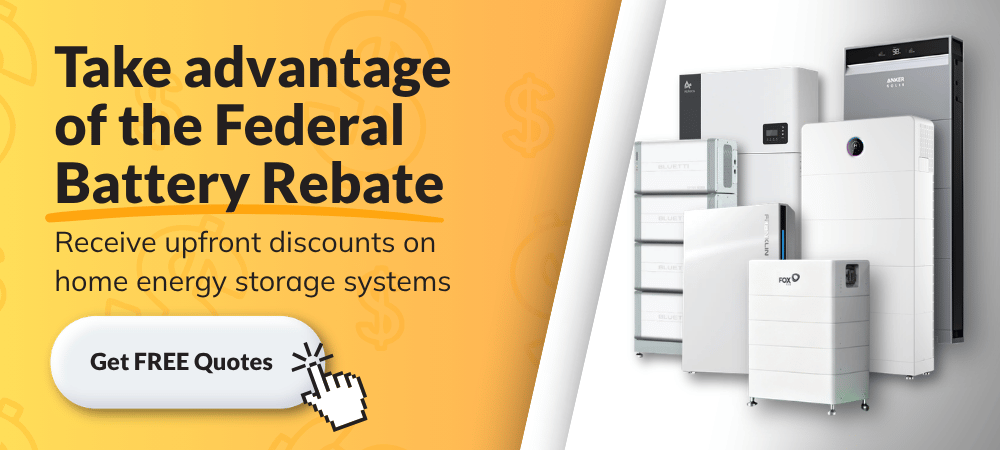
Commercial battery storage can also help manage electricity demand charges, which may rise when you add electric heating loads. The federal Cheaper Home Batteries Program is open to businesses and community organisations as well as households, with a discount of around 30% on eligible systems from 5kWh to 100kWh.
Expert tip: Size your solar and battery for the business you’ll have after electrification, not the one you have today. A system designed around current electricity use can end up too small once gas loads move onto the grid.
Costs, barriers and funding
Electrification isn’t free, and it helps to know the hurdles upfront.
Upfront cost
ARENA’s studies found the main barrier for industrial heat pumps is their higher capital cost per unit of heat compared with traditional boilers. The payback comes from lower running costs, so projects are strongest where gas use is high and steady.
Electrical capacity
Moving heat loads onto electricity can require switchboard upgrades or a larger grid connection. In one ARENA-funded project, food processor Hardwick’s upgraded its site to become a high-voltage customer to support its heat pump. Check your site’s capacity early.
Funding and incentives
- ARENA: the Powering the Regions Industrial Transformation Stream supports decarbonisation at existing regional industrial facilities. Check the current round status.
- State energy efficiency schemes: programs in NSW and Victoria offer incentives for commercial activities such as air source heat pump water heaters and boiler replacements. See our commercial incentives guide.
- Batteries: federal battery discounts, plus NSW programs for commercial batteries.
- Financing: solar PPAs and leasing can reduce or remove upfront costs for the solar side of your project.
State rules are also changing. Victoria is moving new buildings toward all-electric requirements, though energy policy remains contested. Check the current requirements in your state before replacing major gas equipment.
Expert tip: Time your electrification around equipment replacement. If your gas boiler is approaching end of life, the extra cost of a heat pump is only the difference between the two options, not the full price. Start planning two to three years before a major boiler replacement is due.

A six-step electrification plan for your business
- Gather your data. Collect gas and electricity bills and, if possible, interval data showing when you use energy.
- Map your heat loads by temperature. List every gas use and the temperature it actually needs. Anything below 90°C is a strong candidate.
- Cut demand first. Lower hot water temperatures where you can, fix insulation, and find waste heat to recover.
- Plan around equipment age. Prioritise gas equipment nearing end of life.
- Design the energy system together. Size heat pumps, solar, batteries and any thermal storage as one system, and check grid capacity.
- Line up funding, then get quotes. Check federal, state and ARENA programs before committing.
Expert tip: Get at least three quotes, and ask each installer to show expected running costs against your current gas bills, not just the equipment price.
Frequently asked questions
What is business electrification?
Business electrification means replacing equipment that burns gas or other fuels with efficient electric alternatives. For most businesses, that means heat pumps for hot water, space heating and process heat, induction for commercial cooking, and electric vehicles, usually powered by commercial solar and supported by battery or thermal storage.
Can heat pumps replace gas boilers in business?
Yes, for many applications. ARENA-funded studies found industrial heat pumps are economically and technically feasible for heating below 90°C. That covers most hot water, space heating, washdown and many food and beverage processes. Higher-temperature steam applications are harder but increasingly possible with newer technology.
Which businesses benefit most from electrification?
Businesses with high, steady demand for low-temperature heat benefit most. That includes cafés, hotels, aged care, gyms, aquatic centres, laundries, breweries and food processors. Sites that also use refrigeration gain extra value, because heat pumps can recover waste heat from cooling systems and reuse it.
How much does commercial electrification cost?
Costs vary widely with site size, heat demand and electrical capacity. Heat pumps usually cost more upfront than gas boilers, but running costs are lower, particularly with solar. Switchboard or grid connection upgrades may add cost. Funding, incentives and PPAs can reduce the upfront investment significantly.
What funding is available for business electrification in Australia?
Options include ARENA programs for industrial facilities, state energy efficiency schemes in NSW and Victoria that support commercial heat pumps and boiler replacement, the federal battery discount of around 30% for eligible systems up to 100kWh, and state commercial battery incentives. Check eligibility and current rounds before applying.
Key takeaways
- Process heat is the largest share of Australian industry’s energy use, and most of it is still produced by burning gas.
- Heat pumps are proven for business heat below 90°C, which covers most hot water, space heating and many food processes.
- Sites with both heating and cooling loads, or high steady hot water demand, are the strongest candidates.
- Pairing heat pumps with commercial solar, batteries and thermal storage improves the economics and reduces exposure to gas prices.
- Plan two to three years ahead of boiler replacement and check federal, state and ARENA funding before committing.