


A home battery’s story begins long before it reaches your garage. It starts with components, engineering decisions, production teams, and testing. Every connection has a job to do. Every finished system needs to deliver when a household or business puts it to work.
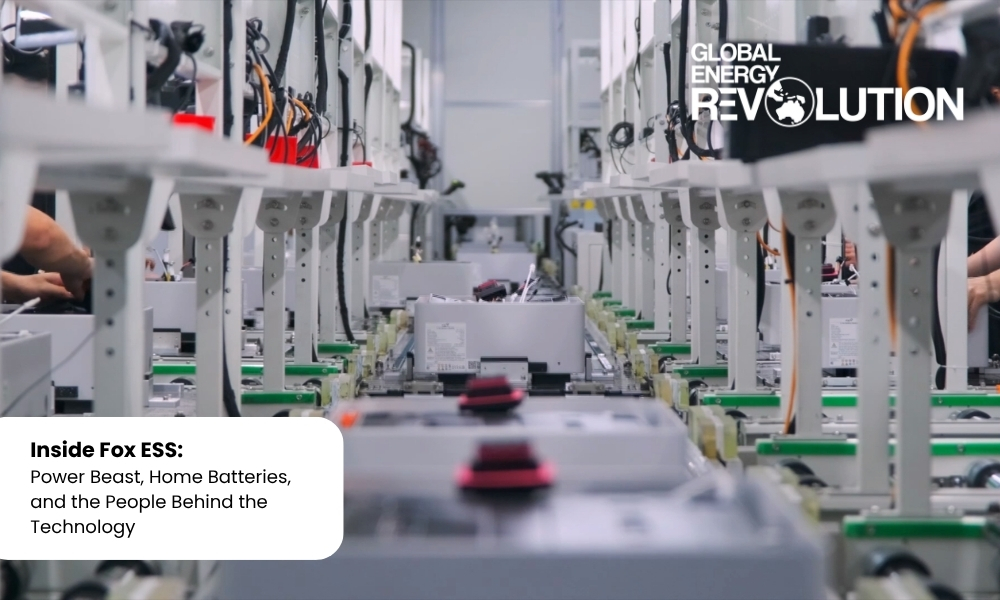
In Global Energy Revolution Season 2, Roshan visits Fox ESS in Wenzhou, China, to discover that process firsthand.
Speaking with Michelle Li, Leo Ye, and Brooks Richard Geng, he explores the people and manufacturing behind the company’s solar and battery technology.
The visit also opens a broader conversation about where energy storage is heading.
For businesses, Fox ESS’ Power Beast brings substantial storage capacity into a modular commercial platform. For households, the newer Power Cube combines an integrated inverter and battery design with monitoring and backup capability.
Different applications, shared ambition: helping people take greater control of their electricity.
TL;DR: Fox ESS from factory floor to everyday energy
- Roshan goes behind the scenes at Fox ESS, exploring manufacturing, inspection, and battery testing with the team.
- Power Beast targets commercial and industrial applications, combining H3 Plus hybrid inverters with modular CQ7 batteries.
- Power Cube is a newer residential platform documented for Australia, pairing PQ1 inverter technology with EQ5500 battery modules.
Meeting the people behind Fox ESS
The episode begins in Wenzhou, a coastal Chinese city where manufacturing and innovation sit alongside a rich cultural heritage.
Here, Roshan meets Michelle Li, who discusses Fox ESS’ development and its growing presence in Australia. She highlights investment in research and development, product design, and installation considerations.
These priorities connect with questions Australian customers regularly ask.
Will the system suit my property? How will it operate? What support sits behind it? Can it adapt to changing energy needs?
The factory visit provides a closer look at the work behind those questions.
Roshan then joins Leo Ye to follow production through its different stages. Later, Brooks Richard Geng discusses the company’s technology and direction.
Together, their conversations connect the equipment with the people responsible for bringing it to market.
Inside the Fox ESS manufacturing process
Energy storage involves more than placing battery cells inside a cabinet. A working system needs electronics, control equipment, protective features, and communication between its components.
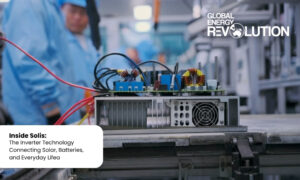
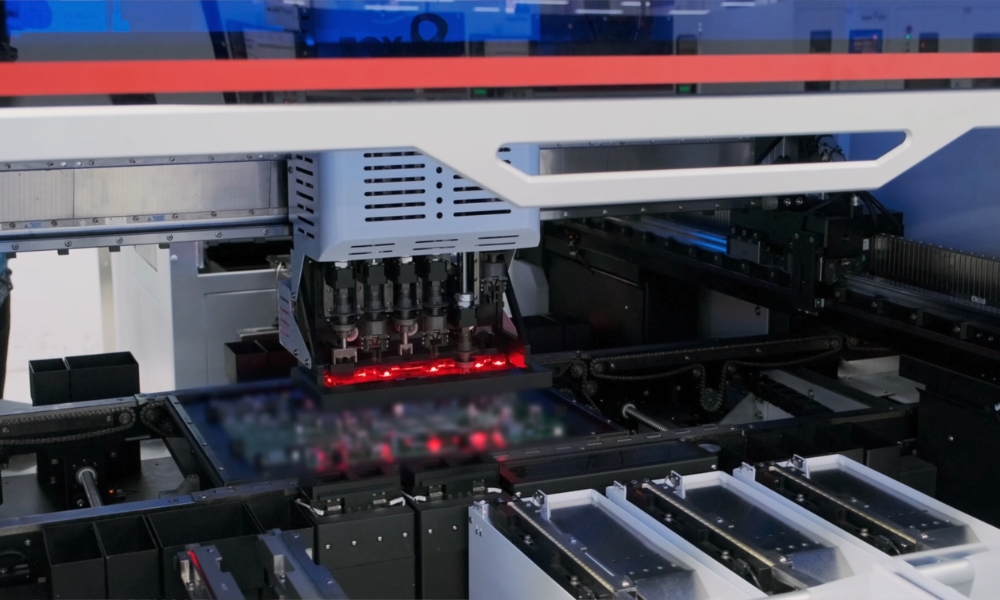
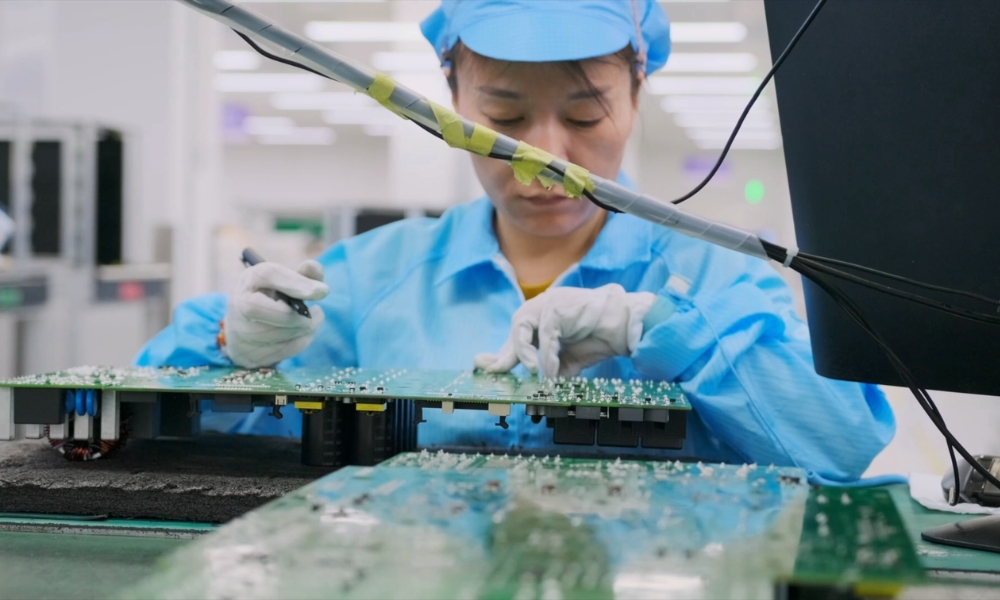
During the tour, Roshan watches circuit boards move through processes that apply materials, position components, and inspect the results. Automation handles precise, repetitive tasks. People also contribute to assembly and checks where their skills are needed.
It is a partnership between machinery and human judgement.
At one point, the conversation turns to pizza-making as a way of explaining the process. Components need to arrive in the right places, with checks along the way. The analogy brings some humour to a complex manufacturing line. The underlying point is serious: small details matter.
A finished battery system depends on many individual processes working together correctly.
Why testing deserves attention
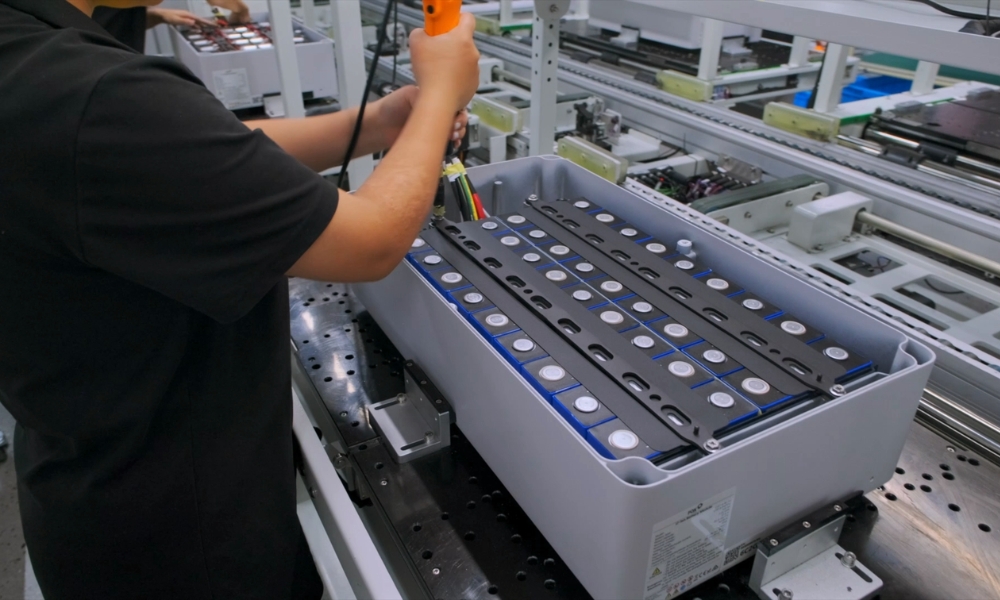
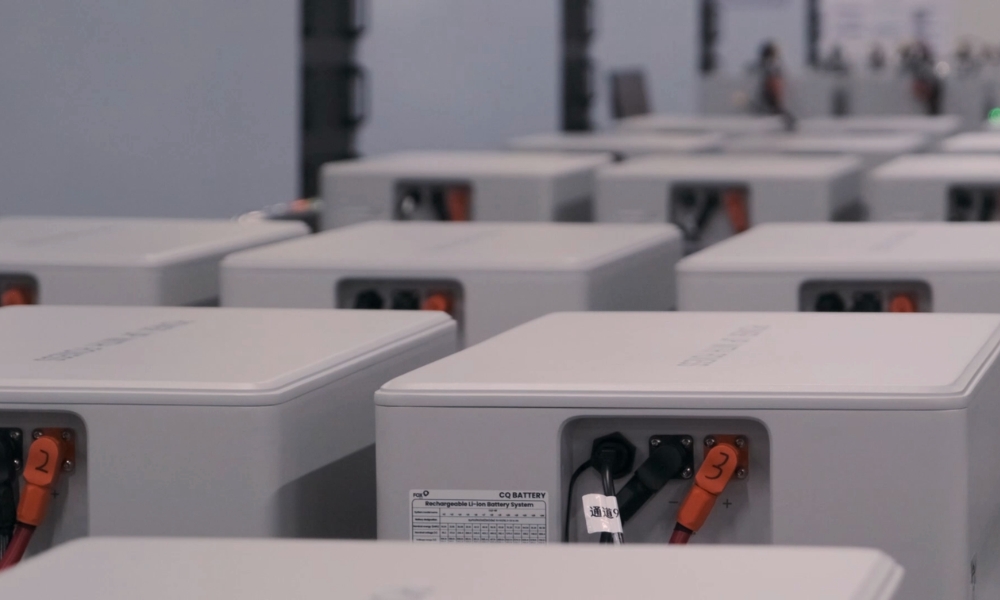
The episode also explores testing before products leave the factory. Leo describes batteries undergoing performance and safety checks, with testing taking approximately two to four hours.
For viewers, this offers a perspective that product brochures rarely provide. The equipment installed at a home or business has already passed through a sequence of production and inspection stages.
Factory testing forms one part of that journey. Suitable system design, correct installation, and ongoing support remain essential once the equipment reaches its destination.
The strongest energy solution connects all of those stages.
Get FREE Quotes for a Fox ESS System
Power Beast: Fox ESS takes storage into the commercial arena
Power Beast is Fox ESS’ commercial and industrial energy storage platform.
The Australian configuration combines the H3 Plus hybrid inverter, CQ7 high-voltage batteries, and an optional CQ7 Dual Tower Base.
Fox ESS launched this configuration in Australia in July 2026, targeting projects needing greater capacity than a typical household installation.
The name makes a statement. The story lies in how the components fit together. Commercial properties have different demands from homes. They may operate larger equipment, consume electricity across extended hours, or face tariffs influenced by peak demand.
Storage can become part of managing those requirements. The opportunity depends on understanding the business first, then designing the system around its operations.

What is inside the Power Beast platform?
| Component | Role in the system |
| H3 Plus hybrid inverter | Manages electricity conversion and energy flows |
| CQ7 battery modules | Store electricity for later use |
| Optional Dual Tower Base | Supports a lower-height battery arrangement |
| Monitoring and control | Helps operators understand and manage system operation |
The Australian launch lists H3 Plus inverter outputs from 50 kW to 125 kW. A single inverter can support up to approximately 292 kWh of CQ7 storage, depending on configuration.
The platform also supports larger multi-inverter projects, allowing designers to assess a wider range of commercial applications.
Those figures describe different capabilities.
Kilowatts measure power: how quickly electricity can be supplied.
Kilowatt-hours measure energy: how much electricity the batteries can store.
Both influence what a system can do for a business.
Making commercial storage easier to accommodate
Space matters in commercial installations. Plant rooms, service areas, and external equipment locations already have competing demands. Height, access, and maintenance clearances can affect whether a design works.
Power Beast’s optional Dual Tower Base allows two battery stacks to share a base.
Fox ESS describes this arrangement as keeping the battery installation below 1.3 metres in height, with pre-installed connections simplifying assembly.
Brooks Richard Geng explains the approach:
“POWER BEAST combines a compact dual-stack design with fast, plug-and-play installation, reducing system height and installation complexity.”
The aim is to make a substantial storage system more manageable to accommodate and install. A project still requires site-specific engineering, electrical design, and commissioning. Modular equipment can help simplify parts of that work.
How commercial batteries can support a business
A battery’s value comes from the work it performs over time.
For a commercial site, that may involve several different functions.
Using more solar electricity onsite
A business may generate surplus solar electricity during some parts of the day. Storage can retain suitable surplus generation for use later, reducing the need to purchase electricity at another time.
The value depends on when the business generates and consumes electricity, alongside its tariffs. A business operating into the evening may have different opportunities from one whose demand closely follows daylight hours.

Managing periods of high demand
Some commercial electricity bills include demand charges. A suitably designed battery can help reduce grid demand during targeted periods by supplying part of the site’s load.
The financial result depends on the tariff structure, control strategy, battery charge, and how the business operates. It requires detailed modelling.
Supporting selected operations during outages
Backup capability can also matter where an interruption affects essential equipment or business activity. However, backup design needs to account for the loads involved, starting currents, required duration, and available energy.
A large battery does not automatically support every appliance or process at once.
Expert tip: Ask a commercial installer to model your actual electricity data and tariff before recommending a battery size.
The useful proposal explains the operating strategy alongside the equipment.
Power Cube: A newer residential direction for Fox ESS
The factory visit also looks towards an integrated residential system. Power Cube brings together a hybrid inverter and modular battery storage.
Inverter models range from 5 kW to 12 kW, with modular storage configurations from 10.92 kWh to 49.14 kWh.
The system includes IP66 protection, remote monitoring, and a stated 10-year standard warranty, subject to its terms. This makes Power Cube an important newer platform to watch within Fox ESS’ Australian residential offering.
An integrated inverter and battery design
Power Cube’s integrated arrangement reduces separate interconnecting cables between the inverter and batteries. For homeowners, that can support a tidier installation. For installers, it changes how the system is assembled.
The hybrid inverter manages electricity flowing between solar, storage, the home, and the grid. The batteries retain electricity for use later.
Working together, those components can help a household use more of its solar generation beyond the middle of the day. That is particularly relevant when cooking, lighting, heating, and other activities continue into the evening.
EQ5500 batteries: Building storage in modules
The EQ5500 battery platform uses lithium iron phosphate, or LFP, chemistry.
Each EQ5500-S module provides 5.46 kWh, with multiple modules forming the complete battery installation. This modular approach gives installers options when matching storage to household needs.
A home with modest evening consumption may require a different configuration from a larger household using electric heating or charging a vehicle.
Choosing storage therefore starts with understanding electricity consumption and available charging opportunities. The largest configuration is useful where the household can make effective use of it.
Backup capability built around the home
Power Cube’s Australian datasheet lists a built-in gateway with a 63 A bypass and backup switching in under four milliseconds.
It also provides smartphone and web monitoring through FoxCloud V2.0.
These features address practical homeowner concerns: what happens when the power fails, and how can I see what my system is doing?
The gateway’s bypass rating should not be confused with the inverter’s battery-powered output. During an outage, the system’s ability to operate appliances still depends on inverter limits, battery capability, charge level, and installation design.
A suitable assessment should identify which household loads can run together. That makes the conversation about backup specific and useful.
For some families, the priority will be refrigeration, lights, communications, and essential equipment. Others may want a broader arrangement.
The design should reflect those priorities.
AirGate adds another backup option
For compatible installations using separate Fox ESS equipment, AirGate provides another route to a backup arrangement. It offers a compact design combining switching, metering, bypass, and protective functions.
It supports single-phase and three-phase applications, subject to the equipment and installation configuration. This broadens the options beyond one integrated product.
For homeowners, the important question is how the proposed inverter, battery, and backup equipment operate together. Ask the installer to explain that complete arrangement.
A clear proposal should identify the components, intended operation, and any limits affecting everyday use or backup.
Power Beast and Power Cube: Different jobs, shared principles
| Feature | Power Beast | Power Cube PQ1 with EQ5500 |
| Primary application | Commercial and industrial sites | Residential single-phase properties |
| Core inverter | H3 Plus | PQ1 |
| Battery platform | CQ7 in the Australian configuration discussed here | EQ5500-S |
| Design focus | Substantial storage, modular deployment, and commercial operation | Integrated home energy storage and backup |
| Assessment priorities | Site demand, tariffs, operations, and project engineering | Household use, solar generation, electrical supply, and backup needs |
Both platforms rely on matching the equipment with the application. A business needs a system aligned with its operations. A household needs one aligned with the people living there.
The factory creates the products. Installation and configuration put their capabilities to work.
What the factory visit reveals about everyday energy
During the episode, Brooks Richard Geng discusses high-voltage storage, modular design, and the company’s direction. These can sound like technical subjects. Their relevance becomes clearer when connected to ordinary decisions.
Can the system fit the available space? Does it provide suitable storage? Can it support the way the property uses electricity?
Those questions matter whether the customer runs a factory or a family home.
The Wenzhou visit adds another dimension by introducing the people and processes behind the product.
Michelle Li discusses development and the Australian market. Leo Ye walks through production and testing. Brooks connects the technology with its intended applications.
Together, they reveal the work behind equipment that will eventually operate quietly at homes and businesses.
Choosing a Fox ESS system for your property
Start with the outcome you want. For a household, that might mean using more solar electricity, reducing evening imports, or adding backup.
For a business, it may involve managing demand, supporting operations, or improving how solar generation is used.
Then assess the system against those needs.
Important questions include:
- How much electricity does the property use, and when?
- How much solar generation is available for charging?
- What inverter output suits the loads?
- Which backup functions are included?
- What monitoring, warranty, and ongoing support apply?
The answers help turn a list of specifications into a useful proposal.
Expert tip: Request the exact Australian datasheets for every major component on your quote.
Product names alone may cover different versions, capacities, and configurations.
From Wenzhou to the places we live and work
The most memorable part of a factory visit is often the scale. Rows of equipment, precise machinery, and products moving steadily through production. The purpose comes into focus when those products reach their destination.
A household stores electricity for the evening. A business manages its energy use. A family gains a backup arrangement designed around its priorities. Power Beast and Power Cube serve different applications, but both reflect the growing role of storage in everyday energy decisions.
In Global Energy Revolution Season 2, Roshan’s visit connects that technology with the people building it.
It is a reminder that better energy outcomes depend on much more than a battery cabinet. They depend on engineering, manufacturing, installation, and support working together.
Explore Fox ESS solar and battery options
Considering battery storage for your home or business?
Energy Matters can help you explore solar and battery options and connect with installers who can assess your requirements.
Compare systems based on electricity use, available solar generation, installation needs, and long-term goals.
Request free solar and battery quotes through Energy Matters to take the next step.
Watch the Fox ESS factory visit in Global Energy Revolution Season 2 to meet the team and see the manufacturing process firsthand.
Get FREE Quotes for a Fox ESS System
Key takeaways
- Power Beast combines H3 Plus inverters and CQ7 batteries for commercial and industrial applications.
- Power Cube’s newer Australian documentation details PQ1 inverters with EQ5500-S storage.
- Backup capability needs careful design, with inverter output and battery capacity both influencing performance.
- Factory testing forms part of a wider quality process, alongside suitable installation and support.
- The strongest system matches the property’s needs, rather than simply offering the largest capacity.
Frequently asked questions
What is Fox ESS Power Beast?
Power Beast is Fox ESS’ commercial and industrial energy storage platform. Its Australian configuration combines an H3 Plus hybrid inverter with modular CQ7 batteries and an optional Dual Tower Base. It supports projects requiring substantial storage, with the final configuration determined by site requirements and engineering.
What is Fox ESS Power Cube?
Power Cube is an integrated residential energy storage platform. Fox ESS’ October 2026 Australian datasheet details a single-phase PQ1 inverter paired with EQ5500-S batteries. The documented system combines solar and battery management with backup capability and remote monitoring. Local availability and installation suitability should be confirmed.
How much storage does Power Cube provide?
The Australian PQ1 and EQ5500-S datasheet lists configurations from 10.92 kWh to 49.14 kWh. Individual battery modules provide 5.46 kWh. The appropriate configuration depends on household consumption, solar generation, charging opportunities, and the intended use of stored electricity.
Can Fox ESS batteries provide whole-home backup?
Suitable Fox ESS configurations support whole-home backup arrangements, including Power Cube and compatible systems using backup equipment such as AirGate. Actual operation depends on inverter output, battery charge, appliance demand, and installation design. Your installer should explain which loads the proposed system can operate together.
Who appears in the Fox ESS Global Energy Revolution segment?
Roshan meets Michelle Li, Leo Ye, and Brooks Richard Geng during the Wenzhou factory visit. Their conversations explore the Australian market, manufacturing, testing, and energy storage technology. The segment follows production processes and connects the equipment with the people developing and delivering it.