



The sun might clock off before dinner, but your household certainly does not. Meals need cooking, washing needs finishing, and someone inevitably wants the air conditioner on. For solar households, battery storage offers a way to keep using electricity generated earlier in the day.
But what goes into building the equipment that makes this possible?
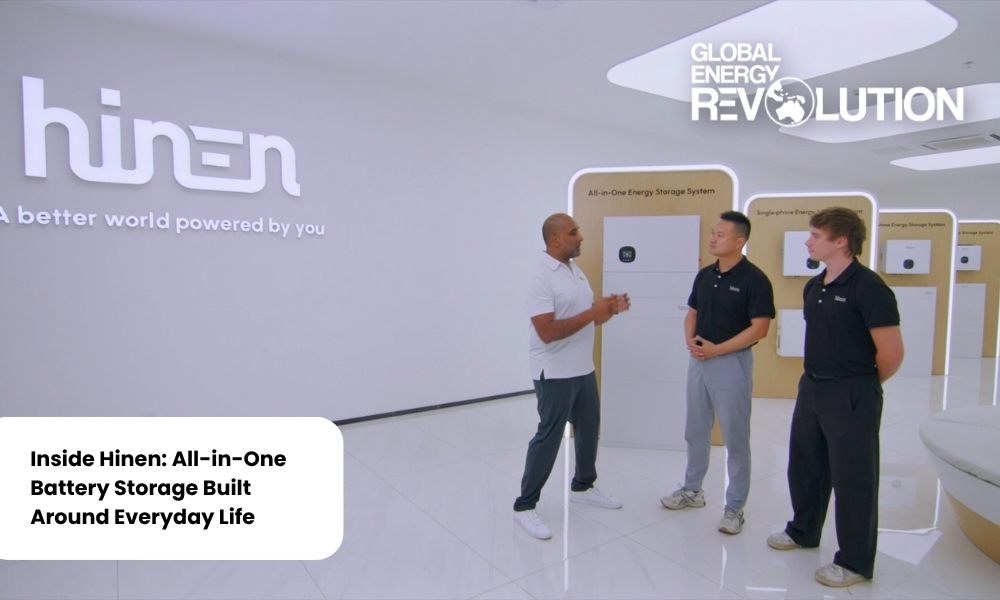
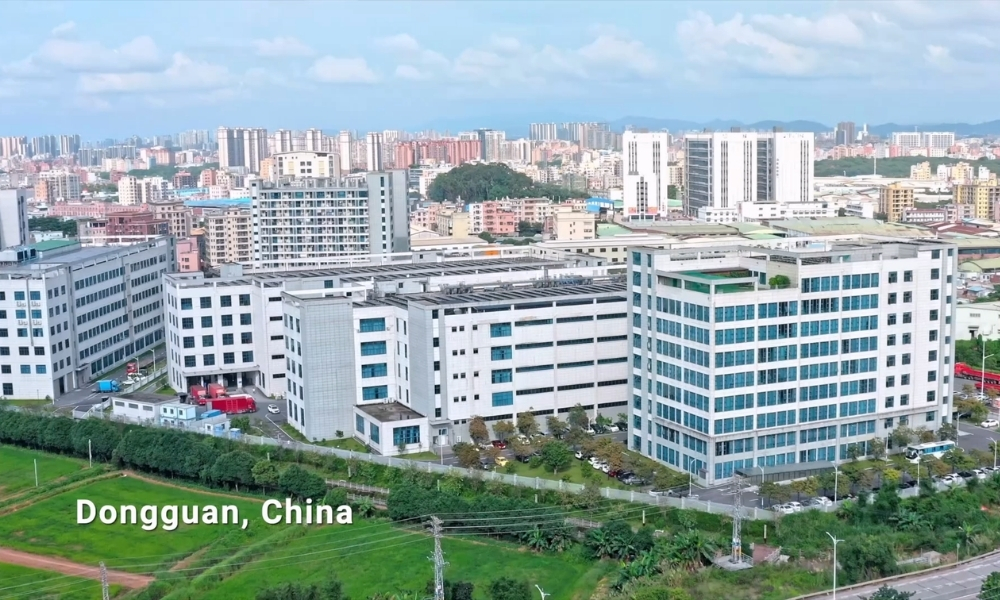
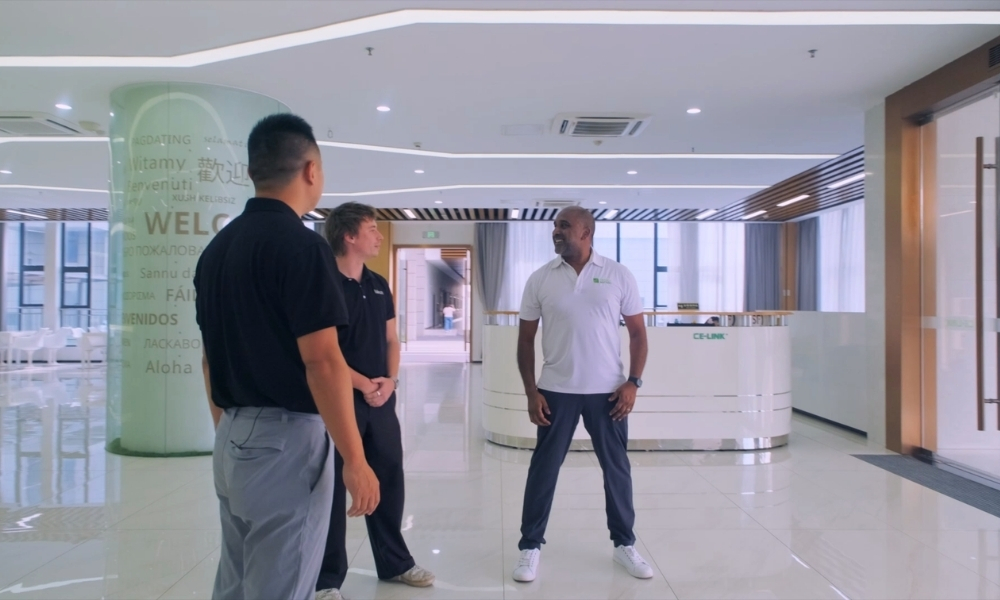
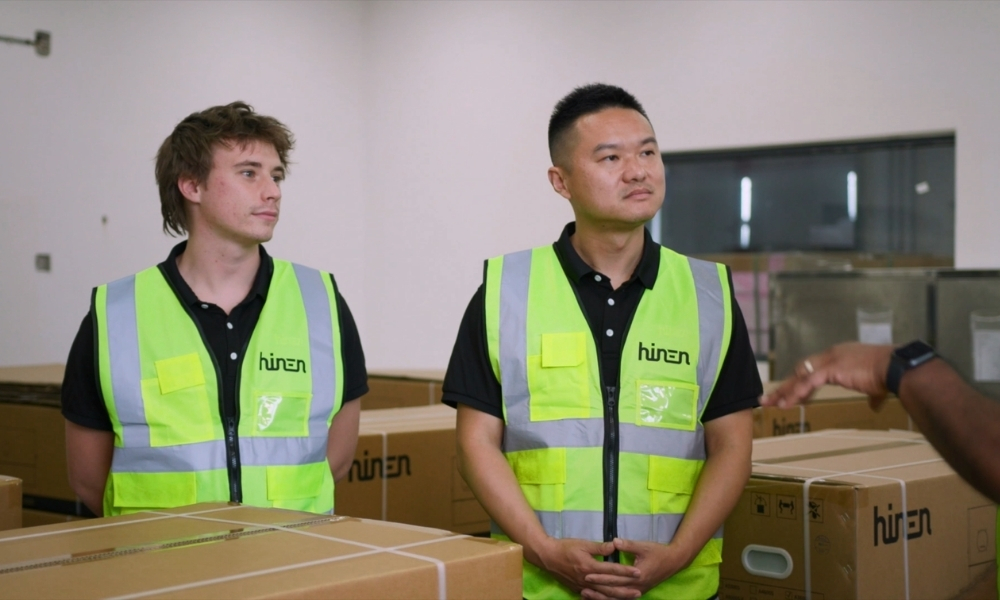
In Global Energy Revolution Season 2, Roshan visits Hinen’s manufacturing facilities in Dongguan, China, to find out.
Joining Steve Qui and Isaac Palmer, he explores the company’s all-in-one energy storage technology and follows the manufacturing process behind it.
The visit brings together design, affordability, and the detailed work happening before a battery reaches an Australian home.
For anyone considering solar and storage, it offers a useful look beyond the finished cabinet. Inside sits a system designed to make household energy work harder, long after the strongest sunshine has passed.
TL;DR: Hinen’s approach to home energy storage
- Hinen’s A Series combines the inverter, batteries, switching equipment, and battery management system within an integrated design.
- Single-phase and three-phase options suit different properties, with modular storage allowing configurations around household needs.
- Roshan’s factory visit reveals the assembly and testing behind the technology, including battery charging and discharging checks before dispatch.
Meeting Hinen in Dongguan
Dongguan is a major manufacturing centre, where production facilities supply products to customers around the world.
At Hinen, Roshan’s attention initially turns to the appearance of the equipment. That might seem a small detail for something designed to manage electricity. However, a home battery becomes part of the property. Its size, shape, and installation arrangement matter to the people living around it.
During his conversation with Steve Qui, Roshan also raises another important consideration: affordability.
Plenty of homeowners want greater control over electricity costs. The challenge is finding a suitable system within their budget. Steve explains that bringing design and manufacturing in-house forms part of Hinen’s approach to managing quality and cost.
The factory tour then gives viewers a closer look at what that involves.
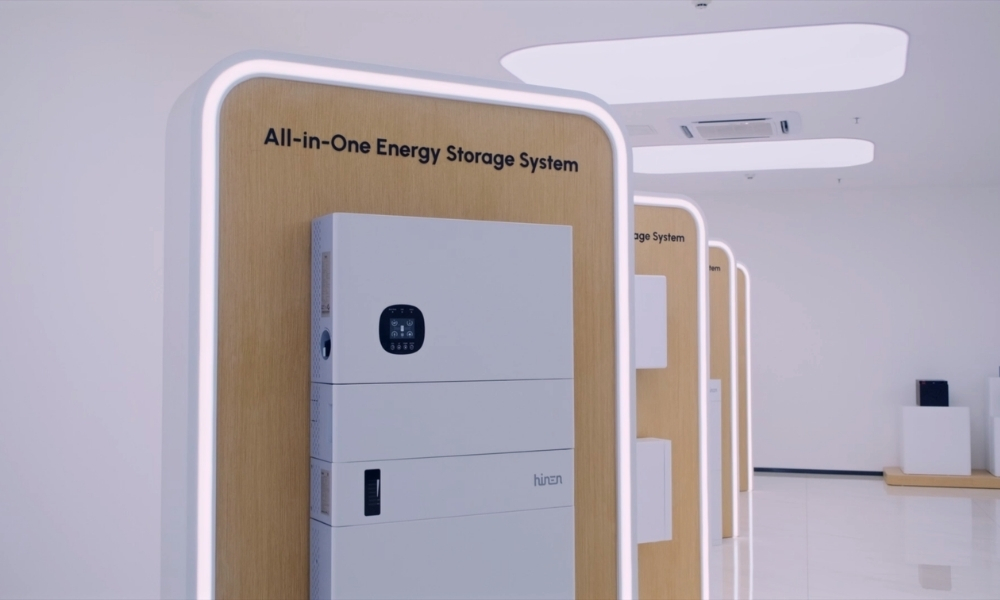
What is Hinen’s all-in-one battery system?
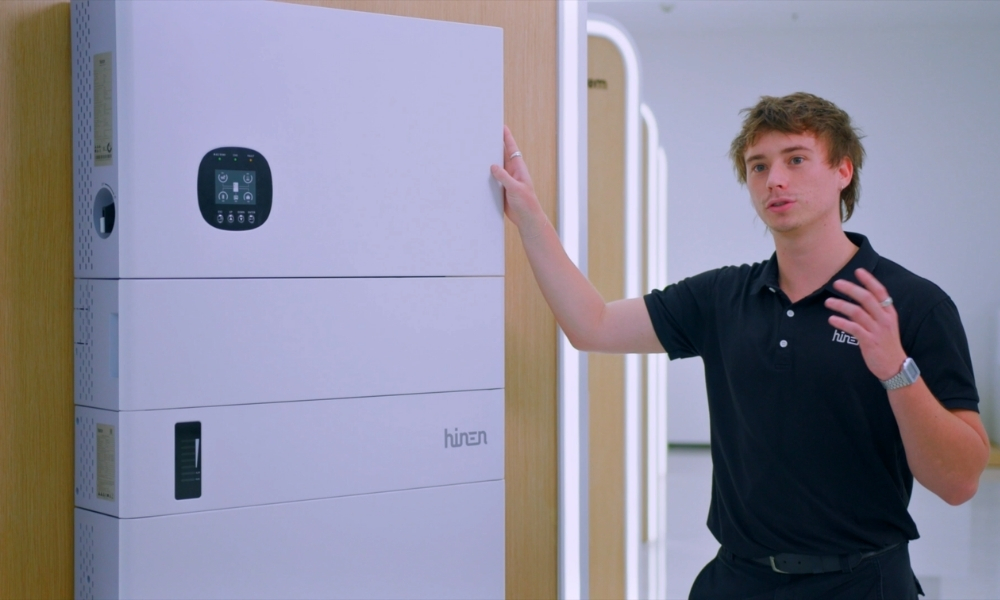
Hinen’s A Series is an integrated residential energy storage system combining a hybrid inverter, battery modules, switching equipment, and a battery management system.
These components work together to manage electricity generation, storage, and household supply. The stackable arrangement brings them into a coordinated installation, reducing the need for separate equipment and external connections.
Hinen offers the A Series in both single-phase and three-phase versions, with different power and storage configurations.
For homeowners, the appeal starts with simplicity. Instead of thinking about several separate products, you can assess a complete system designed to operate together.
That does not remove the need for careful planning. The installation still needs to suit the property, electricity consumption, and available space. It gives the installer an integrated platform to build that plan around.
What each component does
| Component | Role in the system |
| Hybrid inverter | Converts electricity and manages flows between solar, batteries, the home, and the grid |
| Battery modules | Store electricity for later use |
| Battery management system | Monitors battery operation and manages charging and discharging |
| Switching equipment | Supports the system’s connection and backup arrangements |
| Monitoring | Helps homeowners understand how their system operates |
Together, these parts help connect electricity generated during the day with household demand at other times. Solar can supply appliances while the sun is shining. Available surplus generation can charge the battery. Later, stored electricity can help run the home when solar production falls.
That is where storage becomes particularly relevant to busy families. The school run ends, dinner starts, and electricity consumption can continue well into the evening.
A closer look at the Hinen A Series range
Australian homes have different electrical supplies, roof layouts, and energy requirements.
Hinen’s A Series provides several options to reflect those differences.
| Model | Electrical supply | Inverter output range | Listed battery capacity |
| A Series H5S | Single-phase | 3.6 kW to 5 kW | 8.9 kWh to 17.8 kWh |
| A Series H10S | Single-phase | 8 kW to 10 kW | 8.9 kWh to 17.8 kWh |
| A Series H25T | Three-phase | 10 kW to 25 kW | 8.9 kWh to 26.7 kWh |
The choice starts with the home. A larger inverter may suit higher simultaneous demand. More battery capacity may support greater electricity consumption outside solar hours.
Those are different requirements, and both deserve attention. A household can have plenty of stored energy while still needing to manage how many large appliances operate together.
Get FREE Quotes for a Hinen System
The H10S: Solar management with room to work
The A Series H10S is a particularly interesting option for households wanting a higher-output single-phase system. It combines an 8 kW or 10 kW hybrid inverter with integrated battery storage.
Its four maximum power point trackers, known as MPPTs, give installers flexibility when designing compatible solar arrays. Separate trackers can help manage suitable groups of panels facing different directions or operating under different conditions.
The H10S also supports solar oversizing, with a maximum listed array input of 20 kW. This gives designers scope to assess a larger solar array alongside the inverter, subject to the model and connection requirements.
For homeowners, the benefit comes from a layout that works with their roof and electricity use. More panels can create additional generation opportunities across the day. The useful result depends on orientation, weather, consumption, and available storage.
The strongest design makes those parts work together.
Whole-home backup: Keeping everyday essentials running
During the episode, Isaac Palmer explains the backup capability available within Hinen’s single-phase all-in-one system. For households, this is often one of the most appealing reasons to consider storage.
A blackout can interrupt much more than television. Refrigeration, communications, lighting, and other household equipment may all depend on electricity. A properly configured battery system can provide another source of power when the grid fails.
The H10S includes a built-in changeover switch and a backup transfer time of 10 milliseconds or less. It also supports generator integration and load-management functions. Those features create useful options for system design.
The installer still needs to account for the appliances involved, their starting requirements, and the available battery charge.
What does whole-home backup mean?
Whole-home backup describes an arrangement capable of supplying the home’s circuits through the backup system. It does not mean every appliance can operate simultaneously without limits.
An oven, air conditioner, hot-water system, and other large loads can create substantial demand when used together. Available inverter output and battery capability determine what the system can support.
Expert tip: Ask your installer to explain which appliances can run together during an outage.
That conversation is far more useful than simply seeing “backup included” on a quote.
It also helps establish the battery reserve you want available when an interruption occurs.
Already have solar? Hinen has an option for that
Adding storage does not always require replacing an existing solar inverter.
Hinen’s A Series AC5S is an AC-coupled storage option designed for retrofitting alongside existing solar equipment. It combines battery storage with the equipment needed to charge and discharge it on the AC side of the installation.
The system supports third-party solar inverters, app-based energy tracking, and backup operation in suitable configurations. This can be useful for a household with a functioning solar system that wants to add storage.
A new solar-and-battery installation may suit a hybrid arrangement. An existing installation may benefit from retaining equipment already doing its job.
The appropriate approach depends on the inverter, solar array, switchboard, and household goals. An installer should assess those details before recommending either path.
Following the manufacturing process
The factory visit brings the conversation back to the equipment itself. Roshan watches the assembly process and sees the attention given to individual components.
Isaac explains the work involved in positioning electronics, making connections, and checking the equipment as production progresses. These steps can look small compared with the finished system.
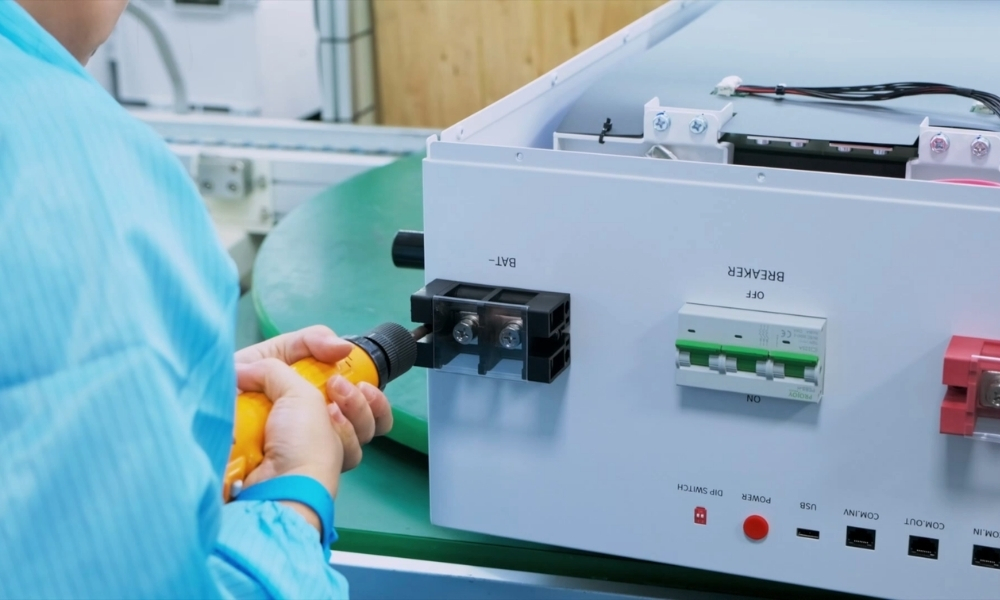
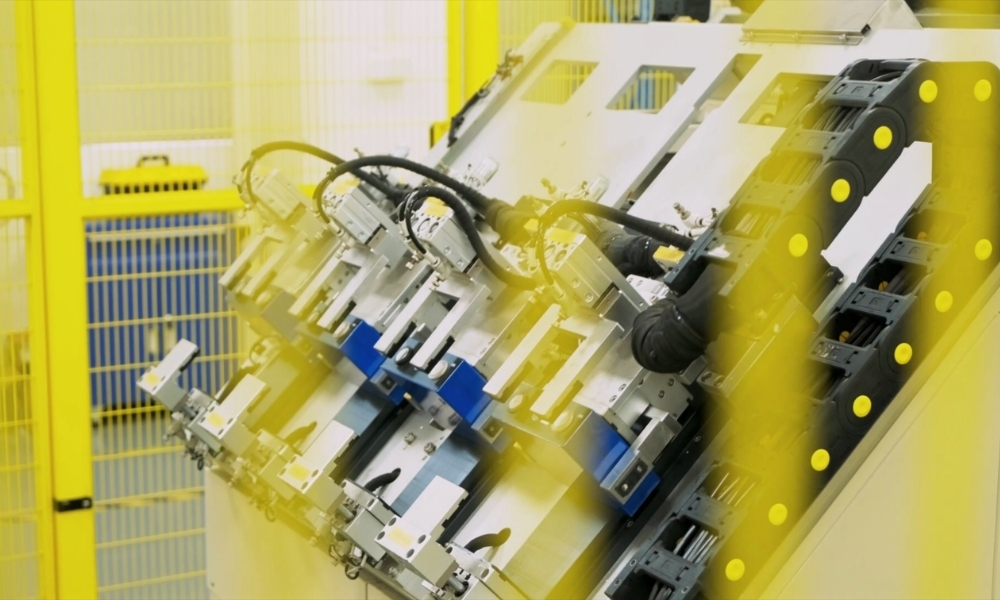
Their importance becomes clearer when you consider what the product will eventually manage: electricity moving between a home, its solar panels, and its batteries. Every component contributes to that operation.
The tour also explores battery assembly, including the protective casing and battery management system. The battery management system plays a central role in overseeing charging and discharging.
It helps coordinate the cells so the battery operates within its intended limits.
For viewers, seeing that process makes an otherwise sealed product easier to understand.
Six hours of charging and discharging tests
One of the most revealing parts of the visit comes after assembly. Isaac describes an ageing test involving approximately six hours of charging and discharging, with the team monitoring battery operation. It provides a practical look at how the batteries are exercised before leaving the factory.
Roshan’s reaction captures the sequence well: one test follows another.
For a homeowner, the factory tour adds context to a purchase that can otherwise revolve around capacity, price, and warranty. Manufacturing and testing matter alongside those considerations. So do the installation, commissioning, and support provided once the system reaches the property.
A good outcome needs the full chain to work.
Affordability with a purpose
During his conversation with Steve, Roshan raises the tension many households face. People can see the appeal of battery storage, but the upfront cost still matters.
Hinen’s approach includes controlling more of the design and manufacturing process in-house.
The intention is to improve production efficiency while managing product quality and cost. For customers, affordability should be assessed across the complete installation. That includes the inverter, batteries, electrical work, backup arrangement, commissioning, and ongoing support.
A low advertised battery price may not describe the full project.
A useful quote explains what the system will do for your household and what is included to make it happen.
That makes comparisons clearer and helps avoid surprises later.
Get FREE Quotes for a Hinen System
Making a battery work for your household
The best starting point is your electricity use. Consider when the home draws power, how much solar it produces, and which future changes could affect demand.
Electric heating, a heat pump hot-water system, or an electric vehicle can all change the picture.
Then consider your priorities. Some households want to use more solar after sunset. Others place greater value on backup or managing electricity purchases across different times.
Those goals influence the configuration.
Questions to ask before choosing a system
- How much electricity do we typically use outside solar hours?
- How much surplus solar is available to charge the battery?
- What inverter output suits our appliances?
- Which backup functions will the installation include?
- What monitoring and after-sales support will we receive?
The answers help turn product specifications into something practical.
They also make it easier to understand why an installer recommends a particular system.
A factory visit that brings energy closer to home
Towards the end of the tour, Roshan sees finished equipment heading to different international markets. It is a reminder that the products made in Dongguan will eventually become part of everyday life elsewhere.
They will help power kitchens, living rooms, and household routines.
For Australian homeowners, Hinen’s all-in-one approach brings several useful ideas together: coordinated equipment, modular storage, and options for different properties.
The visit with Steve Qui and Isaac Palmer shows the work behind that approach. From electronics assembly to battery testing, the technology develops through people applying their skills at each stage.
Its purpose becomes clear when it reaches the home. The sun sets. Family life carries on. Stored energy gets to work.
Explore Hinen solar and battery options
Thinking about battery storage for your home? Energy Matters can help you explore solar and battery options and connect with installers who can assess your property.
Compare proposals around your electricity consumption, existing equipment, backup priorities, and future plans.
Request free solar and battery quotes through Energy Matters to take the next step.
Watch the Hinen factory visit in Global Energy Revolution Season 2 to meet Steve Qui and Isaac Palmer and see the technology coming together.
Key takeaways
- Hinen’s A Series integrates the main storage components, creating a coordinated inverter and battery system.
- Single-phase and three-phase options suit different homes, with the design matched to the property’s electrical supply.
- Backup needs careful planning, including appliance demand and available battery charge.
- AC-coupled storage offers a retrofit pathway, potentially retaining an existing solar inverter.
- Manufacturing, installation, and support all contribute to performance, alongside the equipment itself.
Frequently asked questions
What is the Hinen A Series all-in-one system?
The Hinen A Series combines a hybrid inverter, battery modules, switching equipment, and a battery management system. Its integrated design brings these components into a coordinated installation. Single-phase and three-phase models provide options for different properties, with configurations selected around household electricity use and installation requirements.
Can a Hinen battery power my home during a blackout?
Suitable Hinen configurations provide backup power during grid outages. The appliances supported depend on the inverter output, battery capability, available charge, and installation design. Whole-home backup still requires attention to simultaneous demand, particularly when operating larger appliances such as air conditioners, ovens, and hot-water systems.
Can I add Hinen storage to an existing solar system?
Hinen’s AC5S provides an AC-coupled option for adding storage alongside an existing solar installation. It supports third-party solar inverters in suitable configurations. An installer should assess your existing equipment, switchboard, and energy use to determine whether retaining your solar inverter is the most suitable approach.
What happens during the Hinen factory visit?
Roshan meets Steve Qui and Isaac Palmer at Hinen’s facilities in Dongguan, China. The segment explores the all-in-one system, component assembly, battery management, and testing. Viewers also see batteries undergoing charging and discharging checks and hear how in-house manufacturing supports Hinen’s approach to quality and affordability.
How do I choose the right Hinen battery size?
Start with your electricity consumption, particularly outside solar hours, and the surplus generation available for charging. Consider backup priorities and future appliances. Your installer should assess battery capacity and inverter output together, explaining how the proposed configuration will support your household throughout the day.