

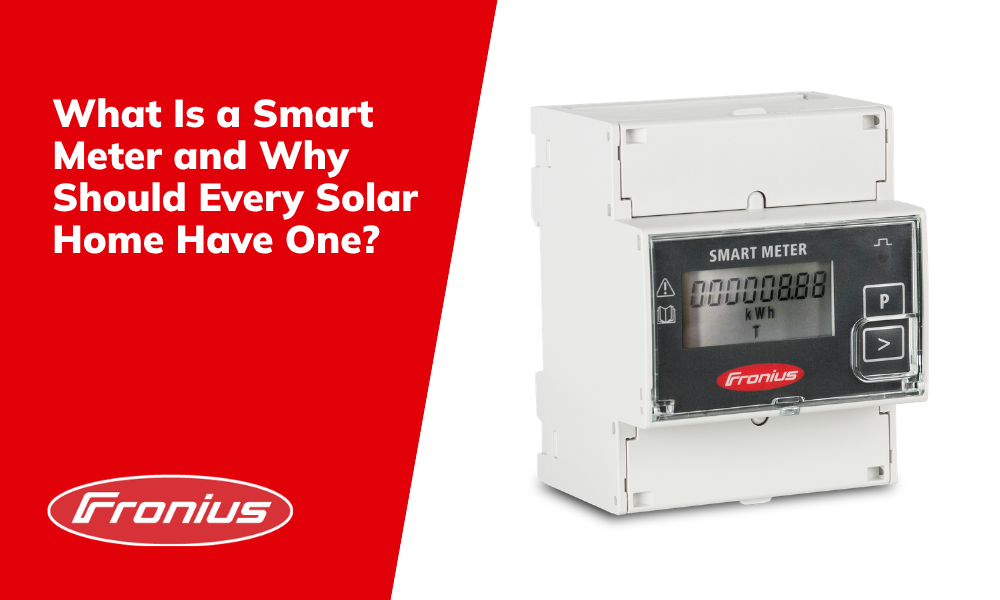
When homeowners install solar, they often focus on panels, inverters, and batteries. Yet one of the most important components of a modern energy system is frequently overlooked: the Fronius Smart Meter.
A smart meter provides the intelligence behind a truly connected solar home. It measures exactly how much electricity is being generated, consumed, imported, and exported, giving homeowners a complete picture of their energy usage.
Even if you do not currently have a battery or electric vehicle, a Fronius Smart Meter can help you better understand your household consumption, improve solar self-consumption, and future-proof your home for emerging energy technologies.
Because generating solar energy is only half the story. Understanding where that energy goes is where the real value begins.
What is a smart meter?
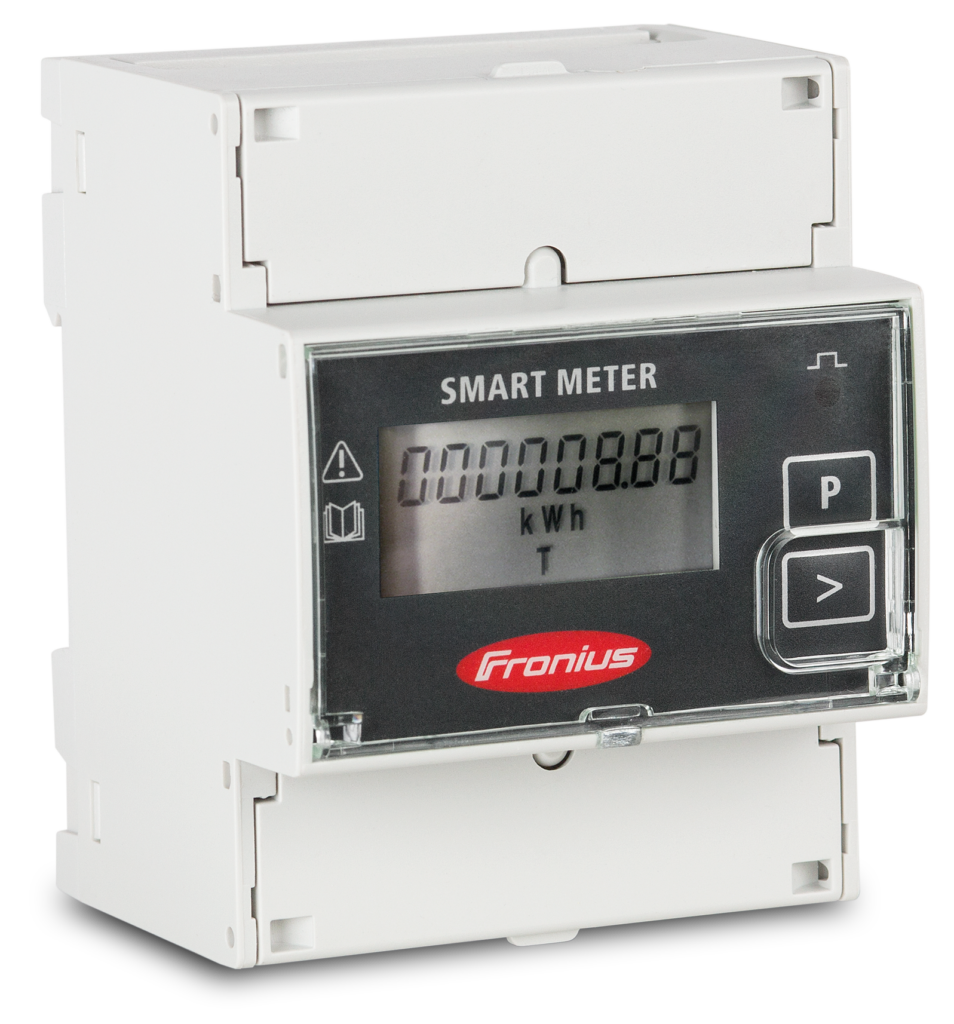
A solar smart meter is an intelligent electricity meter that measures energy flows throughout the home.
Unlike a traditional utility meter, a smart meter can provide detailed information about:
- Solar generation
- Household consumption
- Grid imports
- Grid exports
- Individual energy loads
- Battery charging and discharging
The Fronius Smart Meter is a bidirectional meter, meaning it can measure electricity flowing both to and from the grid. This allows homeowners to visualise, control, and optimise their energy use.
Get FREE Quotes for a Fronius system
How does a Fronius smart meter work?
A smart meter continuously measures energy flows and communicates this information to the inverter and monitoring platform. This data can then be displayed through systems such as Fronius Solar.web.
Instead of simply seeing how much solar your system produced today, you can also understand:
- How much energy your home consumed
- How much electricity was exported
- How much power was imported from the grid
- When your home uses the most energy
- How effectively your solar system is performing
This creates a complete picture of household energy usage.
Why is a smart meter important?
A solar system without a smart meter can still generate electricity. However, it cannot provide detailed energy insights. This is similar to driving a car without a fuel gauge.
You know it is working, but you cannot fully understand its performance.
Better understanding of energy usage
Many homeowners are surprised when they first install a smart meter.
They often discover that:
- Certain appliances use far more energy than expected.
- Electricity usage spikes during particular times of the day.
- Solar exports are much higher than anticipated.
- Night-time consumption is larger than expected.
This information can help households make smarter energy decisions.
Optimising solar self-consumption
Feed-in tariffs across Australia have fallen significantly over recent years. This means that maximising self-consumption has become increasingly important.
A smart meter helps homeowners understand:
- When excess solar is available
- Which appliances should run during solar production periods
- How much electricity is being exported unnecessarily
The result can be lower electricity bills and better returns from a solar investment.
Essential for batteries and energy management
For battery systems, a smart meter is often essential.
The battery needs accurate information regarding:
- Household consumption
- Solar production
- Grid imports and exports
This data allows the system to intelligently decide:
- When to charge
- When to discharge
- How much energy should be reserved for backup
Without accurate measurement data, battery optimisation becomes extremely difficult. This is why smart meters are commonly installed alongside home battery systems.
Some states require smart meters
Requirements vary across Australia. Certain DNSPs and state regulations require smart meters or export monitoring equipment as part of solar and battery installations.
Other jurisdictions may not mandate them. However, regardless of regulatory requirements, every solar home can benefit from installing a smart meter.
As solar systems become increasingly sophisticated, energy visibility is becoming just as important as generation itself.
The Fronius Smart Meter provides valuable insights
The Fronius Smart Meter was specifically designed to work seamlessly within the Fronius ecosystem. It allows homeowners to visualise, control, and optimise energy flows through the inverter and Solar.web platform.
Available in both residential and commercial versions, the Fronius Smart Meter supports a wide range of applications.
Real-time monitoring
Homeowners can monitor:
- Current solar generation
- Household consumption
- Grid imports
- Grid exports
- Historical trends
- System performance
This information can be viewed remotely, allowing homeowners to better understand how their energy system is operating.
Future-proofing your home
The modern home is becoming increasingly electrified. Over the coming years, many households will likely add:
- Home batteries
- Electric vehicles
- Heat pumps
- Induction cooking
- Pool heating
- Smart appliances
Installing a smart meter today helps prepare for these future technologies. Rather than adding monitoring later, homeowners can build the foundations of a smart energy ecosystem from the beginning.
Monitoring specific appliances with secondary smart meters
One of the lesser-known benefits of the Fronius ecosystem is the ability to install additional smart meters. Secondary smart meters can be used to monitor individual loads within the home. This allows homeowners to gain detailed insights into specific energy consumers.
Examples may include:
- Electric vehicle chargers
- Pool pumps
- Heat pumps
- Air conditioning systems
- Separate buildings or granny flats
- Commercial equipment
This additional level of monitoring can help homeowners identify opportunities to reduce consumption and improve energy efficiency.
Understanding where energy is being used
Many households know how much electricity they use. Far fewer know where it is being used. Secondary metering can provide this missing information.
This level of detail becomes increasingly valuable as homes continue to electrify.
Supporting intelligent energy management
Smart meters are becoming increasingly important as energy management technologies evolve.
Devices such as:
- Home batteries
- EV chargers
- Hot water controllers
- Energy management systems
These all rely on accurate data. The Fronius Smart Meter acts as the information hub that allows these technologies to work together. Good data leads to better decisions.
Better decisions lead to lower electricity bills and greater energy independence.
Why every solar home should consider a smart meter
Even if you do not currently have a battery, a smart meter remains a worthwhile investment. Benefits include:
- Better visibility: Understand exactly how your home uses electricity.
- Improved system monitoring: Gain deeper insights into solar system performance.
- Greater self-consumption: Identify opportunities to use more of your own solar energy.
- Future battery readiness: Prepare your home for future battery installation.
- Support future technologies: Enable smarter EV charging and home energy management.
- Identify energy wastage: Discover which appliances are driving electricity bills.
A smart meter transforms a solar system from a simple generation system into an intelligent energy management platform.
Frequently asked questions
What does a smart meter do?
A smart meter measures electricity imports, exports, household consumption, and solar generation, providing detailed energy insights.
Do I need a smart meter if I do not have a battery?
No, but it is highly recommended. A smart meter provides significantly better monitoring and prepares your home for future technologies.
Can a smart meter reduce my electricity bill?
Indirectly, yes. By understanding energy usage patterns, homeowners can improve self-consumption and reduce unnecessary grid imports.
Can I monitor specific appliances?
Yes. Within the Fronius ecosystem, additional smart meters can be installed to monitor individual loads and energy-consuming devices.
Is a smart meter required in Australia?
Requirements vary depending on state regulations and DNSP requirements. However, all solar homes can benefit from having one installed.
Key takeaways
- A smart meter measures imports, exports, generation, and consumption.
- It provides the data needed for intelligent energy management.
- Batteries and advanced energy systems often rely on smart meter information.
- Every solar home can benefit from improved monitoring.
- Secondary smart meters can provide appliance-level insights.
- Smart meters help future-proof homes for batteries and EV charging.
- The Fronius Smart Meter integrates seamlessly into the Fronius energy ecosystem.
Because generating solar energy is only part of the equation. Understanding where that energy goes is where the real value begins.
Take a look inside the Fronius ecosystem in our Fronius Explore Series.