




A persistent challenge today is water scarcity. Australia has a history of droughts and increasing pressure on water resources due to climate change and population growth. The need for sustainable water management is more critical than ever.
On this page


Did you know Energy Matters is Australia’s largest renewable news, blog and educational resource? Subscribe to Energy Matters’ weekly newsletter and keep updated even with incentives, rebates and recommended solar product offers.
The importance of water conservation
The country experiences a unique set of water challenges. Rainfall patterns are highly variable, with some regions receiving abundant rainfall while others endure prolonged periods of drought. This natural variability is further exacerbated by the increasing impacts of climate change, which is projected to alter rainfall patterns, increase the frequency and intensity of droughts, and raise evaporation rates.
The consequences of water scarcity
Rainfall patterns in the nation are highly variable, with some regions receiving abundant rainfall while others endure prolonged periods of drought. This natural variability is further exacerbated by the increasing impacts of climate change, which is projected to alter rainfall patterns, increase the frequency and intensity of droughts, and raise evaporation rates.
The consequences of water scarcity are far-reaching. Environmentally, it puts stress on already fragile ecosystems, threatening the survival of native flora and fauna. Rivers, wetlands, and groundwater systems are all vulnerable to depletion, impacting biodiversity and overall ecosystem health. Economically, water scarcity affects key industries such as agriculture, which relies heavily on irrigation. Reduced water availability can lead to decreased crop yields, impacting food security and agricultural exports. Urban water security is also a major concern, with cities facing the challenge of providing adequate water supplies for growing populations. Water restrictions, rising water costs, and the potential for supply disruptions are all realities we face.
In essence, water conservation is a necessity. Proactive water management strategies at all levels are important for mitigating the impacts of water scarcity and ensuring a sustainable future for the country.
How it works
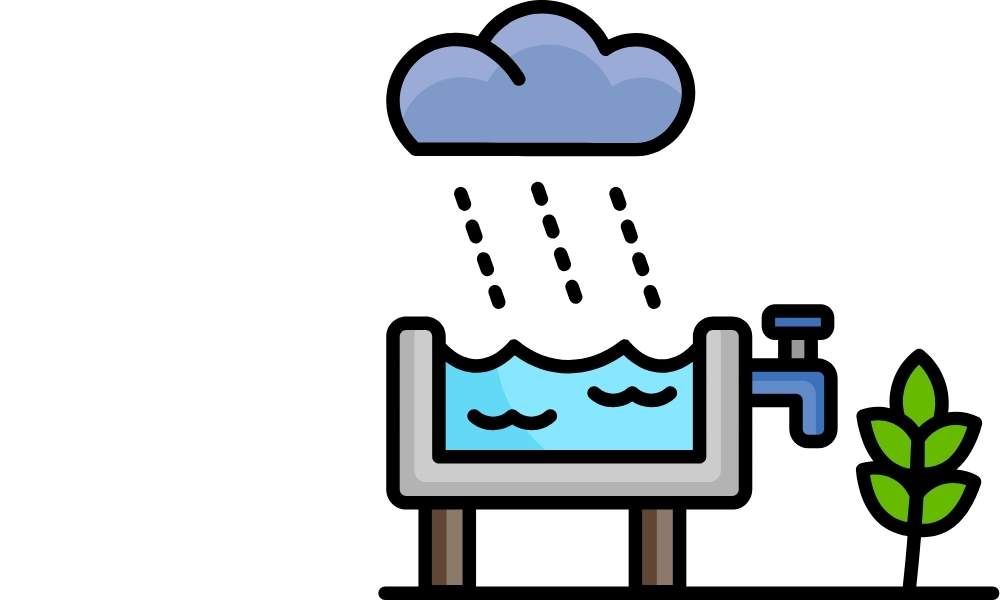
A typical rainwater harvesting system involves several key components:
- Catchment area: The roof of a building is the most common surface used to collect rainwater. The size and material of the roof influence the amount and quality of water that can be harvested.
- Gutters and downpipes: These components channel the rainwater from the roof to the storage tank. Proper design and maintenance are essential to ensure efficient water flow and prevent blockages.
- First flush diverters: These devices divert the initial runoff of rainwater, which may contain contaminants such as leaves, bird droppings, and accumulated dust, away from the storage tank, improving water quality.
- Storage tank: Rainwater is stored in a tank, which can be made of various materials, including polyethene, steel, or concrete. The size of the tank depends on factors such as rainfall patterns, roof area, and intended water usage.
- Filtration: This ranges from simple leap filters to more advanced sediment and carbon filters, which remove debris and impurities from the harvested rainwater.
- Pump and distribution system: In many cases, a pump is required to distribute the stored rainwater for various uses, such as garden irrigation, toilet flushing, and laundry.
Better lighting quality
Moving beyond energy efficiency and environmental considerations, LED technology also provides significant enhancements to lighting quality.
- Variable colour temperatures: LED lights offer a wide range of colour temperatures, measured in Kelvin (K). This allows for precise control over the ambiance of a space. Warmer colour temperatures create a cosy atmosphere, while cooler temperatures provide a brighter, more energising effect. His versatility makes LEDs suitable for diverse applications, from residential living spaces to commercial environments.
- Instant illumination: Unlike some traditional lighting solutions that require a warm-up period, LEDs provide instant illumination upon activation. This eliminates delays and contributes to improved responsiveness, particularly in settings where immediate lighting is essential.
- Durability and resilience: LDs are inherently robust, exhibiting resistance to shock, vibration, and temperature fluctuations. This durability makes them suitable for challenging environments, including outdoor installations and industrial settings.
- Directional light emission: LEDs emit light in a directional manner, reducing the need for reflectors and diffusers. This focused light output contributes to improved efficiency and allows for precise control over illumination.
- Reduced heat generation: Compared to incandescent bulbs, LEDs produce significantly less heat. This enhances safety and reduces the load on air conditioning systems, leading to further energy savings.
Uses of harvested rainwater
Harvested rainwater is commonly used for non-potable purposes, including:
- Garden and lawn irrigation: Rainwater is ideal for watering plants as it is naturally soft and free from chemicals like chlorine, which can be present in mains water.
- Toilet flushing: Using rainwater to flush toilets can significantly reduce household water consumption.
- Laundry: Washing clothes with rainwater can reduce the need for detergents as it is softer than mains water.
- Car washing and outdoor cleaning: Rainwater can be used for various outdoor cleaning tasks, such as washing cars, driveways, and patios.
Benefits of rainwater harvesting
Rainwater harvesting offers a multitude of benefits for households, communities, and the environment. Some of the key advantages are:
- Water conservation: By capturing and using rainwater, dependence on mains water supplies is reduced, helping to conserve this precious resource, especially during periods of drought or water restrictions.
- Cost savings: Rainwater harvesting can lead to significant savings on water bills, as less water is purchased from municipal suppliers.
- Environmental benefits: Reducing reliance on mains water can lower the energy required for water treatment and distribution, decreasing greenhouse gas emissions. Rainwater harvesting can also mitigate stormwater runoff, reducing erosion, flooding, and pollution of waterways.
- Improved water quality: Rainwater is naturally soft and free from chemicals like chlorine and fluoride, making it ideal for various uses, including garden irrigation and laundry.
- Drought resilience: Rainwater harvesting provides a reliable alternative water source during dry periods, enhancing water security and reducing the impact of water shortages.
- Reduced pressure on infrastructure: By using rainwater, the strain on centralised water treatment and distribution systems is lessened, potentially deferring the need for costly infrastructure upgrades.
- Increased self-sufficiency: This empowers households and communities to become more self-reliant in their water supply, reducing vulnerability to external factors such as water restrictions or supply disruptions.
Integrating rainwater harvesting and water-saving fixtures
Water-saving fixtures, such as low-flow showerheads, dual-flush toilets, and efficient washing machines, reduce the demand for water within a household or building. When combined with rainwater harvesting, this approach maximises the use of collected rainwater and minimises reliance on mains water supplies.
Here’s how this integration can be beneficial:
- Synergistic water conservation: Combining reduced demand with increased supply leads to a significantly greater reduction in reliance on mains water than either approach could achieve alone. This is important during droughts or water restrictions, where the integrated system provides a more resilient and reliable water source. For example, a household might use 40% less mains water by combining a rainwater tank with Water Efficiency Labelling Scheme (WELS) rated fixtures.
- Optimised and extended rainwater use: Water-saving fixtures ensure that collected rainwater is used with maximum efficiency, prolonging the storage capacity of rainwater tanks and minimising water from overflow. This lets homeowners extend their harvested rainwater over longer periods, reducing the need for mains water top-up.
- Compounded cost savings: The integration leads to substantially lower water bills compared to implementing either approach in isolation. Homeowners save both by minimising the volume of mains water needed and by maximising the cost-effectiveness of their rainwater harvesting system.
- Enhanced environmental impact reduction: By simultaneously minimising water demand and reliance on energy-intensive water treatment and distribution, the combined approach yields significantly greater reductions in greenhouse gas emissions, promotes the preservation of natural water sources, and lessens the strain on aquatic ecosystems. This could translate to a measurable reduction in a household’s carbon footprint, directly attributable to decreased energy consumption for water treatment and transport.
- Increased system efficiency and longevity: Water-saving fixtures reduce the draw on the rainwater harvesting system, leading to less frequent pump cycles, reduced wear and tear, and potentially prolonged system lifespan. This also minimises the energy consumption associated with the rainwater harvesting system’s operation.
In essence, water conservation is not merely a choice but a necessity, particularly in a nation like Australia that faces the persistent challenge of water scarcity. The combination of variable rainfall patterns, the increasing impacts of climate change, and growing population pressures underscores the critical need for proactive water management strategies at all levels. By implementing such strategies, we can mitigate the far-reaching environmental and economic consequences of water scarcity and ensure a sustainable future for the country.
Energy Matters has been in the solar industry since 2005 and has helped over 40,000 Australian households in their journey to energy independence.
Complete our quick Solar Quote Quiz to receive up to 3 FREE solar quotes from trusted local installers – it’ll only take you a few minutes and is completely obligation-free.