





Every bite we take has an impact on the planet. From the farm to our fork, the journey of our food contributes to a complex web of environmental pressures, including greenhouse gas emissions. For Australians, our dietary habits—especially our significant consumption of meat—play a substantial role in our carbon footprint.
This guide from Energy Matters will explore how reducing meat consumption and adopting sustainable diet choices can be a powerful way to reduce your environmental impact. It’s time to act, not just for your health, but for the health of our planet. Let’s make every meal count.

On this page




Did you know Energy Matters is Australia’s largest renewable news, blog and educational resource? Subscribe to Energy Matters’ weekly newsletter and keep updated even with incentives, rebates and recommended solar product offers.
Australia's food system and greenhouse gas emissions
The food we eat accounts for a significant portion of global greenhouse gas (GHG) emissions. In Australia, the agriculture sector is a major contributor to national emissions. A 2024 report from the Australian Government’s Department of Climate Change, Energy, the Environment and Water (DCCEEW) noted that agriculture contributed to national emissions. This is due to a variety of factors, including land clearing for farming, fertiliser use, and livestock management.
Why reducing meat matters for your carbon footprint
Meat & Livestock Australia (MLA) reports that Australians are among the world’s largest consumers of red meat. Specifically, in 2023, per capita beef consumption averaged 23.4 kg, sheepmeat (lamb/mutton) was 7.4 kg, with Australia ranking 3rd for beef and 1st for sheepmeat globally.
Use Energy Matters’ carbon footprint calculator to calculate your household and business’s direct emissions.
Red meat's role in the carbon footprint
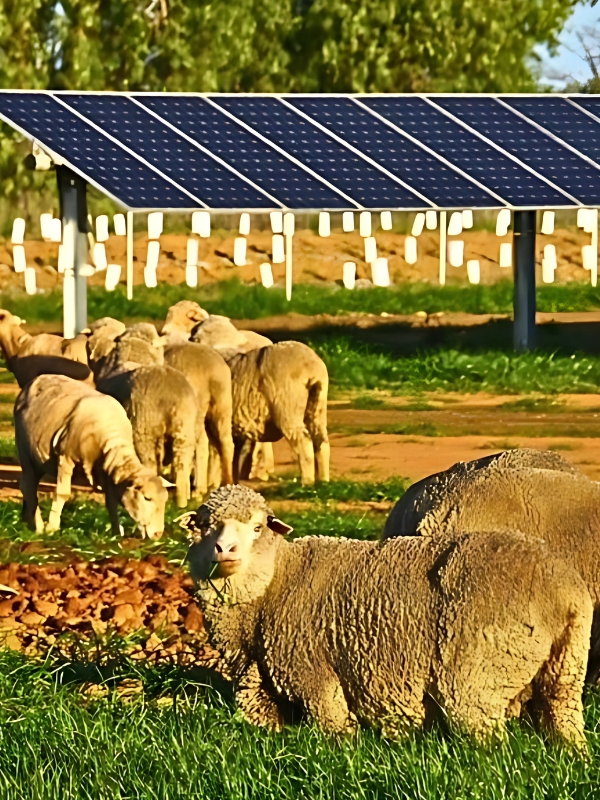
Among all food groups, red meat—particularly beef and lamb—has the highest carbon footprint. This is because cattle and sheep are ruminant animals that produce methane, a potent greenhouse gas, as part of their digestive process. The land required for solar grazing and feed production also contributes significantly to the environmental impact. Studies show that in the average Australian diet, red meat and “non-core” foods are the top two contributors to diet-related GHG emissions.
Image and source: Clean Energy Regulator – At the Numurkah Solar Farm in Shepparton, Victoria, sheep graze in the middle of solar panels.
Despite this, the Australian red meat industry has made strides in recent years, resulting in a reduction in net GHG emissions since 2005. This progress is a result of innovations in feeding practices, improved genetics, and better land management to increase carbon storage in the soil. However, even with these improvements, the lowest-carbon beef and lamb still have a higher carbon footprint than most plant-based foods.
Australian Agriculture’s response to climate challenges
The red meat industry in Australia is taking action to reduce its emissions, aiming for carbon neutrality by 2030.
Between 2005 and 2021, net GHG emissions from red meat dropped by 78.56%, thanks to improved land use practices and vegetation regrowth.
The National Livestock Methane Program (2012–2015) helped reduce beef cattle methane emissions by around 24% through targeted R&D.
Sustainable diet choices Australians can embrace
Here are practical, eco-friendly eating habits that align with sustainable diet choices:

- Swap red meat for poultry or plant-based proteins: A weekly swap of beef for chicken or plant-based food reduces household emissions by up to six tonnes annually.
- Adopt part-time meat-free days: Going Meatless Monday—or choosing meat-free options one day a week—lowers your climate footprint while helping animals and your health.
- Embrace the planetary health diet: This model recommends half a plate of plants and whole grains, plus modest meat/dairy; shown to reduce GHG emissions while benefiting health.
- Minimising food waste is key
Food waste is a massive problem in Australia. The 2021 National Food Waste Strategy Feasibility Study revealed that Australians waste around 7.6 million tonnes of food annually, costing the economy $36.6 billion. This waste accounts for about 3% of Australia’s annual greenhouse gas emissions. When food ends up in a landfill, it decomposes and releases methane, which is a greenhouse gas even more potent than carbon dioxide.
Here are some simple steps to reduce food waste:
- Plan your meals: This helps you buy only what you need and avoid over-purchasing.
- Store food correctly: Proper storage extends the shelf life of fresh produce.
- Embrace leftovers: Get creative with leftovers to create new meals for the next day.
- Compost your scraps: If food does go to waste, composting it at home stops it from ending up in a landfill. Learn more about how to set up a compost bin for your home in our comprehensive guide.

Summary table – Actions vs. Impact
Action | Approximate emissions reduction |
Weekly swap: beef → chicken | ~2 tonnes CO₂/year |
Weekly swap: beef → plant-based protein | ~2.5 tonnes CO₂/year |
Adopt a meat-free day per week | Variable: adds up across households |
Reduce food waste | Significant indirect emissions savings |
Sustainable protein sources
Reducing your reliance on red meat doesn’t mean you have to sacrifice protein. A wide variety of plant-based protein sources can easily replace meat in your diet. These include:
- Legumes: Lentils, chickpeas, and beans are fantastic sources of protein and fibre with a very low environmental impact.
- Nuts and seeds: Almonds, walnuts, and chia seeds are packed with nutrients and can be incorporated into many meals.
- Tofu and tempeh: These soy-based products are versatile and excellent meat substitutes.
- Grains: Quinoa and other whole grains also provide a good source of plant-based protein.
By diversifying your protein sources, you can ensure you’re getting a balanced diet while also reducing your environmental footprint.
Beyond meat: Other eco-friendly eating habits
While reducing meat is crucial, adopting truly sustainable diet choices means looking at the entire food system. Other powerful, eco-friendly eating habits can further diminish your carbon footprint. These changes are easy to implement and have a significant collective impact.
- Choose local and seasonal produce, reducing transport-related emissions and promoting sustainable agriculture.
- Support transparency, advocating for front-of-pack emissions labels to combat greenwashing.
- Educate others, sharing simple swaps and facts to inspire communal action.
Buying local and in-season
The distance food travels from the farm to your plate, known as “food miles,” also contributes to its carbon footprint. Choosing locally sourced, in-season produce can significantly reduce this impact. This supports local farmers and communities while minimising the emissions associated with long-distance transportation, refrigeration, and packaging. Visiting a local farmers’ market is an excellent way to connect with the source of your food and make a more sustainable choice.
Limiting discretionary and processed foods
Discretionary foods—those high in saturated fat, added sugar, and salt—are not only detrimental to our health but also have a significant environmental footprint. These items, such as cakes, biscuits, and sweetened drinks, account for a substantial portion of diet-related emissions. Their production often involves energy-intensive processing, packaging, and transportation. By limiting your consumption of these foods, you’ll improve your health and support more sustainable food production systems.


The impact of reducing meat consumption
Making a conscious effort to reduce the carbon footprint is one of the most effective personal actions you can take. Shifting away from a meat-heavy diet to a more plant-rich one can lead to a substantial decrease in your emissions. This is not about becoming a strict vegetarian or vegan overnight but making incremental changes that add up.
A typical Australian diet consistent with the Australian Dietary Guidelines (ADG) has been shown to have a lower GHG emissions footprint than the average Western-style diet. This is primarily due to a reduction in the consumption of red meat and discretionary foods. The United Nations and other global bodies have also highlighted that diets rich in plant-sourced foods and with fewer animal-sourced foods have both health and environmental benefits.
Benefits of eco-friendly eating habits for health & planet
Health benefits: Reducing red meat intake aligns with dietary guidelines for better cardiovascular health, lower cancer risk, and obesity prevention.
Climate benefits: Individual dietary shifts—away from red meat towards plant-based meals—can significantly reduce emissions. Collectively, this can lower food’s land use and decrease GHG emissions globally.
Mental & social impact: Being part of the responsible consumer movement contributes to a sense of purpose and community change.
Challenges in emission tracking
Recent investigation suggests Australia may have a million more cattle than reported, meaning actual livestock-related emissions could be significantly higher—potentially up to 90 million tonnes CO₂e annually, not the previously estimated 57 million tonnes.
Accurate data is vital for measuring industry progress toward goals like those of Meat & Livestock Australia.
Sources: Australian Government Department of Climate Change, Energy, the Environment and Water (DCCEEW) – Australia’s greenhouse gas emissions: March 2024 quarterly update | ABC News – I calculated my family’s carbon footprint — and now we need to eat a lot less red meat | Meat & Livestock Australia (MLA) – State of the Industry Reports | Good Meat V2 – Australian red meat industry records 78.56% reduction in net greenhouse gas emissions since 2005 | CSIRO – Australian red meat stakes a claim for a carbon neutral future l FoodBank – Food waste in Australia | Nuts for Life – Healthy and sustainable eating l United Nations – Food and Climate Change: Healthy diets for a healthier planet l Climate Council – Farming Down Under: Agriculture’s role in Australia’s climate pollution
The video below acts as a helpful visual aid for understanding how diet choices, such as reducing meat consumption, impact your carbon footprint.
A useful visual showing how a Brisbane community is embracing a local, seasonal food system that supports local farmers and reduces food miles, thereby lowering its carbon footprint.
The average Australian eats about half a kilogram of meat. However, meat production significantly impacts the environment; it makes up over 10% of Australia’s carbon emissions. So, if we care about the environment, can we still eat meat? Yes, but with some limits, say experts.
The way forward: Your call to action
Taking control of your diet is a simple yet powerful way to make a difference. Every Australian has the opportunity to reduce their carbon footprint and contribute to a more sustainable future. By making small, informed changes, you can create a ripple effect that benefits both yourself and the environment.
Start your journey to a more sustainable lifestyle today. Explore our resources on sustainable energy for your home, switch to greener energy solutions, and join us in building a cleaner, brighter future for all Australians. Your actions matter.


Take the next step towards a sustainable future with Energy Matters
Let Energy Matters help you harness the sun’s power for a greener tomorrow. Explore the range of solar landscape lighting, garden solar systems, and eco-friendly products at our Energy Matters Marketplace, from solar panels and energy storage solutions to energy-efficient appliances. Start your journey towards a more sustainable and eco-friendly outdoor living experience today.
Going solar with confidence
Energy Matters is here to guide you every step of the way. We help Australian home and business owners receive personalised solar quotes through our large network of high-quality solar installers. We only work with reputable solar firms with a proven track record of delivering high-quality solar systems. Contact Energy Matters today and start your journey towards a brighter, cleaner, more affordable energy future.