




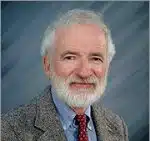
A U.S. scientist who has dedicated his working life to improving the efficiency of solar cells will be honoured by the American Chemical Society for "chemistry in the public interest" at Harvard University next month.
Dr Arthur J. Nozik, from the Department of Energy’s National Renewable Energy Laboratory (NREL), will be awarded the Gustavus John Esselen Award for Chemistry in the Public Interest, which is presented to those whose outstanding achievement in scientific and technical work that contributes to the public well-being.
Nozik’s award cited his innovative solar research, including the exploration of future generation concepts for lower cost and more efficient solar conversion.
"Dr. Nozik through his groundbreaking solar research work, is pioneering technologies that have, and will continue to have, a long-term impact on how people create energy in clean and affordable ways," Deputy Laboratory Director for Science and Technology Dana Christensen said.
In the 1970s, Dr Nozik was among the first to identify “hot carrier conversion” in the processing of sunlight to energy in a solar cell, which could increase efficiency by using more of the sun’s energy to produce electricity.
In 2000 Nozik used built upon his work on hot carrier conversion and fathered the still-controversial multiple exciton generation –or MEG – theory, wherein nano-structured particles in solar cells, called quantum dots, cause electrons that have absorbed solar energy to become “excited,” which in turn causes neighbouring electrons to transform into "excitons", generating more energy, thereby increasing the electricity output of solar panels containing quantum dot technology.
According to a NREL statement, Nozik’s latest work is the successful completion of a designed molecular analogue to MEG, a process called singlet fission, which could lead to a 35 percent increase in light-harvesting yield in solar cells for photovoltaics and solar fuels. These two new processes are now termed next generation (or sometimes third generation) solar photon conversion.
Dr Nozik holds 11 US patents and has published over 250 papers and chapters on the subject of photovoltaics, electrochemistry and nanoscience. He will receive his award on April 14 at Harvard University.