



If you jumped on the solar bandwagon back in 2016, you were a pioneer. But here’s the cold truth: in the world of energy tech, a decade is a lifetime.
Back then, a high-performance panel was pushing maybe 250W to 270W with an efficiency of around 17%. Today, the 2026 baseline was shifted to 450W+ modules, hitting nearly 24% efficiency.
Beyond just the raw numbers, your heritage system is likely facing a slow, invisible decline. Most 2016-era P-type panels lose about 0.7% to 1.0% of their output every single year. After ten years of baking in the sun, your 5kW system might only be giving you the “oomph” of a 4kW one, and that’s assuming you don’t have hot spots or micro-cracks hiding under the glass.
Think of it like an old smartphone. It still makes calls, but it struggles with the new apps. Your old system is struggling with the apps of a 2026 home: the EV in the garage, the heat pump in the garden, and the peak electricity prices that have climbed while your panels’ output has dipped. Every day you keep those heritage panels is a day you’re missing out on the high-density power that modern N-Type silicon can squeeze out of the exact same footprint on your roof.
The bifacial breakthrough
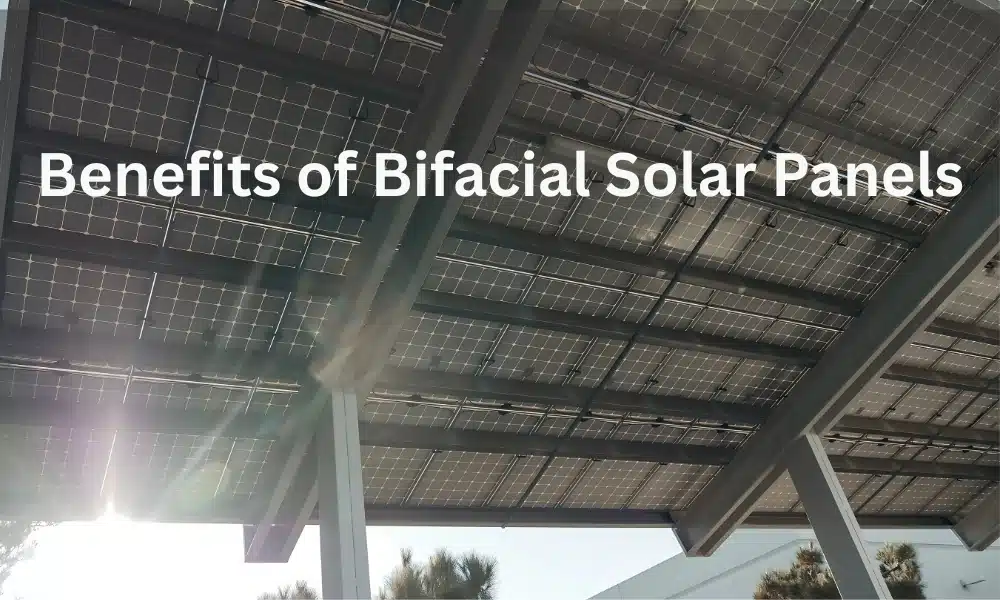
If you look at a traditional solar panel from 2016, the back is usually a solid white or black plastic sheet. It’s a one-way street. But the 2026 re-powering gold standard is the Bifacial module. These panels are essentially a “glass-on-glass” sandwich, with active solar cells on both the front and the back.
The strategic secret here is something called the Albedo effect. This is just a fancy way of saying “reflectivity.” While the front of the panel drinks in direct sunlight, the back is busy capturing the light that bounces off your roof, nearby walls, or even the ground.
- The 20% bonus: In the right conditions, especially if you have a light-colored Cool Roof or the panels are slightly tilted, bifacial modules can boost your energy yield by 10% to 20% without taking up a single extra centimetre of roof space.
- The ambient edge: They don’t just need direct sun to work on the flip side. They are incredibly good at picking up diffuse light on cloudy days during those early morning and later afternoon hours when the sun is at a low angle.
For the homeowner, this is the ultimate space-efficiency hack. Instead of trying to find more roof real estate for more panels, you’re simply making the panels you do have work twice as hard. It’s the difference between a flashlight that only shines forward and a lantern that fills the whole room with light.


The glass-on-glass durability factor
If you’ve ever seen a solar panel from 2015 peeling or showing strange brown bubbles, you’re looking at a failing plastic backsheet. For years, this was the industry’s Achilles’ heel. But in 2026, the high-end re-powering market has almost entirely ditched plastic for dual-glass construction.
Think of this as the heavy-duty version of a solar panel. Instead of sandwiching the delicate solar cells between glass and a flimsy sheet of polymer, the cells are now protected by two layers of tempered glass.
- Immunity to the elements: Glass-on-glass panels are virtually immune to the moisture ingress and micro-cracking that typically plague older systems after a few years of expanding and contracting in the Australian heat.
- The 30-year standard: Because this build is so robust, manufacturer warranties have made a massive leap this year. While your 2016 system likely came with a 10 to 12-year product warranty, 2026’s bifacial N-type panels often carry 30-year product and performance guarantees.
- Lower degradation: These panels don’t just last longer, but they stay stronger. Most dual-glass modules are guaranteed to still provide over 90% of their original power after 3 decades.
When you’re re-powering, you’re not just buying more power. You’re buying a component that is likely to outlast the roof it’s sitting on. It moves solar from being a 10-year appliance to a 30-year infrastructure investment.
Retrofitting for the 2026 grid
If you’re planning a re-powering project this week, you need to keep one date in mind: May 1, 2026. This is when a significant regulatory shift hits the grid, and it fundamentally changes the brain of your solar system.
Starting May 1st, any new or upgraded solar system must meet updated connection requirements, often referred to as Emergency Solar Management. In simple terms, your new inverter needs to be communications-capable. This is about the grid being able to send a “remote handshake” to your system to manage exports during rare power emergencies.
Here is the strategic choice you’ll face:
- The flexible pathway: By installing a smart, communications-ready inverter (complying with the CSIP-AUS protocol), you unlock the ability to export more power. This is your ticket to joining Virtual Power Plants (VPPs) where you can actually get paid a premium for helping the grid stay stable.
- The standard pathway: If you choose not to have an internet-connected system, or if your Wi-Fi is patchy, you can still upgrade, but you’ll likely be hit with a permanent, low export limit (often 1.5 kW).
The strategy for 2026 is clear: don’t just swap your panels. If you’re re-powering, you must treat your inverter as the control centre. Upgrading before May 1st deadline gives you some breathing room, but upgrading to the new standard ensures your home is a participant in the modern energy market, rather than just a spectator.
The ROI math
The final payoff for re-powering is about the sheer physical efficiency of your roof space. If you look at your tiles today and see 20 panels from a decade ago, you’re looking at a space-efficiency bottleneck. A 10kW system back then would have swallowed nearly 60 square meters of your roof. Today, you can hit that same target with just 22 panels, effectively halving the footprint and leaving the other half of your roof open for future-proofing, like a dedicated EV array or extra battery-ready strings.
This footprint flip changes the financial math from exporting for profit to an avoided cost strategy. With grid prices in 2026 reaching as high as 45c/kWh while FiTs dwindle to around 5c, the old game of selling power back to the utility is over. The real profit now lies in self-consumption. Every watt your high-efficiency panels generate that stays behind the meter to run your heat pump or charge your car is worth nearly 10 times more than a watt sold back to the grid.
Even with the gradual tapering of the federal STC rebates this year, a strategic re-powering project for a high-consumption household typically hits its break-even point in 5-7 years. Since these modern N-Type modules are backed by 30-year warranties, you aren’t just paying off a system, you’re securing over 2 decades or nearly free energy. In the strategic landscape of 2026, re-powering is the only way to lock in your energy overhead for the next 30 years while the rest of the neighbourhood remains at the mercy of the grid.
Energy Matters has been in the solar industry since 2005 and has helped over 40,000 Australian households in their journey to energy independence.
Complete our quick Solar Quote Quiz to receive up to 3 FREE solar quotes from trusted local installers – it’ll only take you a few minutes and is completely obligation-free.