





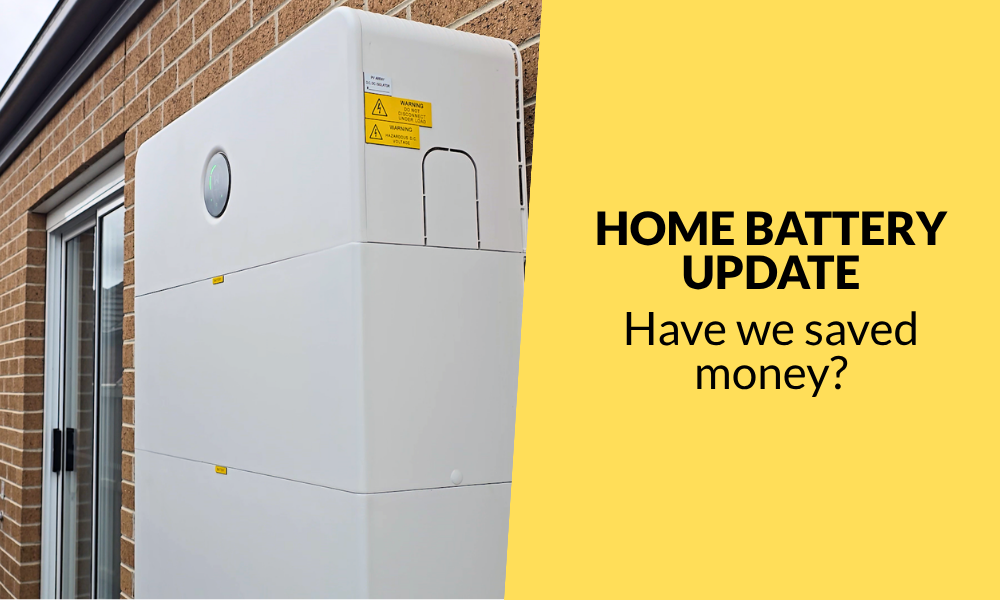
It’s hard to believe that we’re already a quarter of the way through 2026. My GoodWe ESA All-in-One home energy storage system was installed 2 months ago by Hytech Solar, and it’s time to give you all an update. Living in a home powered entirely by solar and stored electricity comes with some pros and cons. If you’re looking to add a battery to your own home, read on!
A brief recap
If you haven’t already, read all about my GoodWe ESA installation.
TL;DR:
We had a 10kW, 48kWh ESA installed on our home in February by the fantastic team at Hytech Solar. We opted to DC couple to our existing solar panels and back up the whole home.
The pros of home battery storage
To be frank, the GoodWe ESA has been life-changing. For years, I have attempted to shift all of our electricity usage to the daytime to make use of the solar. Now, being able to pop on a load of washing at 10pm, turn the dishwasher on at 5am, and work on my PC throughout the night has completely changed my habits. There’s a strange freedom that comes from being able to use what I want, when I want, with no financial consequences.
But there are more pros:
- No more worries about blackouts
- Lower gas bills
- No more worry about peak pricing
- Maximised solar
- Future-proofing the home
Let’s explore these a little further.
No more worries about blackouts
This is the big one. Blackouts used to mean absolutely no internet (we live in a mobile black spot) and power rationing with our portable battery. Storms rolling in no longer have me in worry mode.
Now, outages go unnoticed. The system switches over so quickly that you actually have no idea that you’re in the middle of one. I only knew of a recent minor outage from a community post on Facebook. The Wi-Fi stays on, the fridge keeps humming, and the kids stay glued to their screens. Priorities.
Lower gas bills
We quickly made the switch to GloBird when we found out that they offer free electricity from 11am – 2pm each day (completely fills the battery), give you $1.00 per day if you use no grid electricity between certain peak times (we never do), and receive a 12 c/kWh feed-in tariff (FiT) for exporting electricity during that same time frame (now 15 cents per kWh – we are on a slightly older plan). Just from the last two alone, we receive $2.20 of credit per day. This does not include any additional FiT (currently 3c/kWh) from our solar exports.
As we also moved our gas over to GloBird, that credit goes straight to our gas bill. Our total combined gas and electricity bill for April was $36.75 credit. That’s right – credit. This is partially due to a $50 credit from a referral, which would mean that our total bill would have been $13.25. That credit will carry over for our current month’s usage. We expect our gas usage to increase as the colder months roll in, but we plan to rely more on our split system for heating.
A few days into the current billing, our next combined bill is predicted to be $5.81. I’m on a mission to see us in credit again, but even if that figure increases tenfold, it will still be around $200 cheaper than our usual gas and electricity bills for a month of use.
Peak pricing? No more
Time-of-use tariffs used to feel like a trap. Use power at the wrong time, and your bill cops it.
Now, peak periods are when the battery steps in. You are effectively opting out of the most expensive electricity on the market. And with GloBird, we export during this time and have enough left over to carry us through the rest of the night and morning.
Better use of your solar
Without a battery, excess solar heads back to the grid for a barely-there feed-in tariff.
With a battery, you keep more of that energy. You use it later, when power is expensive. It is the difference between selling wholesale and consuming retail. However, with GloBird’s free window of electricity, a good portion of our solar still goes to the grid after 2pm. This will be more prevalent during summer, but most of it will go to the battery in winter.
Future-proofing our home
Our next big purchase will be an EV. Opting for a 48kWh battery will allow us to top up the car and power the whole home. To do this, we would likely stop the grid export during peak periods. Top-ups would use approximately 10kWh of the battery each day – so we could realistically power the home, charge the car, and export – but I never like playing it too close. We’ll cross that bridge when we come to it!
Regardless, we have future-proofed our home for any power-hungry additions.
It changes how you think about energy
This one surprised me.
You start to think in flows, not just usage. When is the battery full? When is solar peaking? What can I run now? It becomes a bit of a game, and a satisfying one at that.
The cons of home battery storage
You would think that a list of cons for home batteries couldn’t exist, but here it is:
- SEMS+ and GloBird app obsession
- Cloudy days are still annoying
- Smugness levels
- Friendships change
Incessant need to constantly check the apps
I wish I were joking.
You install a battery, and suddenly you are an energy analyst. You check graphs, watch charge cycles, and admire your own self-sufficiency. Seeing your credit increase with your energy retailer has never been so satisfying.
Family members will hear phrases like, “What’s the battery percentage?” far more often than they should.
Mild disappointment on cloudy days
You will catch yourself judging the weather. Not because it is raining, but because your solar production has dropped. You may even mutter things about kilowatt hours under your breath. This was ever-present during our solar-only days, but it means a lot more now as each kW charges the battery.
Smugness levels may increase
You will become that person.
The one who casually mentions they have not paid for electricity in months. The one who nods knowingly when others complain about bills. I am that person, and I’m not ashamed of it.
Friends suddenly very interested in your energy setup
Expect questions. Lots of them.
“How much did it cost?”
“Is it worth it?”
“Can I come look at it?”
You are now the unofficial neighbourhood energy consultant. Our neighbour, a few doors down, has popped by on more than one occasion to check out our setup. We’ve almost convinced him!
My advice: Get a battery
Two months in, and the GoodWe ESA has already changed how we live. It is not just about savings; it is about control, flexibility, and a bit of peace of mind.
If you are on the fence about battery storage, this is your sign to take a closer look – even with the reduced federal rebate. Just be prepared to develop a mild obsession with your energy app.