







If you have solar panels in New South Wales, your export payments are changing. The new NSW solar feed-in tariff rates for 2026 dropped again this year, and most solar households will earn less for the power they send back to the grid.
Understanding these new adjustments is vital for your household budget. The solar market is moving away from high export credits. It is shifting toward smart home energy management. Let us look at what these changes mean for your bills.
What are the new NSW feed-in tariff rates for 2026?
Each year, the Independent Pricing and Regulatory Tribunal, or IPART, sets a benchmark range for solar feed-in tariffs in New South Wales (NSW). It is not a fixed price. It is a guide for what your export is worth.
For the 2026-27 financial year, IPART’s all-day benchmark sits at 3.4 to 6.5 cents per kWh. That is down from 4.8 to 7.3 cents in 2025-26.
The lower NSW solar feed-in tariff rates for 2026 reflect falling wholesale electricity prices during the day. More rooftop solar and large-scale renewables are pushing midday prices down across the whole grid.
Tired of overpaying for energy? Discover your best energy deal with Energy Matters. Compare top offers in your area and find the right plan for your energy needs. Our advanced tool draws on data from a trusted network of retailers, so you can easily evaluate options and choose a plan that gives you greater control and better savings on your electricity and gas bills. Don’t settle for less—switch to a plan that suits your budget and goals with Energy Matters today!
Why did IPART lower the benchmark?
IPART points to a few clear drivers behind the drop:
- More homes exporting solar at once, which pushes midday wholesale prices lower
- Growing large-scale solar and wind generation adds to daytime supply
- Falling avoided costs for retailers, since exported power is worth less when the grid already has plenty of it
- Network export charges are now built into how the benchmark is calculated
None of this means your solar system is worth less. It means the value has shifted toward the evening, when the sun isn’t doing the heavy lifting anymore.




Retailers don’t have to match the benchmark
Here’s the part many households miss. NSW retailers are not required to offer the IPART benchmark rate. They can pay more, less, or nothing at all.
Since 1 July 2026, several retailers have moved in different directions:
- EnergyAustralia cut its flat-rate feed-in tariff from 4c to 3c per kWh, below the benchmark floor
- AGL removed feed-in tariffs entirely for customers on Standard Retail Contracts
- Alinta Energy and GloBird Energy offer the highest maximum rate at 10c per kWh, well above the benchmark
If you’re still on a legacy plan, it’s worth checking whether your rate has quietly fallen behind.
Time-of-use tariffs: Where the real value sits
While flat rates are falling, IPART’s time-of-use benchmarks tell a different story. Solar exported during the evening peak is worth several times as much as midday exports.
For 2026-27, the evening benchmark ranges by network are:
- Ausgrid: 17.2 to 18.7 cents per kWh between 4 pm and 9 pm
- Endeavour Energy: 16.9 to 19.9 cents per kWh between 4 pm and 8 pm
- Essential Energy: 26.6 to 33.3 cents per kWh between 5 pm and 8 pm
That’s roughly five to ten times higher than most flat-rate offers. The catch is that only a handful of retailers currently offer time-of-use feed-in tariffs, including Red Energy, CovAU, Energy Locals and GloBird Energy. Amber Electric instead ties its rate to the live wholesale price.
A battery lets you store midday solar energy and either use it yourself in the evening or export it when rates are at their peak. If you’re not on a time-of-use plan, a battery storage quote is a smart place to start turning the new NSW feed-in tariff rates for 2026 to your advantage.
Use Energy Matters’ easy-to-use solar power and battery storage calculator to determine the size of your solar system with storage! Our solar calculator will generate performance information and potential savings.
We can send this information to 3 of our pre-vetted, trusted local installers in your area so they can provide obligation-free solar quotes and take the first step toward true energy independence!

What this means for your solar bill
For most households, the feed-in tariff was never the biggest driver of solar savings. Self-consumption is.
A typical NSW household can save several hundred dollars a year by using solar directly rather than exporting it, thereby avoiding retail charges of 25-40 cents per kWh. Export credits under the new benchmark add a smaller amount on top, often under $200 a year at flat rates.
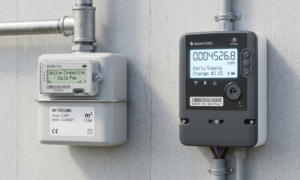
From 1 July 2026, NSW households with a smart meter also gained access to the Solar Sharer Offer, three free hours of electricity during the midday solar window. This applies whether or not you have panels installed, and it’s designed to help the grid absorb excess daytime solar.
A quick look back at NSW feed-in tariffs
NSW feed-in tariffs weren’t always this modest. Between 2010 and 2016, the state ran a Solar Bonus Scheme paying eligible households up to 60 cents per kWh, well above the wholesale value of the power.
That scheme closed to new applicants in 2011 and ended completely at the end of 2016. Since 2012, IPART has published a voluntary benchmark instead, based on what retailers would actually pay for wholesale electricity at export times.
The NSW feed-in tariff rates for 2026 sit firmly in this newer, market-based era. Rates now track wholesale prices closely, which is why they fall when daytime solar supply is abundant and climb when evening demand is high.
Key NSW feed-in tariff facts for 2026-27
| Item | Detail |
| All-day benchmark 2026-27 | 3.4 to 6.5 c/kWh |
| All-day benchmark 2025-26 | 4.8 to 7.3 c/kWh |
| Ausgrid evening benchmark | 17.2 to 18.7 c/kWh, 4 pm-9 pm |
| Endeavour Energy evening benchmark | 16.9 to 19.9 c/kWh, 4 pm-8 pm |
| Essential Energy evening benchmark | 26.6 to 33.3 c/kWh, 5 pm-8 pm |
| Highest flat-rate offer (NSW) | 10 c/kWh, Alinta Energy and GloBird Energy |
| Benchmark status | Voluntary guide, not mandatory |
| Effective from | 1 July 2026 |
How to make the most of the new NSW feed-in tariff rates 2026
- Check your current rate against the IPART benchmark and see where you stand
- Compare energy offers on Energy Matters
- Ask your retailer about time-of-use feed-in tariffs if you have a smart meter
- Add battery storage to shift self-use into the evening or capture peak export rates
- Switch to a heat pump hot water system to soak up midday solar you’d otherwise send to the grid
- Charge an EV during the day with an EV charger to use cheap solar instead of exporting it
Powering up your EV with solar
If you’re thinking of buying an EV, adding an EV charger to your solar system is a smart way to “fuel” your car with clean, renewable energy.
Frequently asked questions
What is the NSW feed-in tariff rate for 2026-27?
IPART’s all-day benchmark for the NSW feed-in tariff rates for 2026 is 3.4 to 6.5 cents per kWh. Retailers set their own actual rates, which can sit above or below this range.
Is the feed-in tariff mandatory in NSW?
No. IPART’s benchmark is a voluntary guide. Retailers choose their own feed-in tariff, and some, such as AGL under Standard Retail Contracts, no longer offer one at all.
Which retailer currently offers the best feed-in tariff in NSW?
As of mid-2026, Alinta Energy and GloBird Energy offer the highest flat rate at 10 cents per kWh, though conditions apply. Time-of-use plans from retailers like Red Energy can pay far more during the evening peak.
How can I check if my feed-in tariff is fair?
Compare your rate with the current IPART benchmark, and use our Energy Matters compare tool to find other energy plan offers.
Will the NSW feed-in tariff rates in 2026 continue to fall?
It depends on wholesale prices. As more homes install solar and batteries, midday export values are likely to remain low, while evening and peak-demand rates could continue to climb. This is why more retailers are expected to roll out time-of-use plans over the next few years.

Get ahead of the new NSW feed-in tariff rates 2026
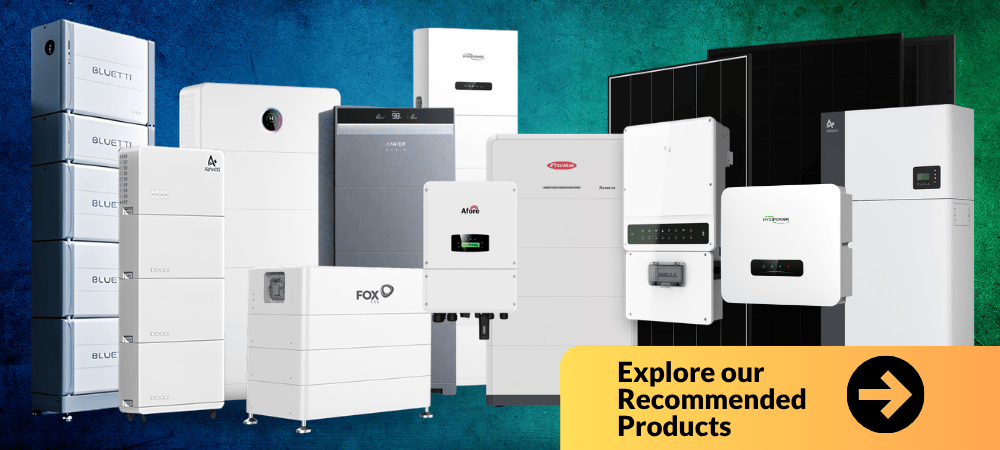
The new NSW feed-in tariff rates for 2026 confirm what many solar owners already sense: flat export payments are shrinking, and using your own solar matters more than ever. Battery storage, EV charging and heat pump hot water are the easiest ways to capture that value before it leaves your roof.
Ready to see what a battery or a new solar system could save you? Explore solar quotes from Energy Matters and check out our EV charger and heat pump hot water ranges for a free, no-obligation quote today.
Sources and References:
- IPART: Solar feed-in tariff benchmarks for 2026-27, Solar feed-in tariffs price guide
- Solar Choice: Best NSW Solar Feed-In Tariffs
- Australian Government: Energy Made Easy