
NSW has just opened public consultation on Australia’s first mandatory solar panel recycling scheme, aiming to tackle a rising tide of panel waste as older systems reach end of life. It’s a significant step, but it won’t become law until at least the end of 2026, and consultation itself doesn’t close until 16 November. So what do you actually do if your panels are damaged, failing, or being replaced today?
This guide covers what happens to old solar panels in Australia right now, and how to dispose of yours responsibly while the regulatory picture catches up.
Quick Summary
- Most old solar panels in Australia currently end up landfilled, stockpiled, or exported, rather than recycled
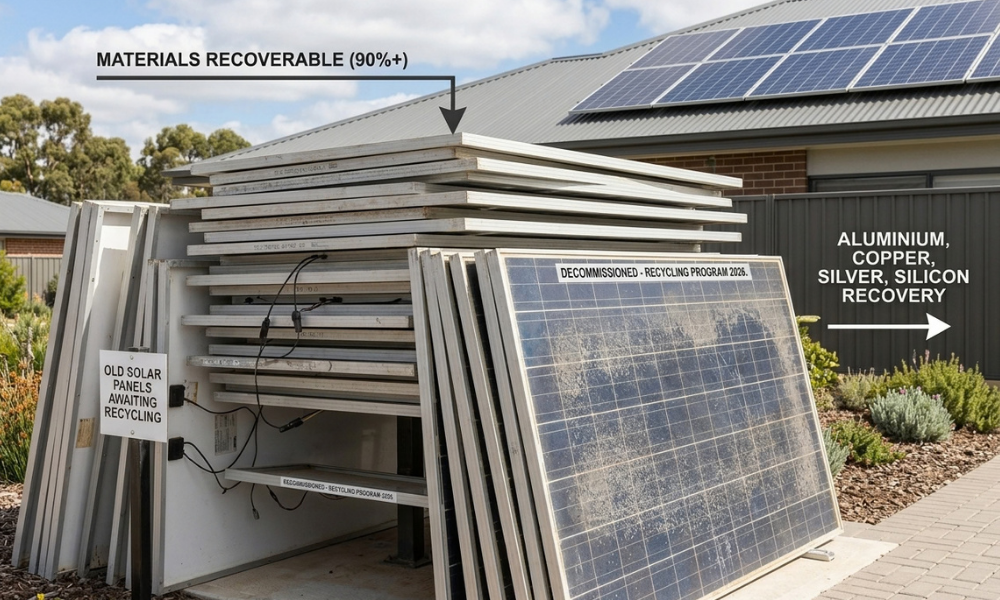
- Specialist recyclers already exist and can recover 90%+ of panel materials, despite a common myth that panels can’t be recycled
- NSW’s proposed scheme will eventually make manufacturers responsible for collection and recycling, but for now, responsible disposal is largely on the homeowner or installer
Why solar panel recycling is suddenly in the news
NSW’s environment protection authority opened consultation this week on a mandatory product stewardship scheme for solar panels, citing insufficient current disposal pathways and warning that most end-of-life panels continue to be landfilled, stockpiled, or illegally dumped. The scheme would build on the same product lifecycle law the state used for batteries last year, and is designed so other states, or eventually the Commonwealth, could adopt the same model.
It’s a genuine first for Australia. But it’s still a proposal, not a rule. Consultation runs until 5pm on 16 November 2026, and the government has flagged finalising the regulation by the end of the year at the earliest. If your panels need attention now, you’re working within the current system, not the future one.
Expert Tip: Don’t assume your panels “can’t” be recycled. A widely repeated figure suggesting only 17% of a panel’s weight is recoverable was later clarified by Sustainability Victoria after fact-checkers found the claim was outdated; specialist Australian recyclers can now recover up to 90% of a panel’s materials.





What actually happens to old panels in Australia today
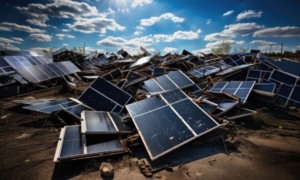
Right now, the reality is mixed. National data shows an estimated four million panels are decommissioned in Australia each year, yet only a small share are currently recycled, with most stockpiled, landfilled, or exported for reuse elsewhere. That’s despite the fact that panels contain genuinely valuable, recoverable materials: silver, copper, aluminium, and silicon among them.
The gap isn’t a technical one. Specialist solar recyclers already operate in Australia and can strip a panel down to recover the vast majority of its components. The gap is structural: without a mandatory scheme requiring collection and funding the process, there’s been little incentive for installers, retailers, or homeowners to route panels to a recycler rather than the tip.
When you’d actually need to deal with this
Most homeowners only think about panel disposal in a few specific situations:
- Storm or physical damage. Hail, falling branches, or extreme weather can crack panels beyond repair.
- System upgrades or repowering. Replacing older, less efficient panels with newer, higher-output ones is increasingly common as panel technology improves.
- End of warranty or performance degradation. Most panels are rated for 25 to 30 years, though output typically declines gradually well before that.
Expert Tip: Before assuming a panel needs replacing, rule out simpler causes of underperformance first, such as dirt, shading from new tree growth, or an ageing inverter. A licensed installer can test individual panel output before you commit to removal.
Your responsible disposal options right now
Use a specialist solar panel recycler. A small but growing number of Australian recyclers are set up specifically to process end-of-life panels and recover materials for reuse, rather than sending them to landfill.
Ask about manufacturer take-back programs. Some panel brands offer their own collection or recycling pathways, particularly for panels still within warranty.
If you’re upgrading your system, ask about panel redeployment before recycling. Energy Matters runs a Second Life Solar program, in partnership with the CSIRO and the NSW EPA, where old panels are removed for free as part of an upgrade, tested for remaining useful life, and either redeployed into community solar projects or sent for recycling if they don’t qualify. It’s worth asking whether an equivalent option is available to you rather than defaulting straight to recycling. Learn more →
What to avoid: don’t put panels in general kerbside waste or council hard rubbish collection, they’re not designed to handle the glass, metal, and electronic components safely. Also be wary of informal “cash for panels” offers that don’t disclose where the panels actually end up.
Expert Tip: If you’re upgrading your system, ask your installer whether responsible panel removal and recycling is included in the job. It’s often bundled into the service and saves you sourcing a recycler separately.
What’s coming: the proposed NSW scheme
If NSW’s mandatory scheme goes ahead as proposed, the responsibility for funding collection and recycling would shift to solar panel brand owners and manufacturers, rather than homeowners or councils. In practice, that means the cost of eventual disposal would ideally be built into the product itself, not billed to you when a panel reaches end of life.
The scheme is also designed to be adopted by other states or a future Commonwealth model, so if it proceeds, it’s likely to shape how panel disposal works nationally, not just in NSW. Public consultation is open until 16 November 2026, we’ll update this guide once the regulation is finalised.
Frequently asked questions
Can solar panels actually be recycled in Australia?
Yes. Specialist Australian recyclers can recover up to 90% of a solar panel’s materials, including glass, aluminium, copper, and silicon. An earlier claim that only 17% could be recycled was based on outdated information and has since been corrected by Sustainability Victoria.
What happens if I just put old solar panels in general waste?
Panels contain glass, metal, and electronic components that aren’t designed for standard landfill or kerbside collection. Improper disposal risks toxic materials leaching into the environment and wastes recoverable resources. Use a specialist recycler or ask your installer about proper disposal instead.
Is there a cost to recycle solar panels?
Currently, yes, in most cases, since Australia doesn’t yet have a mandatory funded scheme. Costs vary by recycler and location. NSW’s proposed scheme aims to shift this cost to manufacturers in future, but for now, check with your installer or a specialist recycler for current pricing.
How long do solar panels last before I need to replace them?
Most panels are rated for 25 to 30 years, though output typically declines gradually rather than failing outright. Many homeowners replace panels earlier for storm damage or to upgrade to more efficient technology, not because the originals have stopped working.
Will manufacturers be responsible for recycling my panels in future?
Potentially. NSW’s proposed mandatory scheme would require panel brand owners to fund and manage end-of-life collection and recycling. It’s currently in consultation, with regulation targeted for finalisation by the end of 2026, so this isn’t yet in effect.
Key takeaways
- Most old solar panels in Australia currently end up landfilled, stockpiled, or exported, not recycled, despite recoverable materials inside them
- Specialist recyclers already exist and can recover up to 90% of a panel’s materials, debunking the common myth that panels can’t be recycled
- Storm damage, system upgrades, and gradual performance decline are the most common reasons homeowners deal with old panels
- NSW’s proposed mandatory recycling scheme is still in consultation until 16 November 2026 and won’t be law until at least the end of the year
- If you’re upgrading your system, ask your installer whether responsible panel removal is included, it’s often simpler than sourcing a recycler yourself