



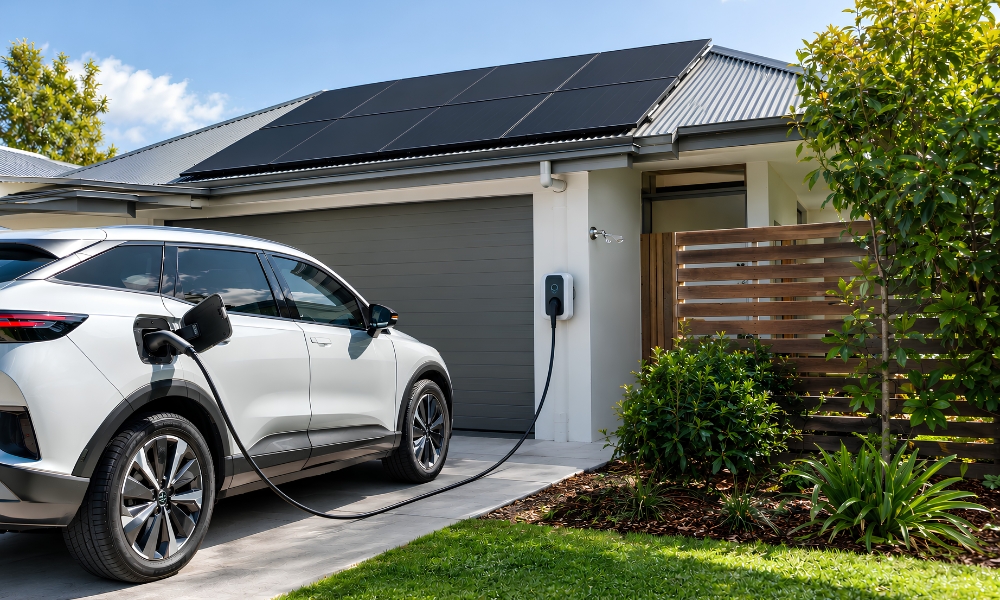
Australians bought more electric vehicles in 2026 than in any previous year, with EVs accounting for 17.7 per cent of new car sales nationally by the end of July, according to Electric Vehicle Council and Federal Chamber of Automotive Industries figures. For households that already have home solar systems on the roof, or are planning one, choosing the best EV for solar owners in Australia can turn that investment into genuinely cheap, sun-powered motoring.
The right match between panel output, battery size and charging behaviour means your car can run largely on daytime sunshine instead of expensive grid electricity. This guide breaks down which EV models suit solar households best, how the charging actually works, what it costs, and the state-by-state details worth knowing before you buy.
Key takeaways
- Solar-charged EVs can cut running costs to a fraction of petrol, often just 30 to 60 cents per 100km.
- Efficient, high-range EVs such as the Tesla Model Y, BYD Atto 3 and Hyundai Ioniq 5 suit solar households best.
- Vehicle-to-load is now common, but vehicle-to-home and vehicle-to-grid remain limited to a handful of models and chargers.
- Most state EV purchase rebates have ended, but the federal Cheaper Home Batteries Program and FBT exemption are still active in 2026.
- A correctly sized solar system, paired with a smart charger, gives the fastest payback on EV charging costs.



What is EV solar integration and why does it matter for Australian homes?
EV solar integration simply means charging your electric car directly from your rooftop solar system rather than drawing power from the grid at peak rates. For most Australian homeowners, this means scheduling charging for midday, when panels produce the most power and grid import is least necessary.
Key terminology
- Solar self-consumption: The share of your generated solar power you use on-site rather than exporting it, which daytime EV charging can lift significantly.
- Vehicle-to-load (V2L): Lets the EV power appliances or tools directly from its battery, now standard on most new models.
- Vehicle-to-home (V2H) and vehicle-to-grid (V2G): Let the car’s battery power your house or feed energy back to the grid, still an emerging category in Australia.
- Solar-aware or smart charger: A home EV charger that can schedule or throttle charging to match live solar generation.
Why best electric cars for solar owners matters in 2026
Electric vehicle sales reached a record 27,000-plus units in August 2026 alone, and for the first time battery electric vehicles outsold pure petrol and diesel cars in a single month, according to VFACTS and Electric Vehicle Council reporting. As more solar households add an EV to the driveway, matching the car to the panels, and the panels to the car, has become one of the most effective ways to reduce both fuel and energy costs at once.
Expert tip
Charging an EV from excess solar rather than the grid is one of the single biggest self-consumption boosts a solar household can make, often lifting daytime solar usage from around 30 per cent to well over 60 per cent.

How EV solar integration works in Australia
Getting the most from a solar-charged EV mostly comes down to scheduling and the right hardware. Choosing the right types of EV chargers for your home can make the difference between charging on cheap daytime solar and defaulting to expensive overnight grid power.
Step-by-step
- Check your inverter and home charger compatibility. Most single-phase homes handle a 7kW AC charger comfortably.
- Set your EV’s charging schedule, via the car’s app or a smart charger, to start once your panels are covering the household load, typically mid-morning to early afternoon.
- Use excess-solar diversion settings on smart chargers so charging automatically ramps up or down as cloud cover changes through the day.
- Monitor usage through your solar app or the EV’s own app, and fine-tune the schedule across the seasons as daylight hours shift.
Real-world examples
A Sydney household with a 6.6kW solar system and a Tesla Model Y can typically cover a full 40 to 50km daily commute using only midday solar generation on a sunny day, avoiding grid charging altogether.
A Perth family running a BYD Atto 3 alongside an 8kW system often finds a single sunny weekend charge, tracked at nearby EV charging station locations or from home, comfortably covers the working week’s local driving.
Powering up your EV with solar
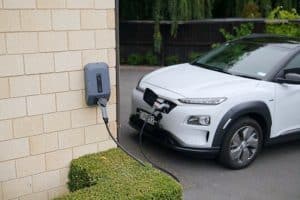
If you’re thinking of buying an EV, adding an EV charger to your solar system is a smart way to “fuel” your car with clean, renewable energy.
Costs and savings on the best EVs for solar owners
Upfront costs vary by vehicle and charger, but the ongoing savings from solar charging typically outweigh the extra investment within a few years.
Upfront costs
- New EVs suited to solar households currently range from around $35,000 for a BYD Atto 3 to $70,000-plus for a Hyundai Ioniq 5 or Tesla Model Y Performance.
- A 7kW smart home charger costs roughly $1,500 to $2,500 to install, while emerging V2G-capable hardware such as the Sigenergy SigenStor or V2Grid Numbat starts at around $10,000 to $15,000.
- Households without existing solar, or with an undersized system, may need a solar or battery top-up; the federal Cheaper Home Batteries Program currently discounts eligible battery installs by roughly 25 to 30 per cent.
Savings calculation
| Charging source | Approx. cost per 100km | Approx. annual cost (15,000km) |
| Petrol (mid-size SUV) | $12 to $15 | $1,800 to $2,250 |
| Grid electricity (off-peak) | $3 to $4 | $450 to $600 |
| Rooftop solar (self-consumed) | $0.30 to $0.60 | $45 to $90 |
Payback period
For a household adding a smart charger and a modest solar or battery top-up to properly support EV charging, the extra outlay is often recovered within two to four years through fuel savings alone, before counting the lower servicing costs typical of EVs.
State-by-state considerations
- Victoria (VIC): Victoria’s own EV purchase subsidy ended in 2023, but the state’s Solar Homes Program continues to support rooftop solar and battery upgrades, and strong daytime solar generation across Melbourne and regional Victoria makes midday EV charging especially effective.
- New South Wales (NSW): NSW’s stamp duty exemption on EVs ended in 2023, though the state remains a strong solar market and households can still access ongoing support for home solar systems and battery upgrades through federal and state programs.
- Queensland (QLD): Queensland’s Zero Emission Vehicle Rebate closed in September 2024, but the state still offers reduced stamp duty rates for electric and hybrid vehicles, and its high solar irradiance makes it one of the best states for daytime EV charging.
- South Australia (SA): SA’s three-year EV registration exemption ended in June 2025. South Australia has the country’s highest per-capita rooftop solar penetration, and its grid has repeatedly run on close to 100 per cent renewable supply, making it a strong candidate for solar-charged EVs.
- Western Australia (WA): WA’s $3,500 Zero Emission Vehicle rebate closed in May 2025. Long sunshine hours across Perth and the state’s north continue to support reliable midday solar charging for EV owners.
Expert tip
Even where state purchase rebates have wound back, the ongoing federal FBT exemption on eligible EVs and the federal Cheaper Home Batteries Program mean the total cost of solar-charged EV ownership keeps falling nationally in 2026.
Comparison table: Best EVs for solar owners in Australia
For solar households, efficiency, range, and charging flexibility matter more than raw battery size. For a full rundown of what is available, see Energy Matters’ guide to current EV models on the Australian market.
Model | Battery/range | Bidirectional support | Approx. drive-away price |
Tesla Model Y 
| 60 to 75kWh, up to 466km | V2L via adapter; V2H in development | From approx. $58,900 |
BYD Atto 3 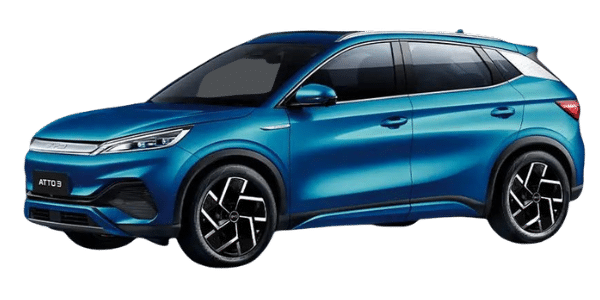
| 60kWh, up to 480km | V2L standard | From approx. $44,900 |
BYD Sealion 7 
| 82.5kWh, up to 542km | V2L standard | From approx. $53,900 |
Hyundai Ioniq 5 
| 84kWh, up to 570km | V2L standard; V2G planned | From approx. $70,500 |
Kia EV9 
| 99.8kWh, up to 505km | V2L standard; most V2G-ready model available | From approx. $97,000 |
MG4 
| 51 to 64kWh, up to 435km | V2L on select variants | From approx. $34,990 |
Prices and specifications are indicative for 2026 and change frequently; always confirm current pricing and bidirectional-charging status with the dealer or manufacturer before buying.
How to get started: Step-by-step guide
- Assess your solar system size and current daytime export to see how much spare capacity you have for EV charging.
- Choose an EV suited to solar charging, prioritising efficiency and V2L or V2H compatibility over raw battery size.
- Select a smart or solar-diverting home charger that matches your inverter and switchboard capacity.
- Get quotes from SAA-accredited installers for the charger and any solar or battery top-up needed.
- Set your charging schedule around solar production and off-peak tariffs, then track savings through your solar monitoring app.
Common mistakes to avoid
- Charging overnight on a standard grid tariff out of habit, missing free daytime solar generation.
- Undersizing the solar system for both household use and EV charging combined.
- Assuming every EV supports V2H or V2G. Most popular models sold in Australia today do not yet.
- Skipping a licensed, SAA-accredited installer for charger installation or any solar and battery upgrade.
- Ignoring off-peak or EV-specific electricity plans, which can sometimes beat solar self-consumption outside peak sunshine hours.

Frequently asked questions on the best EVs for solar owners in Australia
What is the best EV for solar owners in Australia?
The best EV for solar owners in Australia depends on daily driving, budget, solar production, parking times and charging requirements. But efficient, long-range models such as the Tesla Model Y, BYD Atto 3, and Hyundai Ioniq 5 pair well with rooftop solar because they offer different combinations of range, price, efficiency, and home-charging suitability.
Can I charge my EV directly from solar panels?
Yes. Most home EV chargers can be scheduled or set to divert excess solar automatically, so your car charges from surplus rooftop generation rather than the grid, especially effective with smart chargers around the middle of the day.
Do I need a home battery to charge my EV with solar?
No, a stationary home battery is not mandatory. Your electric vehicle acts as a large battery on wheels. However, a home battery lets you store daytime solar energy and transfer it to your vehicle in the evening if you commute during the day.
Which EVs support vehicle-to-home or vehicle-to-grid in Australia?
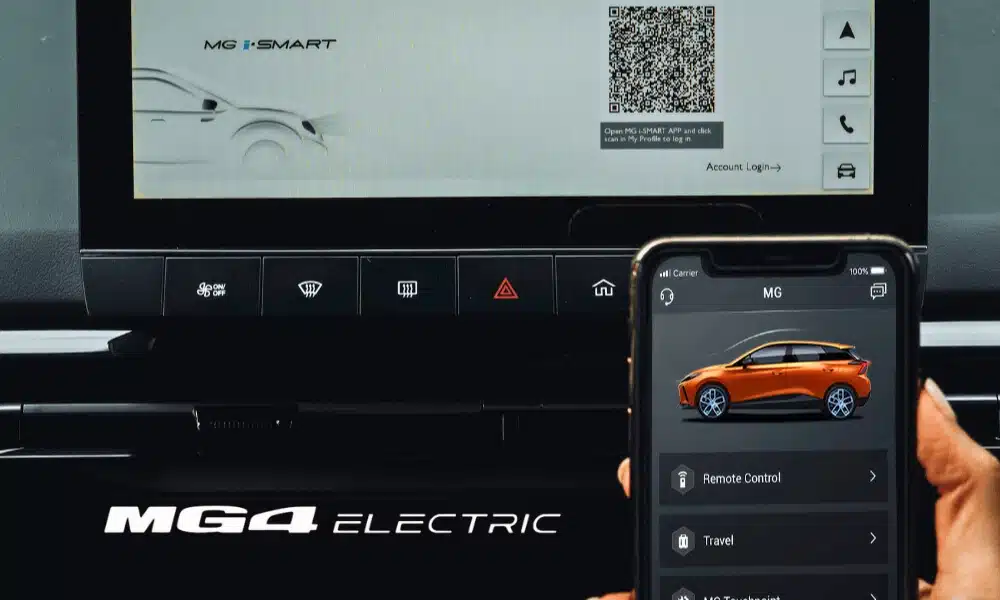
Bidirectional charging is still emerging here. Models most commonly cited with V2H or V2G potential include the Kia EV9, Hyundai Ioniq 5, MG4 and select BYD models, though functionality depends on both the car’s software and a certified compatible charger.
Is solar EV charging cheaper than petrol?
It can be. The Australian Government says EVs can save up to 70% on equivalent fuel costs when reliably charged at home, and solar can reduce the grid electricity needed for charging. Actual savings depend on your electricity tariff, solar output and vehicle efficiency.
Is an EV charger worth installing if I already have solar?
For many homeowners, a dedicated charger can improve convenience and make it easier to use surplus solar for transport. However, whether it is financially worthwhile depends on your driving distance, existing electrical infrastructure, solar surplus and charging requirements.
Ready to charge your EV with free sunshine?
For Australian homeowners, the best EV and solar combination isn’t necessarily the most expensive car or the largest battery. It is a coordinated setup in which the vehicle, solar system, charger, electricity tariff and household energy habits work together.
With EV adoption accelerating and Australia’s energy system becoming more flexible, now is a good time to assess how transport fits into your home’s broader energy strategy. Explore Energy Matters’ energy efficiency resources, compare your options, and get quotes for EV chargers and solar packages before you decide.
Sources and References
- Electric Vehicle Council, electricvehiclecouncil.com.au
- Clean Energy Council, cleanenergycouncil.org.au
- Federal Chamber of Automotive Industries, VFACTS new vehicle sales data
- Tesla Australia Meet Model Y | Hyundai Australia All-electric IONIQ 5 | BYD Australia | KIA EV9 Australia |MG Motor Australia