




Every AI chatbot answer, image generation and cloud search runs on servers housed in data centres. In Australia, the electricity those buildings draw is set to climb steeply.
AEMO forecasts data centre consumption in the National Electricity Market (NEM) will rise from around 5 TWh in 2025–26 to 34 TWh by 2035–36, roughly as much electricity as all the homes in NSW and Victoria use today.
The growth in AI data centres’ electricity use in Australia comes as power bills are finally easing for many households. That raises an obvious question: will the AI boom push prices back up?
The short answer is that data centres aren’t driving bills today, but they could in the next decade if the rules aren’t right. Here’s what’s happening, what regulators are doing about it, and how to protect your household.
Quick summary
- Data centres use about 2% of the NEM’s electricity today, but AI is driving rapid growth in demand.
- They aren’t what’s moving bills right now, but overseas experience shows unmanaged growth can push up wholesale and network costs.
- Australian regulators are designing rules to make data centres pay their own way, and rooftop solar and batteries can reduce your exposure.
How much electricity do AI data centres use in Australia?
Data centres used around 4 TWh of electricity in 2024–25, about 2% of the NEM’s grid supply. That’s roughly the same as more than 700,000 homes.
Demand is already accelerating. According to the Climate Council, data centre electricity use nearly doubled in Victoria and grew 18% in NSW over the 12 months to mid-2026. AEMO expects NEM data centre demand to reach nearly 12 TWh by 2030, about 6% of the market.
AI is the main reason. Training and running AI models relies on graphics processing units (GPUs), which pack far more computing power, and heat, into each rack than traditional servers. That means hyperscale data centres built for AI draw more electricity for both computing and cooling, around the clock.
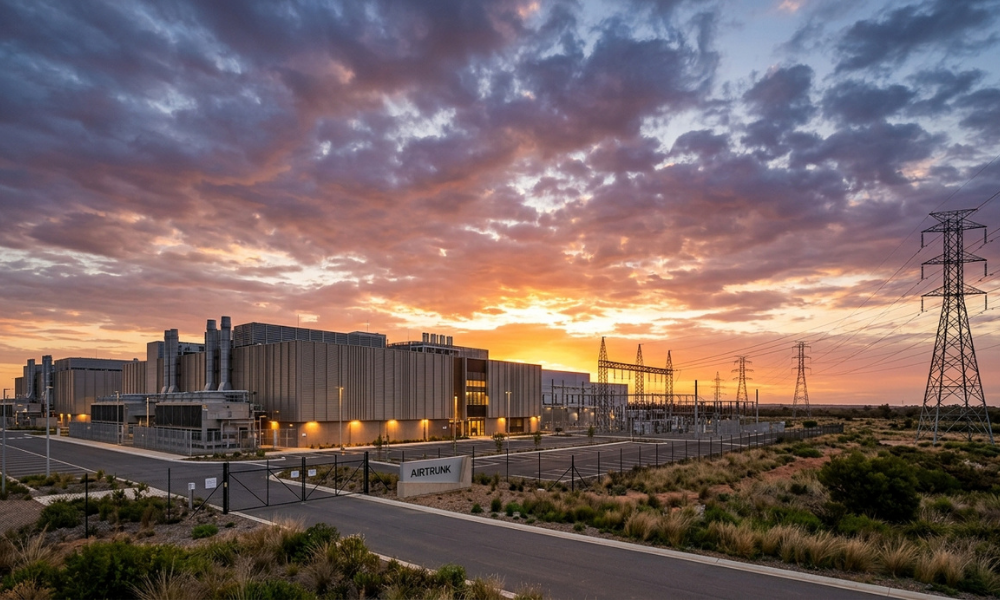
The scale of individual sites shows why. AirTrunk’s SYD1 in Sydney, currently Australia’s largest data centre, uses 130 MW. Its planned SYD3 would use 320 MW, about a third of the demand of the Tomago aluminium smelter, Australia’s largest single electricity user.
For more on the wider environmental footprint of data centres, including water use and noise, see Are Data Centres Really as Bad for the Environment as People Think?
Expert tip: When you see data centre figures in megawatts, remember they run 24 hours a day. A 300 MW facility operating year-round uses far more electricity than a solar farm of the same rated size produces, because solar only generates during daylight.


Microsoft, Google, AWS and the hyperscale boom
Australia has become one of the world’s hottest data centre markets, driven by the biggest global technology companies.
- Microsoft announced a A$25 billion investment in April 2026, running to the end of 2029. It will expand the company’s Australian cloud footprint by more than 140% across its existing data centre sites.
- Amazon Web Services (AWS) committed A$20 billion from 2025 to 2029, including agreements to buy power from new solar farms in Victoria and Queensland.
- Google has flagged a separate data centre commitment, though it was reported in early 2026 to have paused plans over tax concerns.
The investment is showing up in national figures. The ABS recorded A$8.7 billion in data centre construction and server spending in the March quarter of 2026, a record share of private investment.
AEMO says the number of known data centre projects under development more than doubled in a year, from 97 to 225.
Expert tip: Not every announced data centre will be built. Developers often lodge grid connection requests for projects that never proceed, sometimes called “phantom demand”. That’s one reason long-term forecasts carry a wide margin of uncertainty.
How data centres could push up power bills
There are two main ways large data centres can affect what households pay.
Wholesale electricity prices
Electricity prices in the NEM are set by supply and demand. When a very large new user connects, it competes with everyone else for the same generation. If new supply doesn’t keep pace, wholesale prices rise, and retailers pass those costs on.
The source of new supply matters. The Climate Council has warned that if new data centre demand in NSW and Victoria is met mainly with gas generation rather than renewables, wholesale electricity prices could rise 26% in NSW and 23% in Victoria by 2035.
Network costs
Large data centres need major grid infrastructure. The planned 800 MW Bundey data centre in South Australia, for example, involves four substations and new 330 kV and 132 kV transmission lines.
If those upgrade costs are spread across all customers rather than charged to the data centre, households help pay for them through the network charges on their bills.
What’s happened overseas
International experience shows what can go wrong. Energy Consumers Australia points to Bloomberg analysis finding US wholesale electricity costs are up to 267% higher in areas near data centres than five years ago. In Virginia, the world’s largest data centre market, unconstrained growth is estimated to add US$40 a month to household bills by 2040.
Expert tip: Network charges make up a large share of a typical electricity bill. How your state allocates the cost of connecting data centres will matter as much as how much electricity they use.
Why data centres aren’t raising bills yet
Despite the headlines, data centres aren’t what’s driving Australian electricity prices right now.
From 1 July 2026, the Australian Energy Regulator’s Default Market Offer, the regulated standing offer price, fell by between 3.4% and 5.0% in NSW and by 7.2% in south-east Queensland for residential flat-rate customers. South Australian households saw a modest 1.4% increase. The AER attributed the reductions to easing costs in parts of the supply chain, including lower wholesale costs.
Data centres remain a small share of total demand, and new renewable generation and grid-scale batteries have been adding supply. The risk is in the decade ahead, as AI demand grows.
Expert tip: The biggest factors in your bill today are your tariff, when you use electricity, and whether you have solar. Those are also the factors you can control.
What Australia is doing to protect households
Governments and regulators have moved quickly to get ahead of the problem.
- Federal expectations: In March 2026, the federal government published expectations for data centre and AI infrastructure developers, covering clean energy, grid support and the national interest. Microsoft’s investment was accompanied by an agreement affirming its alignment with them.
- Renewable offsets: In May 2026, energy ministers agreed that data centres should offset their electricity demand with renewable generation.
- AEMC advice: In August 2026, the Australian Energy Market Commission (AEMC) recommended four changes: data centres would surrender renewable certificates from new generators to offset their use, show their demand is backed by new firm capacity, register as market participants, and adopt flexible connection arrangements.
- Connection standards: The AEMC is also finalising tiered technical standards for connecting large loads, so data centres don’t threaten grid stability.
There is still debate about the details. The National Cabinet has agreed to develop mandatory national standards, but states have disagreed over whether the additional energy must come from renewables, and Queensland and the Northern Territory have argued they can use coal and gas. The federal government has rejected that interpretation.
Expert tip: Watch for how your state implements these rules. The practical test for households is whether data centres pay for their own grid connections and bring new supply, rather than drawing on existing generation.
Take More Control of Your Power Bills
Get free solar quotes from trusted local installers and see how much you could save by generating more of your own electricity.
Can data centres help the grid?
Data centres don’t have to be a burden. Designed well, they can support the energy transition.
Large, predictable loads can underwrite new wind, solar and storage projects through long-term power purchase agreements, as AWS has done with new solar farms. Data centres can also be built next to renewable generation and shift some workloads, such as AI training, to times when renewable energy is plentiful.
The AEMC’s advice explicitly encourages this kind of flexibility, which can ease pressure on the network rather than add to it.
Expert tip: Look for data centre projects that contract new renewable generation rather than buying existing supply. New projects add capacity to the grid, while existing contracts can tighten supply for everyone else.
How to protect your household from rising energy costs
You can’t control the pace of AI investment, but you can control how exposed your household is to future price rises.
- Rooftop solar lets you generate your own daytime electricity instead of buying it from the grid.
- A home battery stores your solar for the evening peak, when prices are highest. The federal [Cheaper Home Batteries Program] can reduce upfront costs.
- Shift usage to daylight hours, such as running dishwashers, washing machines and EV charging while your solar is generating.
- Check the Solar Sharer Offer if you’re in NSW, south-east Queensland or South Australia, which includes three hours of free midday electricity.
- Use an energy app to automate your system. See our guide to [Best AI Energy Apps for Australian Homeowners in 2026].
- Compare plans regularly, since retail offers change often.
Expert tip: The more of your own solar you use, the less exposed you are to wholesale price rises from any source, whether that’s data centres, gas prices or global energy shocks.
Frequently asked questions
How much electricity do data centres use in Australia?
Data centres used around 4 TWh of electricity in 2024–25, about 2% of the National Electricity Market’s grid supply, or roughly as much as 700,000 homes. AEMO forecasts NEM data centre consumption could reach 34 TWh by 2035–36, driven largely by growth in AI.
Are AI data centres making my power bill more expensive?
Not yet. Regulated electricity prices fell for most households from 1 July 2026, driven by lower wholesale costs. However, if data centre demand grows without enough new supply, or if grid upgrade costs are shared with all customers, it could push bills up over the next decade.
Who pays for the grid upgrades data centres need?
That’s still being decided. The AEMC has recommended that data centres bring new clean energy and firm capacity, and pay the costs and risks they create rather than passing them to households. Governments will decide how to implement these recommendations through legislation and electricity rules.
How can I protect my household from rising electricity prices?
Rooftop solar and a home battery reduce how much electricity you buy from the grid, especially during expensive evening peaks. Shifting usage into daylight hours, using free-power offers where available, and comparing plans regularly also help limit your exposure to future price rises.
Key takeaways
- AI data centres use about 2% of the NEM’s electricity today, but demand is forecast to grow roughly sevenfold by 2035–36.
- Data centres aren’t driving current bill movements. Regulated prices fell for most households from July 2026.
- Unmanaged growth could raise wholesale prices and network costs, as has happened overseas.
- Regulators are designing rules requiring data centres to bring new clean energy, firm capacity and pay their own connection costs.
- Solar, batteries and smart energy use reduce your household’s exposure to future price rises.