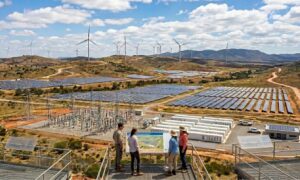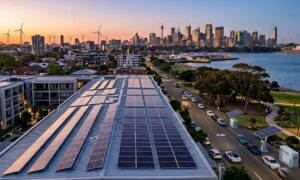




Australia’s clean energy transition generated 43% of the nation’s electricity in 2025, driven by rooftop solar and corporate investments. Global hyperscalers are investing billions in local data centres, signing corporate Power Purchase Agreements (PPAs) to match their consumption. The conversation among Google, Microsoft, and renewable energy Australia homeowners centres on how these massive tech investments affect household electricity bills, grid reliability, and residential solar incentives→.
If you want to protect your household from potential grid cost shifts, explore how home solar systems→ can help secure your energy independence
Ready to act? At Energy Matters, we believe understanding these changes is an important first step towards making informed energy decisions. Get a free solar quote from Energy Matters and compare accredited installers today.
Quick answer
- Google and Microsoft are helping finance large-scale renewable energy projects in Australia through long-term electricity purchasing agreements, creating opportunities to expand solar, wind and energy storage.
- These deals will not automatically reduce household electricity bills. The outcome depends on how much new generation is built, how grid costs are managed and whether growing data centre demand outpaces new supply.
- Australian homeowners can benefit by investing in rooftop solar, comparing electricity plans and considering battery storage, rather than waiting for corporate renewable energy deals to flow through to retail prices.


What is tech energy procurement and why should Australian homeowners care?
The key facts
Corporate Power Purchase Agreements (PPAs) let tech companies buy clean energy directly from solar and wind developers.
- Microsoft and Google have contracted gigawatts of clean energy globally to support operations.
- Australian cloud and AI facilities demand continuous, round-the-clock clean energy.
- Large PPA commitments fund utility-scale solar farms and battery assets that might otherwise lack financing.
Why this matters right now in Australia
As ABC News and The Australian Financial Review report, Australia’s grid is rapidly restructuring as aging coal plants face unscheduled outages. Hyperscaler investments introduce concentrated power demand to urban fringes. High demand from commercial data hubs shapes wholesale power prices across the National Electricity Market (NEM).
Expert insight: When corporate giants underwrite major solar and wind projects, they fast-track new clean capacity onto the grid. However, localised demand spikes mean everyday consumers must take proactive control of their generation and storage capabilities.
How corporate PPAs work and the current state in Australia
Technical explanation
Under a corporate PPA, a business agrees to buy power from a renewable asset at a fixed price over a long term.
The solar farm delivers its output to the NEM, giving tech buyers offset credits while supplying physical electrons directly into Australia’s electricity network.
Australian examples and data
According to data from the Clean Energy Council (CEC) and the Australian Energy Market Operator (AEMO), corporate demand remains a major catalyst for new utility builds.
| Entity / Metric | Scope / Details | Impact on Australia’s Energy Grid |
| Google renewable deals | 24/7 Carbon-Free Energy commitments by 2030 | Drives development of firming assets like utility storage. |
| Microsoft clean power | 100% renewable energy procurement target | Underwrites new solar farms→ across regional Australia. |
| National generation share | Renewables generated 43% of NEM electricity in 2025 | Replaces declining coal generation reliability. |
| Home battery adoption | 260% surge in residential storage installs | Protects households against wholesale peak pricing. |
What does this mean for your electricity bills?
Short-term impact
In the near term, corporate PPAs bring new renewable capacity online, helping offset price spikes caused by fossil fuel plant outages. However, increased network buildouts to support localised data centres can lead to higher network tariffs passed down by distributors.
Long-term implications
Over time, constant baseline demand from tech infrastructure changes daytime electricity dynamics. Daytime solar abundance can lower minimum operational demand, while evening demand surges. Households relying solely on grid power may face higher peak charges unless they adopt residential solar and storage solutions.
Expert insight: The fastest way to insulate yourself from network tariff shifts is rooftop generation. Generating your own power lets you bypass daytime grid pricing entirely.
What Australian homeowners can do right now
Actionable steps
- Upgrade your roof: Quality solar panels→ allow you to capture generation during peak sunshine hours.
- Add battery storage: Store daytime production to avoid high evening peak rates.
- Optimise household loads: Align heavy energy tasks like heating water with peak solar output. Consider a solar hot water system→ or heat pump upgrade.
- Prepare for transport electrification: Install EV chargers→ to charge vehicles directly from excess home generation.
Powering up your EV with solar
If you're thinking of buying an EV, adding an EV charger to your solar system is a smart way to "fuel" your car with clean, renewable energy.
Questions to ask your installer or retailer
- What tariff structure best matches my household's solar production profile?
- Is my inverter setup ready to connect with Virtual Power Plants (VPPs)→?
- What is the payback period based on local network feed-in rates?

State-by-state considerations
- Victoria (VIC)→: The Solar Homes Program offers incentives for solar and battery systems, helping households absorb shifts in commercial demand.
- New South Wales (NSW)→: Large tech infrastructure expansion near Sydney increases demand on local transmission networks, making self-generation valuable for high-use households.
- Queensland (QLD)→: High daytime rooftop output makes home battery storage vital for storing low-cost solar for evening use.
- South Australia (SA)→: With the highest renewable grid penetration, SA households benefit from connecting rooftop systems to VPPs to earn export credits during peak demand.
- Western Australia (WA)→: Operating on the isolated SWIS grid, WA’s Distributed Energy Resources (DER) roadmap offers incentives for smart solar systems and storage management.
Use Energy Matters’ easy-to-use solar power and solar battery storage system→ calculator to determine the right size for your solar system with storage. Our solar calculator will generate performance information and potential savings.
We can send this information to 3 pre-vetted, trusted local installers in your area so they can provide obligation-free solar quotes and help you take the first step toward true energy independence!

Expert Predictions for 2027 and Beyond
By 2027, commercial data centre loads will account for a much larger share of Australia's baseline energy consumption. AEMO’s Integrated System Plan (ISP) forecasts that firming capacity, including community batteries and consumer energy resources (CER), will be essential for grid stability.
Households with solar and battery systems will transition from passive consumers to active market participants. Taking steps toward home energy efficiency→ today helps keep your property resilient as energy prices adjust to tech-driven demand.
Energy Matters recommends switching to energy-efficient appliances→ now to save money and live more sustainably.
Frequently asked questions
Do Google and Microsoft deals increase residential energy prices?
Large corporate power deals fund new renewable projects, helping supply overall clean energy to the grid. However, increased demand on local transmission infrastructure can lead network operators to adjust distribution tariffs, affecting retail rates.
How do corporate PPAs differ from residential solar plans?
A corporate PPA is a long-term wholesale contract between a business and an energy generator. Residential solar plans are retail contracts that let households feed excess rooftop energy back into the grid.
Should I install a home battery because of big tech energy demand?
A home battery helps protect your household from rising peak electricity prices driven by growing commercial grid demand. Storage keeps your solar energy at home for evening use.
Can big tech companies buy electricity directly from home solar?
Big tech companies don't buy power directly from individual homes. Instead, energy aggregators and Virtual Power Plants (VPPs) pool home battery power to support the grid during periods of peak commercial demand.
How can I lower my electricity bills as corporate energy demand grows?
To lower your bills, generate your own clean power using rooftop solar panels. Adding battery storage and optimising household energy efficiency minimises your reliance on the mains grid.
Key takeaways
- Major corporate PPAs from tech buyers accelerate large-scale renewable project construction across Australia.
- Growing commercial baseline demand increases the importance of grid stability and firming capacity.
- Rooftop solar systems protect households against shifting retail electricity tariffs.
- Home battery systems let you store daytime generation to offset expensive peak evening rates.
- Requesting solar quotes→ allows you to compare system designs and secure tailored energy savings.
Take control of your home energy costs
The Google Microsoft Renewable Energy Australia homeowners story highlights a major shift in how Australia's electricity system will be financed and used. Corporate PPAs can help bring new renewable projects to market, but household benefits depend on additional generation, effective grid planning, and fair electricity pricing.
Homeowners can take practical action now by assessing rooftop solar, comparing tariffs, considering battery storage and reducing avoidable energy use. Energy Matters is here to help you navigate the options with clear information and quotes from suitable installers.
Ready to reduce your reliance on grid electricity? Get a free solar and battery quote from SAA-accredited installers through Energy Matters and take the next step towards a more energy-efficient home.
Sources and References
- Australian Energy Market Operator: 2026 Electricity Statement of Opportunities, electricity demand and reliability forecasts.
- Microsoft Australia: Walla Walla Solar Farm PPA, corporate renewable energy purchasing.
- Google Australia: Renewable energy collaboration, Google, AirTrunk and OX2.
- Australian Government: Cheaper Home Batteries Program, household battery incentives.
- ABC News: Data centre electricity demand and proposed requirements, reporting published August 2026.
- The Guardian Australia: Data centres and Australia's energy transition, energy demand outlook.
- Australian Government: Solar and battery guidance, consumer information and incentives.