Australia’s Northern Territory is known for its vast and arid landscapes. Still, it’s also home to many businesses turning to solar energy to power their operations. In recent years, the Australian government has implemented various incentives to encourage the use of solar energy, particularly for commercial, small business and industrial sectors.
On this page
NT commercial rebates, grants & incentives
The Northern Territory government offers a range of incentives and programs to encourage businesses to adopt solar energy. These incentives are designed to help businesses reduce energy costs, improve sustainability, and support the transition to a low-carbon economy. Businesses considering solar energy should take advantage of these incentives and programs to reduce their upfront costs and improve their bottom line in the long run.
Did you know Energy Matters is Australia’s largest renewable news, blog and educational resource? Subscribe to Energy Matters’ weekly newsletter and keep updated even with incentives, rebates and recommended solar product offers.
These incentives are open to any Australian business regardless of its country of origin. Conditions will apply.
What are STCs and how can I access them for my commercial system?
The Australian government’s Small-scale Renewable Energy Scheme (SRES) is a nationwide program that provides financial incentives for installing small-scale solar systems, including solar panels and solar water heaters. Under this scheme, businesses can claim Small-scale Technology Certificates (STCs) that can be traded to offset the upfront cost of installing solar PV systems. The number of STCs a business can claim depends on the size and efficiency of the solar system installed.
Your energy-efficient solar or electric energy source has a designated STC. These STCs represent one MW of energy displaced and created through a renewable energy system. STC allocations for a given system are a function of the estimated energy consumed over 1, 5, or usually 8 years. For example, if your business installed a system that produces 100 MWh over 8 years, you will have 100 STCs allocated to the system.
Commercial systems and Large-Scale Generation Certificates (LGCs)
As part of its Renewable Energy Target, the Australian government created Large Scale Generation Certificates (LGCs) (RET). A programme aims to lower electrical sector carbon emissions and promote sustainable and renewable energy sources.
Businesses can benefit from the Large Scale Renewable Energy Target (LRET) and Large Scale Generation Certificate if they are interested in installing large commercial solar systems with more than 100kW. (LGC). Businesses can purchase and sell renewable energy produced by massive solar power systems thanks to an LGC.
A solar energy system must be authorised before generating LGCs. The first requirement is that the system won’t be based on fossil fuels. The second is that the system must be larger than 100kW.
Feed-in tariff
Customers that export their extra energy back to the grid during the day are eligible for a Feed-in Tariff from Northern Territory government-owned power retailer Jacana Energy. The majority of the energy produced by users is produced by rooftop solar panels and batteries, which offer financial returns for homes and reduce their electricity costs.
Read more about business grants, incentives and rebates:
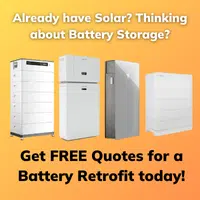
The Home and Business Battery Scheme has reached its $6 million funding cap and is closed to new grant applications. Applications submitted but not approved will only be considered if further funding is released, and no additional funding has been announced.
Eligible residents, businesses, and not-for-profit organisations in the Northern Territory can still install battery systems at their own cost. Only installations that received formal HBBS approval qualify for funding, and any work carried out without prior approval is not eligible for reimbursement.
The scheme originally provided grants of $400 per kilowatt hour of usable battery capacity, up to $5,000. Funding could be used for a battery and inverter, or for solar PV when installed alongside a battery. Customers of Jacana Energy who participated in the scheme moved from the premium one-for-one feed-in tariff to the standard rate as a condition of receiving the grant.
As the program has reached its cap, no further grants are currently being issued.
There is a limit of one application per homeowner and property.
You can apply if you’re:
a registered owner of a residential property in the Northern Territory
a registered NT business
a not-for-profit or community organisation operating in the NT in either owned or leased premises.
There can only be one application per property and per homeowner, regardless of whether the property is utilised for personal use or as an investment.
You can submit separate applications for a grant for your home and your business if you own both.
Steps on how to apply
Step 1. Check your eligibility – refer to the terms and conditions.
Step 2. Get a quote from a qualified system installer or provider. To check the certification requirements, go to the NT WorkSafe website.
There is no minimum number of quotes.
Step 3. After selecting a preferred quote, apply online through GrantsNT to receive a unique voucher.
Only when an application has been approved may eligible work start, and it must be completed within six months of the voucher’s issuance.
Once the application is made
You must pay your installer or service provider once the job is completed. Use a part of the voucher’s amount as payment. The installer or provider must receive your voucher. The voucher amount will be paid directly to them by the NT Government.
Please visitGrantsNT to apply online and for further details.
Is solar energy suitable for your business in NT?
Solar energy has numerous advantages that are worth investigating. Investing in solar will minimise your operational costs, reduce your company’s carbon footprint, and prepare it for the future. A commercial property with a solar installation is excellent for business.
Contact us today for up to 3 FREE solar quotes from commercial solar firms we’ve pre-qualified and vetted for their track record of delivering Australia's best business solar systems.