




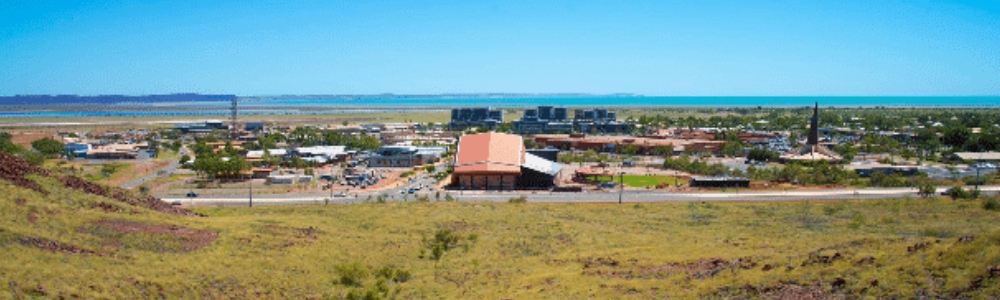
Energy Matters has collaborated with multiple stakeholders to deliver an innovative 1MW solar project for the City of Karratha at Western Australia’s second-largest airport, Karratha Airport.
Karratha Airport provided a crucial link to the Pilbara region, with multiple daily services from Perth, twice-weekly flights to Broome and weekly services to Sydney, Melbourne and Brisbane.
It was a very busy place – passenger numbers at the airport increased from 207,458 in 1985-86 to 798,301 in 2011-12.
A reliable, long-term energy solution was crucial to meeting Karratha Airport’s increasing electricity demands.





Did you know Energy Matters is Australia’s largest renewable news, blog and educational resource? Subscribe to Energy Matters’ weekly newsletter and keep updated even with incentives, rebates and recommended solar product offers.
Project overview
Location
Karratha, WA
System Size
1MW
Estimated Annual Production
1,871 MWh
Estimated Annual Carbon Offset
1,254 tonnes
Solar Panels
340W
Solar Inverter
SMA Sunny Tripower
Mounting System
SunLock
Special Features
Cloud Predictive Technology
The land on which the airport site is located covers a total of 722 hectares – providing plenty of space for solar panels.
After this opportunity was identified, Webster Power Company sought construction and technology partners, along with funding from the Australian Renewable Energy Agency (ARENA).
Energy Matters was approached to assist with delivering a cost-effective solar project, which would also be connected to the North West Interconnected System (NWIS).
There were some unique challenges in planning and designing the project.
The NWIS is a smaller network that has historically required renewable energy systems to meet specific criteria to maintain overall network stability.
Network owner and operator Horizon Power has required significant levels of energy storage for large solar installations to smooth output intermittency. This requirement was due to intermittent cloud cover, which can result in huge, sudden variations in solar electricity output.
To address this, the facility implemented a generation management system (GMS) with cutting-edge cloud-predictive technology (CPT) from MPower. It was the first time cloud predictive technology was utilised on a network-connected solar power installation of this magnitude.
When the cloud was detected, CPT slowly reduced the power supply from the solar panels before the sun was completely blocked. Using CPT reduced the need for energy storage.
Constructed by CPS National, the clean power plant also featured high-performance 340-watt solar panels and SMA Sunny Tripower solar inverters. The facility was expected to generate 1,871 MWh of clean electricity annually and to avoid 1,254 tonnes of carbon emissions.
The City of Karratha purchased the energy produced by the facility under a 21-year Power Purchase Agreement (PPA). The move to a solar PPA ensured long-term security for energy supply and locked in electricity pricing.
The $7.1 million project was supported by the Australian Renewable Energy Agency (ARENA), which contributed $2.3 million. The funding was granted because the project met ARENA’s objectives of reducing costs and increasing the use of renewable energy in Australia.
Considering a commercial-scale solar project? Contact us today, and we can begin to build your solar system in Melbourne together.