
The global push for decarbonisation has positioned biofuel as a critical component in Australia’s future energy mix, offering a renewable alternative to traditional fossil fuels. This innovative energy source, derived from organic matter or biomass, is already being utilised in various transportation sectors, ranging from cars to aviation.
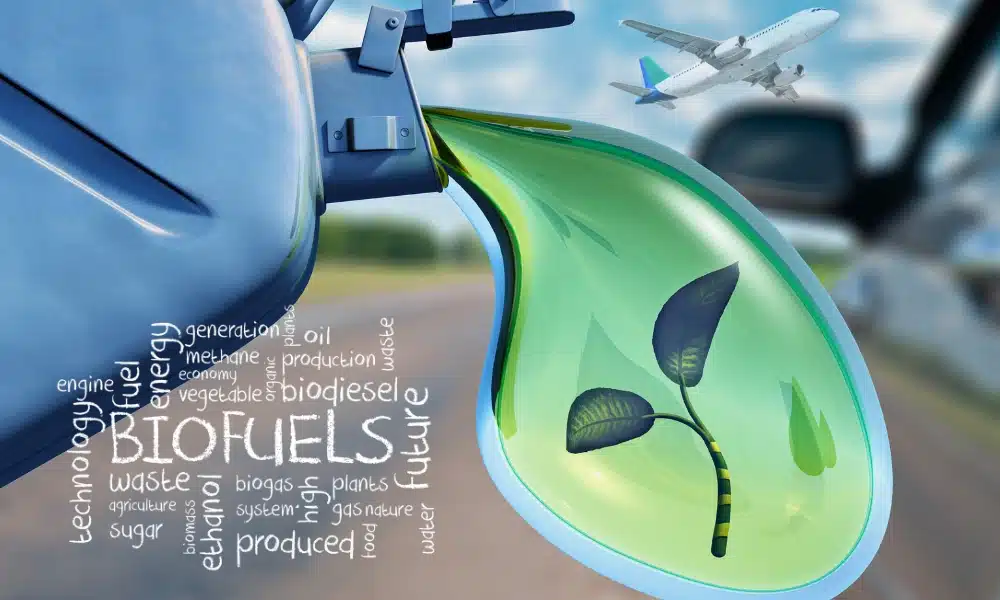
Understanding how biofuels work in Australia is crucial to appreciating their potential to enhance energy security, revitalise regional economies, and significantly reduce the nation’s overall carbon footprint. Australia is rich in agricultural and waste resources, providing an immense opportunity to scale up this clean fuel industry.
On this page




Did you know Energy Matters is Australia’s largest renewable news, blog and educational resource? Subscribe to Energy Matters’ weekly newsletter and keep updated even with incentives, rebates and recommended solar product offers.
What is biofuel in Australia, and how is it made?
Biofuels are renewable liquid or gaseous fuels derived from recent organic matter, or biomass, in a process that sequesters carbon during the feedstock’s growth. They are categorised primarily as bioethanol and biodiesel, each produced through distinct biochemical processes. Using these fuels helps to establish a closed carbon cycle, meaning the CO2 released during combustion is roughly equal to what the source crops absorbed while growing.
Unlike fossil fuels, which take millions of years to form, biofuel is considered carbon neutral since the carbon released during combustion is offset by the carbon absorbed by plants during their growth cycle.
The two types of biofuel production: A technical overview
The production process transforms organic matter into usable fuel through advanced refining.
Bioethanol
This alcohol-based fuel is made by fermenting sugars or starch from crops. In Australia, the primary feedstocks include sugarcane molasses, grain sorghum, and waste wheat starch, particularly in Queensland and New South Wales. The process involves fermenting the sugars with yeast, followed by distillation and purification to create fuel-grade ethanol, which is commonly blended with petrol as E10 (10% ethanol).
Biodiesel
This fuel is produced through a chemical reaction called transesterification. Feedstocks like vegetable oils, animal fats (tallow), and used cooking oil (UCO) react with an alcohol (typically methanol) and a catalyst. This process yields two products: biodiesel and a glycerin byproduct, with the final fuel often used in blends such as B5 (5% biodiesel) or B20 (20% biodiesel) for diesel engines.
Types of biofuels in Australia
Here’s a quick comparison of ethanol fuels vs biodiesels in Australia:
Feature | Bioethanol/Ethanol fuel | Biodiesel |
Source materials | Sugarcane, wheat, corn | Vegetable oils (e.g. canola), tallow, waste or used cooking oils (UCO) |
Common blends | E10 (10% ethanol + 90% petrol) | B5, B20, B100 (100% biodiesel) |
Environmental benefits | Reduces greenhouse gases by up to 30% | Lower particulate emissions, biodegradable |
Vehicle use | Compatible with most petrol cars (check manufacturer) | Diesel vehicles, heavy transport, machinery |
Availability in Australia | Widely available in NSW & QLD | Limited to certain fuel stations and fleets |
Challenges | May not suit older engines; food vs fuel debate | Higher production costs; limited supply chains |
Sustainable Aviation Fuel (SAF): Advanced biofuels in Australia
The future lies in advanced biofuels and Sustainable Aviation Fuels (SAF), which utilise non-food-competing sources such as forestry residues, algae, or municipal solid waste. These next-generation fuels are often “drop-in” replacements, requiring minimal to no modifications to existing infrastructure, and are critical for decarbonising heavy transport and aviation.
How biofuels work in Australia
Biofuel works by converting natural biomass into liquid fuel that can power vehicles, machinery, and even electricity generation. Here’s a simplified breakdown of how biofuel works:
- Feedstock collection – Farmers and industries supply sugarcane, grains, or waste oils.
- Processing & conversion – Ethanol is created via fermentation, while biodiesel is produced through a chemical process called transesterification.
- Distribution – Fuel is blended with petrol or diesel at refineries.
- End use – Cars, trucks, and fleets can run on biofuel blends such as E10 (10% ethanol) or B20 (20% biodiesel).
Australia’s rich biofuel feedstock resources
Australia boasts massive potential for biofuel feedstock—reportedly up to 40 times its annual fuel needs—positioning it favourably against global competitors. Tapping into this wealth of sustainable, often waste-based, material is paramount to building a robust domestic industry and achieving fuel security. The diversity of supply helps to ensure that biofuel production can be scaled up without compromising food crops.
Abundant local biomass sources
The country’s vast agricultural and industrial sectors provide a steady and varied supply of biomass for conversion to low-carbon liquid fuels.
- Agricultural residues: Sugarcane bagasse (the fibrous waste from sugar milling, a major resource in Queensland), wheat straw, and corn stover are abundant by-products. These are used to produce both bioethanol and to power cogeneration plants.
- Waste streams: Used cooking oil (UCO) and animal fats (tallow) are essential feedstocks for biodiesel production, particularly because their use results in a lower net carbon footprint compared to food-grade crops. Diverting this waste from landfills also offers environmental benefits.
- Energy crops: Dedicated energy crops, such as oilseeds like canola and fast-growing Mallee eucalyptus, are being explored as potential sources of energy. These crops are often grown on marginal or degraded land, providing farmers with diversified income and contributing to the rehabilitation of the land.
- Algae and forestry waste: Future and current pilot projects focus on rapidly growing marine algae and forestry residues as high-yield, sustainable sources for advanced biofuels, such as SAF and renewable diesel.
Benefits of biofuels in Australia
The widespread adoption of biofuel offers a multi-layered benefit to Australia, encompassing environmental, economic, and strategic advantages that significantly contribute to national resilience. These fuels are not just a green alternative; they are a critical component of a secure and diversified future energy mix. Investing in this sector yields returns that benefit the entire economy.
Key advantages of biofuel adoption
Strong environmental and economic arguments support the transition to biofuels.
Reduced GHG Emissions
The most significant benefit is the reduction in greenhouse gas emissions, with pure biodiesel offering up to 90% fewer lifecycle GHG emissions than fossil diesel. Using biofuel in heavy transport and aviation helps Australia meet its Paris Agreement and its overall climate targets.
Energy security and sovereignty
Australia currently relies heavily on importing liquid fuel, which poses a significant risk to national security and supply chains. Increasing domestic biofuel production from local feedstock enhances energy independence, offering a dependable, locally sourced alternative to global oil fluctuations.
Economic growth and regional jobs
Developing a robust biofuel industry stimulates significant investment in new biorefinery facilities, creating thousands of skilled jobs, particularly in regional Australia. It provides diversified and stable income streams for farmers supplying agricultural biomass and waste products.
Compatibility with existing infrastructure
Unlike hydrogen or electric power, biofuel is a ‘drop-in’ solution that is compatible with existing fuel storage, distribution, and engine technologies. This avoids the high cost and time required to build entirely new national infrastructure, accelerating the clean energy transition.
Improved air quality
Using biofuels, particularly biodiesel, in urban centres can lead to lower emissions of particulate matter, sulphur dioxide, and carbon monoxide. This contributes to better urban air quality and potential health savings for the population.
Key policy drivers and initiatives
Recent federal announcements signal a major investment and regulatory boost for the sector.
- The Cleaner Fuels Program: The government has recently committed substantial funding (AU$1.1 billion) through this program to incentivise the domestic production of low-carbon liquid fuels over a decade. This includes financing for renewable diesel, SAF, and e-fuels.
- Guiding legislation: State-level mandates, particularly in Queensland and NSW, have created a foundational demand for biofuel, demonstrating the market’s potential. Nationally, the government is also expanding the Guarantee of Origin Scheme to include low-carbon liquid fuels.
- Economic and regional benefits: The industry is expected to create thousands of jobs, primarily in rural and regional areas, providing new, diversified income streams for farmers and enhancing regional economic resilience. The National Farmers’ Federation is a strong supporter, seeing it as a vital growth lever.
Challenges of biofuels in Australia: Then opportunities for scaling up
Despite the immense potential, the industry faces hurdles that require strategic investment to overcome.
- Infrastructure investment: Significant capital is needed to build large-scale biorefinery facilities and upgrade supply chain infrastructure, including storage and distribution networks.
- Feedstock sustainability: Ensuring that the sourcing of biomass remains sustainable is critical—avoiding land-use change, deforestation, and competition with food crops. Australia’s commitment to utilising agricultural waste and non-food competing crops is vital.
- Cost competitiveness: Reducing the production costs of biofuels to compete with cheaper, imported fossil fuels remains a challenge, necessitating ongoing government incentives and technological advancements in refining.
Biofuel in action: Use cases across Australian industries
The compatibility of biofuels with current infrastructure makes them a versatile and immediate solution for reducing emissions across multiple sectors. This flexibility is a major advantage for Australia’s vast and resource-dependent economy. Biofuel blends are already in use, proving their commercial and environmental viability today.
Decarbonising the hard-to-abate sectors
Biofuels in Australia are uniquely suited to industries that are challenging to electrify, playing a complementary role to solar and wind power.
Road transport: Bioethanol-blended fuels, such as E10, are common at service stations in states with mandates, like New South Wales and Queensland, offering a lower-emission alternative for standard petrol cars. Biodiesel is used for commercial fleets, buses, and heavy-duty transport.
Mining and rail: The heavy machinery used in the mining and construction sectors, as well as long-haul freight rail, relies on high-energy-density liquid fuels. Renewable diesel and biodiesel provide an immediate pathway to decarbonisation for these regional operations.
Marine shipping: Biofuels can also be used to power marine transport, which is essential for Australia’s reliance on international trade, further strengthening the country’s sovereign fuel security.
Aviation: The development and future adoption of Sustainable Aviation Fuel (SAF) derived from Australian tallow and other residues is crucial for the aviation industry. Airlines like Qantas have successfully conducted demonstration flights using biofuel blends to reduce their carbon footprint. Use Energy Matters’ carbon footprint calculator to calculate your household and business’s direct emissions.

Biofuel's place in Australia's renewable energy mix
Biofuels are a crucial component in Australia’s broader transition to renewable energy, complementing solar, wind, and battery storage. They provide a reliable, storable source of energy that helps to balance the intermittency of other renewables, bolstering the stability of the national energy grid. They offer a solution for sectors that cannot easily switch to electricity, ensuring that the entire economy can move towards a net-zero future. By harnessing the power of local agriculture and waste, Australia can achieve greater fuel security while cementing its position as a global leader in clean energy innovation.
- Heavy transport and aviation.
- Backup power in off-grid regions.
- Agricultural machinery in rural areas.
Use Energy Matters’ easy-to-use solar power and battery storage calculator to determine the size of your solar system with storage! Our solar calculator will generate performance information and potential savings.
We can send this information to 3 of our pre-vetted and trusted local installers in your area to receive obligation-free solar quotes and take the first step towards true energy independence!

Sources: Queensland Government – What are biofuels? How we make and use biofuels in Queensland | NSW Government – Transport for NSW | Australian Competition & Consumer Commission (ACCC) – Ethanol and other biofuels | Earth Science Australia – Biofuels in Australia – an overview of issues and prospects | CSIRO – Low carbon liquid fuel opportunities for Australia
These helpful videos are a great way to learn about biofuels in Australia visually.
Future outlook of biofuels in Australia
The significant, untapped potential of biofuels in Australia makes it a clear leader in paving a sustainable and prosperous future. The strategic combination of extensive agricultural resources, new government investment, and evolving conversion technology presents a clear path to low-carbon transportation.
Don’t wait for the future—fuel it now! Contact Energy Matters to secure a cleaner, more resilient energy solution for your business or home, and become part of the energy revolution today!
Our team of solar experts can help you get up to 3 FREE solar quotes from pre-qualified and vetted solar firms in your area.