


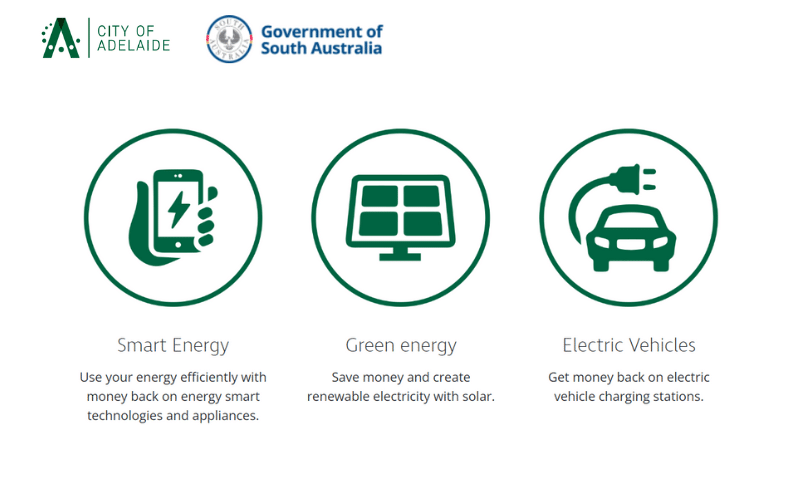
In an era marked by increasing concerns over climate change and environmental sustainability, cities around the world are taking proactive measures to promote eco-friendly practices. The City of Adelaide, South Australia, has emerged as a shining example of a municipality dedicated to fostering sustainability. Through its diverse range of grants, sponsorship programs, and incentives, the City of Adelaide is empowering individuals, businesses, renters and organisations to embrace sustainable practices and contribute to a greener future. This article explores the incentives for sustainability provided by the City of Adelaide and their impact on shaping a more environmentally conscious community.
On this page
Understanding Federal Government Incentives in 2026
The Australian Federal Government remains committed to the Renewable Energy Target (RET) through the Small-scale Renewable Energy Scheme (SRES). This scheme provides “point-of-sale” discounts via Small-scale Technology Certificates (STCs) for systems under 100kW.
In 2026, while the STC multiplier continues its scheduled phase-out, the financial benefit remains a substantial driver for Adelaide households. The number of certificates issued depends on the system size and the installation’s geographic location.


Did you know Energy Matters is Australia’s largest renewable news, blog and educational resource? Subscribe to Energy Matters’ weekly newsletter and keep updated even with incentives, rebates and recommended solar product offers.
Commercial systems and Large-Scale Generation Certificates (LGCs)
For Adelaide businesses installing systems larger than 100kW, the Large-scale Renewable Energy Target (LRET) applies. These commercial entities can create Large-Scale Generation Certificates (LGCs) based on the actual clean energy produced.
Unlike STCs, which are granted upfront, LGCs are generated annually following the energy production period. This provides an ongoing revenue stream for large-scale commercial projects in Adelaide, making high-capacity solar a lucrative long-term investment.
Maximising returns with electricity retailers - Feed-in Tariff (FiT)
A Feed-in Tariff (FiT) is the credit you receive on your electricity bill for exporting excess solar energy back to the South Australian grid. In 2026, the FiT landscape in Adelaide has evolved with the rise of Virtual Power Plants (VPPs).
While base Feed-in Tariff (FiT) rates vary across retailers, savvy Adelaide consumers are seeking “Solar Sponge” tariffs. These reward users for shifting their energy consumption to midday, when solar production is at its peak.
- Standard FiT: A flat rate paid for every kilowatt-hour (kWh) exported.
- Time-of-Use FiT: Higher rates paid during peak demand periods.
- VPP participation: Premium rates offered in exchange for allowing the grid to manage your battery storage. For more information, visit our VPP offers in Australia page.
State government: The City of Adelaide solar rebates and incentives available
The City of Adelaide remains a pioneer in local government climate action through its Sustainability Incentives Scheme. This program specifically targets residents, businesses, and community organisations within the CBD and North Adelaide.
These local incentives are often stackable with federal STCs, providing a unique “double-dip” opportunity for city dwellers. Funding is frequently updated to reflect 2026 technology trends, such as increased support for EV charging infrastructure.
Program | Who It’s For | Key Benefit (2026 Status) |
Small-scale Renewable Energy Scheme (STCs, Federal) | Homes & small businesses (<100kW) | Upfront reduction in system purchase price. |
Large-scale Renewable Energy Target (LGCs, Federal) | Commercial systems (>100kW) | Tradable certificates per MWh of clean energy produced |
Feed-in Tariffs (Retailer-based) | Solar households | Credits on quarterly power bills for exported energy. |
City of Adelaide Sustainability Incentives Scheme (SIS) | Residents & businesses | Direct financial reimbursement for solar, batteries, EV charging station and others. |
SA Electrification & Efficiency Programs | Homes, SMEs & industry | Targeted grants & decarbonisation funding |
VPP Incentives | Battery Owners (Tesla, Senec, etc.) | Premium payments for grid support during peak events. |
Retailer Energy Productivity Scheme (REPS, State Govt) | SA households & small businesses | Retailer-delivered energy efficiency discounts |
| Rooftop Solar PV Systems 20% up to $5,000 for solar systems based on size | Residential, strata, commercial property owners | Installation of new rooftop solar systems |
| Energy Storage 250% up to $1,000 | Residential & commercial | Behind-the-meter battery installations |
| Energy Efficiency Upgrades25-50% up to $3,500 | Businesses & multi-residential | LED lighting, HVAC optimisation, building upgrades |
| Electrification Upgrades50% up to $10,000 | Homes & businesses | Heat pumps, electric hot water, removal of gas systems |
| Electric Vehicle Charging Infrastructure •25% up to $2,000 for Smart EV Charging Station (7kW to <50kW). • 50% up to $1,000 for One-way EV Charging Station (7kW to <50kW). • 50% up to $250 for Electric Bicycle Charging Station | Commercial buildings & strata | EV charger installation |

Empowering Sustainability: Rebates & Incentives Adelaide, South Australia
The push for “Empowering Sustainability: Rebates & Incentives Adelaide South Australia” is not just about environmental stewardship; it is about economic resilience. High electricity prices are being mitigated by the rapid adoption of rooftop solar and home battery storage.
By utilising the South Australian Retailer Energy Productivity Scheme (REPS), households can also access discounted energy-efficient appliances. This holistic approach ensures that every Adelaide home can become a mini-power plant.
Energy-saving strategies for lowering bills in SA
Beyond solar panels, adopting smart energy-saving strategies is crucial for long-term bill reduction. In the South Australian climate, thermal management is one of the most effective ways to lower demand.
- Smart hot water: Upgrade to a heat pump, which can be up to 4 times more efficient than traditional electric units.
- Home automation: Use smart controllers to run high-energy appliances during the “Solar Sponge” window (10 am – 3 pm).
- Insulation and sealing: Ensure your home is properly insulated to reduce the reliance on air conditioning during Adelaide’s summer heatwaves.
- EV integration: Charge electric vehicles (EVs) during peak solar production hours to effectively “fuel” your car for free.
Powering up your EV with solar
If you plan to purchase an EV, integrating an EV charger into your solar system is a great way to “fuel” your car with clean, renewable energy.
The role of battery storage in Adelaide’s green future
In 2026, battery storage is the cornerstone of energy independence in South Australia. With the state’s high penetration of renewables, storing your own energy is more profitable than exporting it at low FiT rates.
Batteries provide backup power during grid outages and let you use 100% of your solar energy at night. Many Adelaide residents are now joining VPPs to help stabilise the SA grid while earning additional financial rewards.
Use Energy Matters’ easy-to-use solar power and battery storage calculator to determine the size of your solar system with storage! Our solar calculator will generate performance information and potential savings.
We can send this information to 3 of our pre-vetted and trusted local installers in your area to receive obligation-free solar quotes and take the first step towards true energy independence!
Switching to a better plan in South Australia?
Read more about energy saving, carbon reduction and cash-saving opportunities
- How You Can Reduce Your Carbon Footprint With Solar Power
- 10 Tips To Reduce Your Live Electricity Usage In Australia
- What can you eat to reduce your carbon footprint?
- How to save money and improve your carbon footprint at your business
- Australia: Net Zero Emissions Target By 2050
- How to calculate your carbon footprint