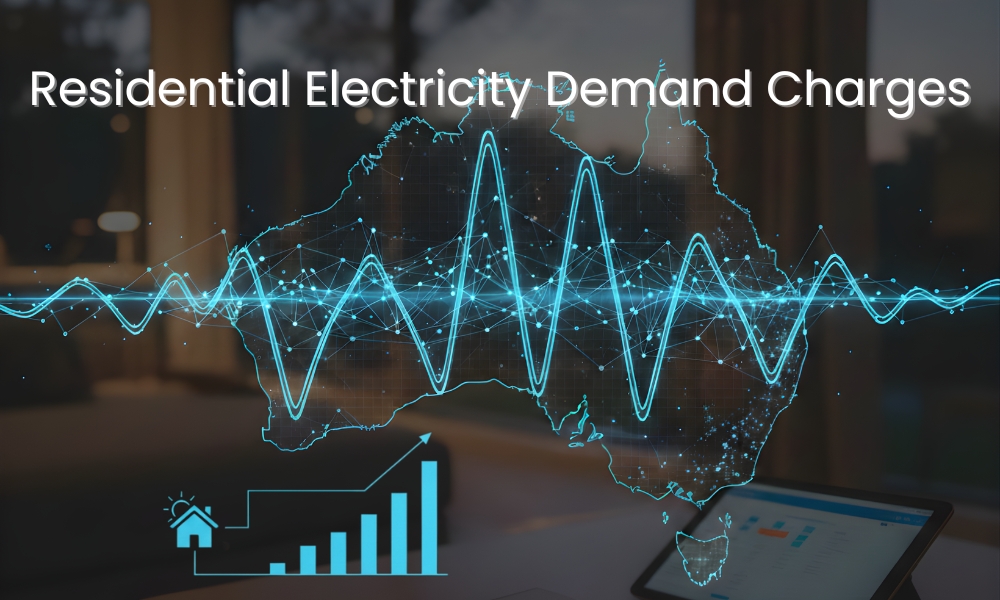
The demand for residential electricity is increasing faster than ever before with demand projected to grow by 28% by the year 2040. This growth is due to the increasing use of home appliances and Electric Vehicles.
Businesses have endured commercial electricity demand tariffs/charges for quite some time. Now residential electricity customers are increasingly faced with the same electricity demand charges burden. However, solar and home battery systems can provide relief.
On this page



Did you know Energy Matters is Australia’s largest renewable news, blog and educational resource? Subscribe to Energy Matters’ weekly newsletter and keep updated even with incentives, rebates and recommended solar product offers.
What is a demand tariff?
A demand tariff (AKA a capacity charge) is a component of electricity billing where the daily charge is set by the highest power demand in a specific time period. For example, between 3 pm and 9 pm.
A peak demand charge is a little like the standing charge (the cost of having an electricity supply available) you pay with residential connections. Only, it is potentially significantly higher.
The easiest way to understand how a capacity charge works is that it’s a charge based not on how long you use an appliance but on the load of the appliance, or a combination of appliances. It could be over a reasonably short duration of use.
What is electricity demand usage?
Electricity demand usage is the amount of electricity that you use in a given period of time. Your electricity provider will charge you based on your electricity usage. The higher your electricity usage, the higher your monthly bill will be.
Weather conditions play a big role in determining how much electricity is used. For example, during a heat wave, air conditioners will be working overtime to keep people cool. This can lead to a spike in electricity demand.
Time of day is also a factor. Electricity use typically peaks in the evening when people are getting home from work and turning on lights and appliances. Economic conditions can also affect electricity demand. For example, during a recession, businesses may cut back on their use of electricity to save money.

What is the difference between demand charge and energy charge?
The demand charge is a part of your bill that shows the highest energy usage on a given period of time, usually at 15 – 30 min intervals. This is also called peak demand. On the other hand, the energy charge is your overall electricity usage during a billing cycle.
You can lessen your electricity bill by reducing the peak demand. Here are a few things you can do:
- Upgrade your HVAC system
- Invest in energy-efficient equipment
- Install solar panels
- Maximise energy usage during off-peak hours
How is the demand charge calculated?
If a household has a peak capacity demand at or above a threshold set by an electricity distributor (let’s say 1.5kW), they are charged a daily electricity demand charge for exceeding that level. Then, for each additional kilowatt of demand, extra charges may apply.
Electricity demand charges apply even though normal usage may be a fraction of the threshold most of the time.
Another unsettling aspect of residential demand tariffs is that the calculation often comes from the maximum half-hourly interval kW demand occurring during the monitoring period over an entire month.
If you happen to be running one or multiple major appliances (e.g. air-conditioner + electric oven) simultaneously for just an hour during the monitoring period on one day during the month, you’ll pay the calculated daily capacity charge for each day of that month!
Demand tariffs are now appearing in residential contracts, particularly in Victoria and South Australia. Some expect it won’t be long before capacity charges start appearing in NSW as well.
Capacity charges and smart meters
This billing system requires ‘smart meters’ to measure energy use in half-hour periods, so the peak usage rate is determinable to set the daily demand charge. Smart meters are already in use in South Australia and Victoria and are about to appear in NSW, coinciding with the end of the solar gross feed-in tariff and the switch to net metering of electricity.
In many cases, peak-demand tariffs will result in higher electricity bills for residential consumers. This is particularly so for those not up to speed on costs and energy-efficiency strategies.
Even if the per-kWh charge reduces, you may end up paying more in fixed charges than you do for the actual energy.
Avoiding demand tariffs when they become applicable in various states can be difficult if you have a smart meter. These are charges applied by the network distributor rather than the electricity retailer. So it’s not a matter of “shopping around”.
While you may not be able to avoid demand charges, you can minimise the financial impact.
How can solar reduce energy demand charges?
To minimise the impact of peak demand tariffs, there are a few things you can do:
- Create a demand pricing plan (time shift appliances)
- Avoid simultaneous use of major appliances.
- Shift energy usage from time periods when demand tariffs are calculable.
- When choosing new electrical appliances, compare the load ratings.
- Install solar and battery storage or retrofit a battery system to an existing PV installation.
How solar and battery systems can help
The use of a battery can shave the top off-peak usage if appropriately sized and with sufficient discharge capacity, resulting in significant savings. In some cases, it may be enough to pay the battery off reasonably quickly.
Home energy storage also enables you to better utilise your own solar energy production.
With a battery, you tap into your stored electricity at night or during peak-rate TOU (Time-Of-Use) metering periods. Batteries boost your energy independence by reducing the amount of energy you’ll need to draw from the grid.

How solar can reduce energy demand charges?
You can save money on your monthly electricity bills by installing solar panels on your home. Solar panels can generate enough electricity to equalise your entire electric bill. With solar panels, you may be able to completely eliminate your electric bill.
Additionally, solar panels can withstand future increases in electricity rates. Regardless of utility rates, you still can produce the same amount of energy with solar panels, offsetting higher rates.
With professionally installed, high-quality solar panels and a next-generation battery system, you could slash grid power consumption by up to 80%*. Check our page for our recommended solar battery products.
To gain a rough estimate of how you could benefit from residential energy storage, try our free online battery calculator.
With some minor changes in electricity usage and solar and storage, you may be able to beat the network distributors and save a significant amount of money on demand charges!
For expert advice on choosing a suitable solar + battery system or battery retrofit, contact Energy Matters’ friendly experts. You can get up to 3 FREE, no-obligation solar quotes by completing our quick solar quiz.
*Based on standard system installation in Sydney. Your site will require an assessment, and your savings (if any) will depend on your individual circumstances (which may vary over time). They are likely to be different from any estimates shown.
Time of use charges
Note that demand or capacity charges differ from time-of-use charges. Time-of-use charges are seasonal and daily. There are peak, shoulder, and off-peak rates. NSW distributor Ausgrid explains it all on this page. Your state’s distributors and retailers will have equivalent pages.
Make the most out of solar panels and start saving thousands of dollars from your electricity bill! Get a quote from our network of local solar installers in Melbourne today.