





A new poll shows most Australians think renewable electricity and home battery storage is key to affordable, reliable energy.
Commissioned by the Climate Council, the ReachTEL poll found 74 per cent of 1,928 respondents across Australia expect household batteries will be commonplace in the next decade.
When asked why they were adding batteries to their rooftop solar systems, over half replied, “to reduce power bills”.
Amanda McKenzie, Climate Council Chief Executive, said Australians “love rooftop solar”.
She said we can expect home battery storage to be as commonplace as dishwashers in our homes in a decade.
“Rising energy prices and a lack of a Federal energy plan are driving many people to take back control of energy,” Ms McKenzie said.
“We’re getting smart to the fact that our energy system is changing.”
Aussies get behind rooftop solar and batteries
More than a third (38%) of respondents said they already own rooftop solar systems. Of these, 68 per cent would consider adding a battery to their system.
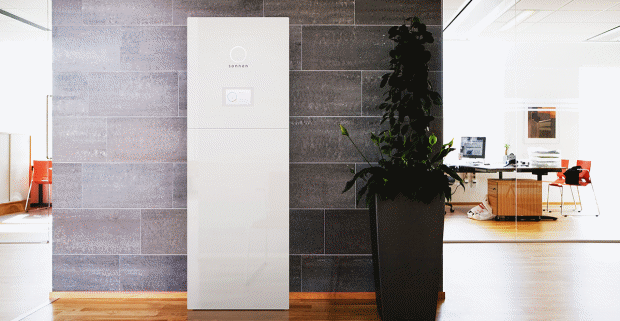
As well as the acceptance for smart energy storage in the home, the poll explored the public’s understanding of the role of large-scale energy storage.
This includes the world’s largest battery being rolled out in South Australia by Tesla. The majority polled (55%) thought large-scale batteries would be commonplace in a decade.
In addition, more than half of respondents (52%) believe large-scale energy storage enables wind and solar to provide power 24/7, on demand.
Renewable energy steps up to the main grid
Battery storage can also meet technical grid requirements, like providing frequency control to the National Electricity Market.
Frequency control is about maintaining a constant supply of electricity at 50Hz, even as demand rises and falls. Generators that contribute to this are called frequency control ancillary services (FCAS). Most of these are currently gas or coal-fired generators.
Poor frequency control management can lead to blackouts, as happened in South Australia last year.
New ways to provide frequency control from renewable energy sources such as wind and solar are now being explored.
A trial at the Hornsdale Wind Farm in South Australia is now underway in conjunction with the Australian Energy Market Operator. It will test the ability of wind turbines to provide FCAS. If they can, it will keep our electricity supply reliable no matter how high demand rises during those sweltering summer days.