







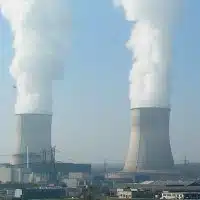
The impact of climate change on water resources could affect electricity production associated with the majority of the world’s hydro and thermoelectric power stations in the not too distant future.
A new study published in the journal Nature Climate Change looked at data from 24,515 hydropower and 1,427 thermoelectric power plants worldwide. Both types depend heavily on the availability of water and water temperature also plays a critical role in cooling for thermoelectric plants; which includes nuclear, fossil and biomass-fueled facilities.
Using a coupled hydrological–electricity modelling framework, the researchers determined reductions in usable capacity for 61–74% of the hydropower plants and 81–86% of thermoelectric power plants globally for the period 2040–2069.
“This is the first study of its kind to examine the linkages between climate change, water resources, and electricity production on a global scale,” said Applied Systems Analysis (IIASA) Energy Program Director Keywan Riahi; co-author of the study. ” We clearly show that power plants are not only causing climate change, but they might also be affected in major ways by climate.”
Regions to be particularly affected include the United States, southern South America, southern Africa, central and southern Europe, Southeast Asia and southern Australia.
The study urges operators to improve power plant efficiencies and change cooling system types to reduce vulnerability to water constraints.
“In order to sustain water and energy security in the next decades, the electricity focus (sic) will need to increase their focus on climate change adaptation in addition to mitigation,” said IIASA’s Michelle Van Vliet, the study’s lead researcher.
Non-hydro renewables will also play an important role – neither wind or conventional PV-based solar power require significant water for ongoing operation, except to occasionally clean down solar panels in the case of PV systems.
Tasmania is already experiencing a small taste of what may be in store. Hydro Tasmania had been importing a significant percentage of the state’s electricity from Victoria via the Basslink interconnector since October due to low dam levels. Then on December 20, the Basslink interconnector failed; putting the Apple Isle into a tricky situation. However, wind power has been helping to maintain electricity supply.
Image Credit : Stefan Kühn