






Solar panel research is accelerating at a rapid pace and it’s predicted that solar R&D will soon rival the new-today, obsolete-tomorrow pace of computer chips and mobile phone technology.
But just when it seems the latest roll-to-roll transparent thin film solar sheet has consigned the traditional rigid silicon-based solar panel to the PV history books, or a company develops a revolutionary solar magnifier that increases the efficiency of crystalline solar panels, nature once again shows us that, when it comes to capturing solar energy, we are still fumbling in the dark.
Researchers from the US Department of Energy’s Oak Ridge Laboratory and Washington University are studying the light-harvesting abilities of some of nature’s most photosynthetic life-forms, breaking ground into a new generation of solar cell design.
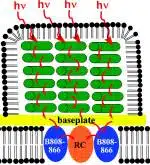
The team bombarded green photosynthetic bacteria with neutrons to analyse the structure of chlorosomes using Oak Ridge’s High Flux Isotope Reactor. They found that even in low light and in extreme conditions, these organic solar collectors continued to collect sunlight for conversion to energy.
The team hope that by mimicking the way chlorosomes are arranged in nature they could achieve the same sunlight-to-energy conversion rate in a bio-inspired solar cell.
“It’s one of the most efficient light harvesting antenna complexes found in nature,” said research scientist Volker Urban from Oak Ridge’s Center for Structural Molecular Biology, or CSMB.
Although work is just beginning, the stability and strength of the chlorosome structure in harsh conditions has the Oak Ridge/Washington University team excited about potential solar energy applications.
“We found that their structure changed very little under all these conditions, which shows them to be very stable,” Urban said. “This is important for potential biohybrid applications – if you wanted to use them to harvest light in synthetic materials like a hybrid solar cell, for example.”
Source