






The cost of spray-on solar power could be much lower in the future after a breakthrough in dye-sensitised solar technology by a scientist at Michigan Technological University.
Yun Hang Hu, the Charles and Caroll McArthur Professor of Materials Science and Engineering, has discovered a way to replace the rare and expensive platinum normally used in dye sensitized solar cells (DSSC) with a three-dimensional form of graphene; one of the thinnest and most conductive materials in existence – without losing power generating capacity.
Hu and his team knew of graphene’s applications in solar power technology and believed that by utilising the nanomaterial’s conductive similarity to platinum, they could synthesise a version in 3D.
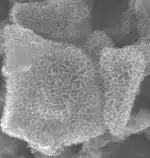
Hu created a chemical reaction by combining lithium oxide with carbon monoxide to form lithium carbonate (Li2CO3). When this compound was applied to standard atom-thick two-dimensional version, a honeycomb-like structure was formed. An acid is used to remove any traces of LiC203, leaving a perfect 3D structure demonstrating high conductive and catalytic activity.
The researchers then replaced the platinum counter electrode in a dye-sensitised solar cell with one made of the 3D honeycomb graphene. The cell achieved a power efficiency of 7.8 percent.
The average efficiency level of standard dye-sensitised solar cells is around 8 percent; but the promise of the technology lies in its low cost of manufacture and the ability to be sprayed or printed onto glass or ceramic surfaces.
Hu was this year awarded the McArthur Professor chair for his groundbreaking research on the use of graphene in photovoltaic systems. He says synthesising the 3D honeycomb graphene was neither expensive nor difficult and making it into a semiconductor for a solar cell posed no special challenges.
A paper describing the MTU team’s work was published in the journal Angewandte Chemie, International Edition.
Source