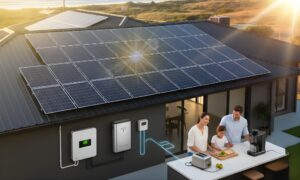






Are you tired of watching your electricity bills climb higher every year? Many homeowners in Australia are turning to solar heat pump systems to regain control over their household expenses and energy use.
By combining solar power with advanced air-to-water technology, you can create a self-sustaining loop. This synergy does more than just heat your water; it transforms how your entire home consumes energy.
The secret lies in the “hidden” benefits that most people overlook when they think about simple solar panels. Let’s dive into why this combination is the ultimate “power couple” for the modern Australian home.

What is a solar heat pump system?
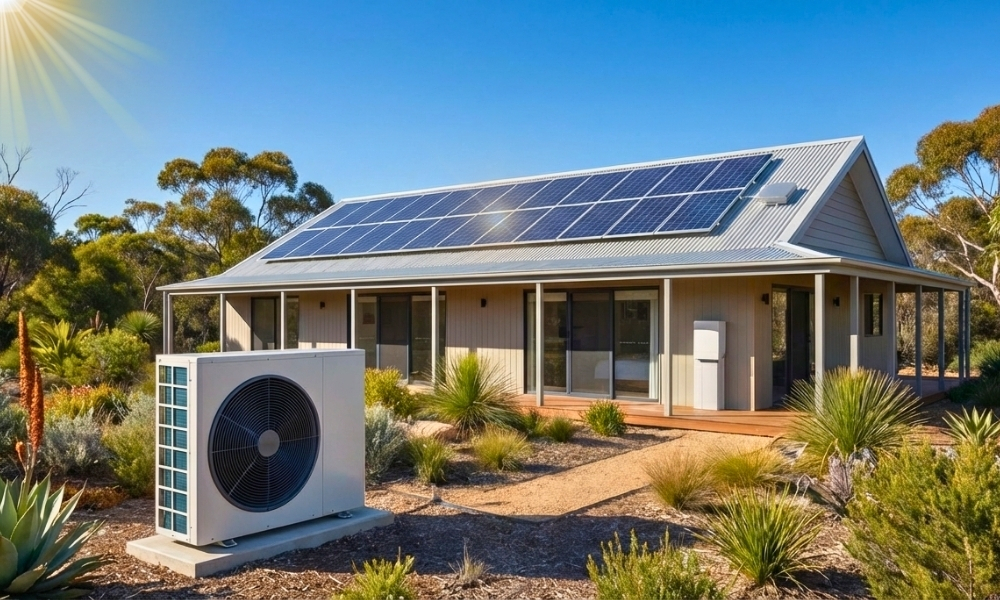
A solar heat pump system in Australia integrates two distinct but complementary technologies to provide high-efficiency heating. The solar photovoltaic (PV) panels on your roof convert sunlight into electricity, while the heat pump uses a small amount of that power to extract heat from the surrounding air.
Think of it like a refrigerator working in reverse. Instead of pushing heat out to keep food cold, it pulls heat from the ambient air into your water or living spaces to warm them. When these systems work together, they create a nearly closed-loop energy cycle. You are essentially using “free” electricity in your home to move “free” heat from the environment.
The thermal battery: Your hidden storage solution
One of the most significant hidden benefits of a solar heat pump system in Australia is its ability to act as a “thermal battery.” While many people spend thousands on lithium-ion batteries, a well-insulated hot water tank can store energy just as effectively.
During the middle of the day, when your solar panels are producing peak power, your heat pump can run at maximum capacity. This “charges” your water tank with high-temperature water that stays hot for hours, or even days.
This process allows you to store solar energy as heat rather than electricity. It is a cost-effective way to ensure you have hot water during the evening without relying on expensive grid power.
Why the Australian climate is perfect for heat pumps
Australia’s climate is well-suited to this technology. Because heat pumps extract energy from the air, the relatively mild winters in most Australian regions mean the system rarely has to work hard.
Even in cooler areas such as Tasmania or the Victorian highlands, modern “cold-climate” heat pumps can operate efficiently at temperatures well below freezing. However, in sun-drenched states such as Queensland and WA, a solar heat pump system operates at peak efficiency year-round.
The abundant sunlight ensures your PV panels are almost always generating enough power to meet the heat pump’s compressor load. It is a match made in geographical heaven.


What are the hidden energy benefits of combining solar + heat pumps?
A solar heat pump system installed in Australian households unlocks hidden energy benefits beyond simple savings.
1. Maximising energy self-consumption
A major challenge for solar owners is “exporting” too much power back to the grid for a low feed-in tariff. A solar heat pump system in Australia solves this by increasing your “self-consumption” rate significantly.
- Smart scheduling: You can set your heat pump to operate between 10 am and 3 pm, when solar production is highest.
- Offsetting peak rates: By heating your water during the day, you avoid using energy during the expensive evening peak periods.
- Reducing grid reliance: Every kilowatt-hour your heat pump draws from your panels is a kilowatt-hour you don’t have to buy from an energy retailer.
Using your own power is always more profitable than selling it back. This strategy ensures you get the best possible return on investment for your solar installation.
2. Improved home energy ratings
A solar heat pump system that Australian property owners choose can improve energy ratings.
- Higher energy ratings increase property value.
- They also make homes more attractive to buyers and renters.
- Energy-efficient homes are becoming a key requirement in Australia’s housing market.
2. Environmental impact: A greener neighbourhood
Switching to a solar heat pump system in Australia is one of the most impactful ways to reduce your household’s carbon footprint. Water heating typically accounts for about 25% of a home’s total energy consumption. Use Energy Matters’ carbon footprint calculator to calculate your household and business’s direct emissions.
This transition helps the community reach “Net Zero” goals faster. It also prepares your home for a future in which gas connections may be phased out in favour of all-home electrification systems.
3. Financial incentives and rebates in 2026
The Australian government continues to support the transition to renewable energy with substantial financial incentives. If you are looking to install a solar heat pump system in Australia, 2026 offers several avenues to reduce your upfront costs.
The Small-scale Technology Certificates (STCs) remain a primary driver of affordability nationwide. These certificates serve as a point-of-sale discount, often reducing the total price of your system by over $1,000.
Additionally, states such as Victoria and New South Wales offer targeted rebates through programs such as the Solar Homes Program and the Energy Savings Scheme (ESS). In some cases, you can stack these rebates to save thousands of dollars on a high-efficiency upgrade. Check out my blog, VIC & NSW Heat Pump Hot Water Rebates for 2026, for further details.
How solar heat pump systems compare to traditional systems
| Feature | Solar Heat Pump System Australia | Electric Water Heater | Gas Heating |
| Energy efficiency | Very high | Low | Medium |
| Running costs | Very low | High | Rising |
| Emissions | Near zero | High | High |
| Solar compatibility | Excellent | Limited | None |
| Long-term savings | Significant | Minimal | Declining |


Maintenance tips for long-term savings
A solar heat pump system in Australia is a long-term investment that can last 15 years or more with proper care. Maintenance is generally low, but a few simple checks will help maintain your efficiency.
- Clean your solar panels: Dust and bird droppings can reduce your solar output by 10% or more; a quick rinse twice a year makes a big difference.
- Check the air intake: Ensure the heat pump unit is free of debris, leaves, or overgrown plants to ensure maximum airflow.
- Inspect valves: Regularly check the pressure and temperature relief valves on your tank to ensure they are functioning correctly.
- Professional service: Have a licensed technician inspect the refrigerant levels and electrical connections every 3 to 5 years.
Pro tip: If you’re going on holiday, don’t forget to use the “Vacation Mode” on your heat pump. This prevents the system from unnecessarily heating water while you’re away, saving you even more on your next bill.
Energy Matters can help you connect with trusted, accredited solar professionals across Australia. We partner with Solar Service Guys, who can perform solar system health checks.
Why Energy Matters recommends solar heat pump systems
Combining solar power with a heat pump is the smartest energy move an Australian homeowner can make today. A solar heat pump system in Australia not only slashes your bills but also provides a reliable, eco-friendly way to enjoy hot water. By leveraging your tank’s thermal storage, you can maximise your solar investment and achieve true energy independence. The “hidden” benefits are clear: more savings, less waste, and a smaller carbon footprint for a brighter future.
Ready to start your journey toward energy independence? Contact Energy Matters today for a fast, free solar and heat pump quote! Join over 40,000 Australians who have switched to a cleaner, cheaper energy future with Energy Matters.