




If you have invested in solar, you likely want to understand how solar battery storage degradation affects your savings. Every battery loses capacity over time, but the harsh Australian climate poses unique challenges for energy storage systems.
Understanding why battery degradation happens — and what you can do about it — helps you protect your investment and get more clean energy from your solar system for longer.
What is battery degradation?
Battery degradation is the gradual loss of a battery’s capacity and performance over time. A new battery might store 10 kilowatt-hours (kWh) of energy. After several years of use, that same battery may only hold 8 kWh or less.
This decline occurs due to chemical and physical changes within the battery. It is completely normal. However, the rate of degradation can vary widely depending on how you use and maintain your battery.
Most quality home batteries sold in Australia are designed to retain at least 70–80% of their original capacity after 10 years. Understanding the causes of solar battery degradation helps you slow the process as much as possible.



How does a solar battery work?
Solar batteries store the excess electricity generated by your solar panels during the day. You can then use that stored energy at night or during peak times when grid electricity costs more.
Most modern solar setups in Australia use Lithium-ion (Li-ion) or Lithium Iron Phosphate (LiFePO4) chemistry. While these are durable, they are not immune to the laws of physics. Over time, the battery’s “health” declines, meaning it can no longer hold as much charge as it did on day one.
Inside the battery, lithium ions move between a positive cathode and a negative anode through an electrolyte. Each charge and discharge cycle gradually alters the chemistry of these materials, a key driver of battery degradation.
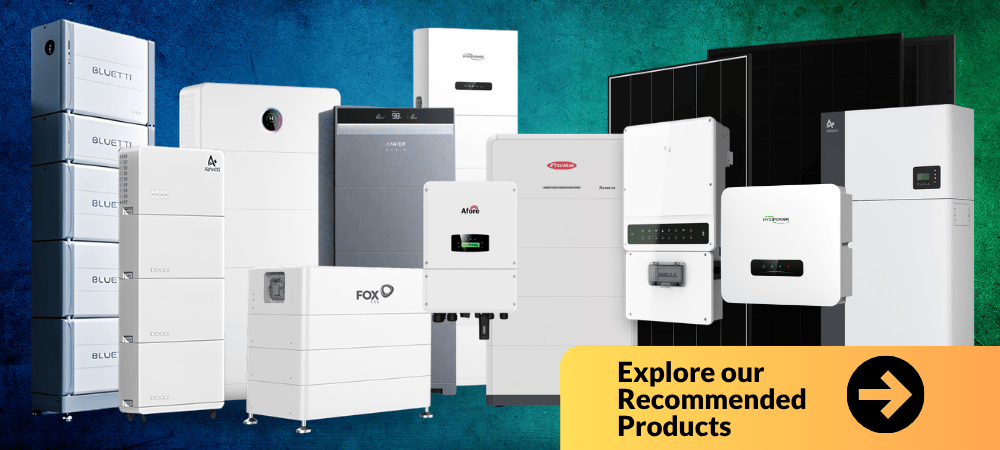
Check our page for our recommended solar battery products.
Solar battery degradation causes: What you need to know
There are several causes of solar battery degradation that affect home battery systems in Australia. Some are related to chemistry, while others are linked to how the battery is used or where it is installed.
1. Charge and discharge cycles
Every time a battery charges and discharges, it completes one cycle. Lithium-ion batteries are typically rated for a set number of cycles — often between 3,000 and 10,000 — before they lose significant capacity.
Performing full charge-and-discharge cycles (0% to 100%) puts more stress on the battery than shallower cycles. Keeping the battery between 20% and 80% charge, where possible, can help slow battery degradation.
2. High temperatures
Heat is one of the biggest causes of solar battery degradation. Australia’s climate makes this especially relevant. High temperatures accelerate the chemical reactions inside lithium-ion cells, leading to faster degradation of the electrolyte and electrode materials.
Batteries stored or installed in hot spaces — like an unshaded outdoor wall or a hot garage in Queensland or Western Australia — may degrade much faster than those kept in cooler conditions.
3. Overcharging and over-discharging
Consistently charging a battery to 100% or draining it to 0% can accelerate battery degradation. Modern battery management systems (BMS) help prevent extreme states of charge, but user settings and system configuration also play a role.
Some battery manufacturers recommend setting the maximum charge limit to 90% and the minimum to 10–20%. This reduces strain on the cells and extends overall battery life.
4. High charge and discharge rates
Rapidly charging or discharging a battery pushes more current through the cells at once. This generates extra heat and can cause lithium plating — a condition in which lithium metal deposits on the anode — thereby accelerating battery degradation.
This is less of a concern for most home systems, which operate at moderate rates, but it is worth knowing if you plan to use your battery for high-demand applications.
5. Calendar ageing
Even when not in use, batteries degrade over time. This is called calendar ageing. It occurs due to slow side reactions within the cells and is unavoidable, though it is slower in cooler storage conditions.
Storing a battery at a partial state of charge (around 50%) and in a cool location can help reduce calendar ageing during periods of low use.
Key battery degradation factors
| Degradation Cause | Impact Level | How to Minimise It |
| Heat / High temperatures | Very High | Install in a shade or a cool area |
| Full charge/Discharge cycles | High | Keep charge between 20–80% |
| Overcharging | High | Set the charge limit to 90% |
| Over-discharging | High | Set minimum charge to 10–20% |
| High charge/Discharge rate | Moderate | Avoid very rapid charging |
| Calendar ageing | Low–Moderate | Store at ~50% in a cool location |
How to minimise battery degradation in Australia
The good news is that there are practical steps you can take to slow battery degradation and extend the life of your home battery. Here are the most effective strategies for Australian households.
Install your battery in a cool, shaded location
Where you place your battery matters a great deal. Avoid direct sunlight and poorly ventilated spaces. A shaded wall, an indoor laundry, or a cool garage is much better than a north-facing outdoor wall that bakes in the afternoon sun.
Many battery manufacturers specify a maximum operating temperature. Keeping your battery within this range will significantly reduce battery degradation over time.
Optimise your charge settings
Most modern battery systems allow you to set charge and discharge limits. Consider these recommended settings to slow battery degradation:
- Set the maximum charge limit to 80–90% for daily use
- Set the minimum discharge limit to 10–20%
- Reserve 100% charge only for times when you expect a power outage or extended cloudy weather
- Use your battery’s built-in software or app to schedule charging during cooler parts of the day
Keep your software and firmware updated
Battery manufacturers regularly release firmware updates that improve battery management algorithms. These updates can optimise charging behaviour and help slow battery degradation.
Ensure your installer sets up your battery with remote monitoring so you can track its health over time. Early detection of issues can prevent bigger problems later.
Schedule regular maintenance checks
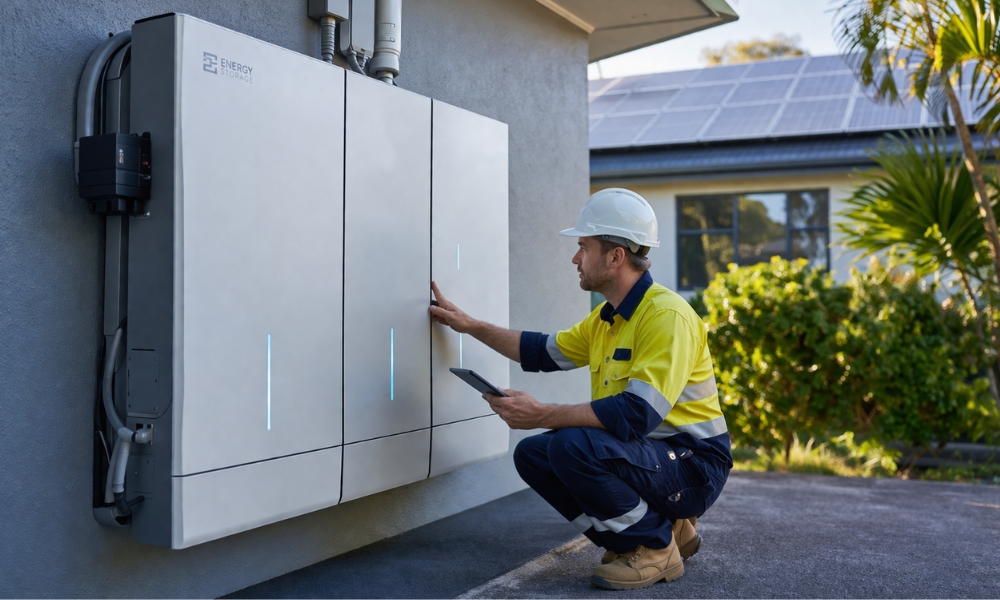
Have a qualified solar and battery technician inspect your system at least once every two years. They can check for:
- Unusual temperature readings
- Errors or faults in the battery management system
- Connection quality and corrosion
- Software or firmware issues
- Overall battery health and capacity

Choose the right battery chemistry
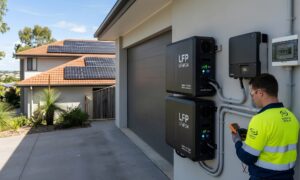
Lithium iron phosphate (LFP) batteries generally have a slower rate of battery degradation compared to other lithium-ion types like NMC (nickel manganese cobalt). LFP batteries handle heat better and can tolerate more charge cycles.
If you live in a hot part of Australia — such as Darwin, Perth, or inland Queensland — choosing an LFP battery is a smart move.
Use Energy Matters’ easy-to-use solar power and battery storage calculator to determine the size of your solar system with storage! Our solar calculator will generate performance information and potential savings.
We can send this information to 3 of our pre-vetted, trusted local installers in your area to receive obligation-free solar quotes and take the first step toward true energy independence!

When should you replace a degraded battery?
You do not need to replace a battery the moment it starts to degrade. Most homeowners replace their battery when it can no longer meet their daily energy needs — typically when it has lost more than 20–30% of its original capacity.
Signs it may be time to consider replacement include:
- Your battery runs out of charge much earlier in the evening than it used to
- Your energy bills are rising despite using the same amount of power
- Your battery monitoring app shows a significant drop in usable capacity
- The battery is approaching the end of its warranty period, and performance has declined
Newer battery models often offer better energy density and performance than older ones. Replacing an ageing battery can be a good opportunity to upgrade to a higher-capacity system.
Ready to upgrade your home energy? Get a quick solar quote from Energy Matters today and find the perfect battery for your needs.