




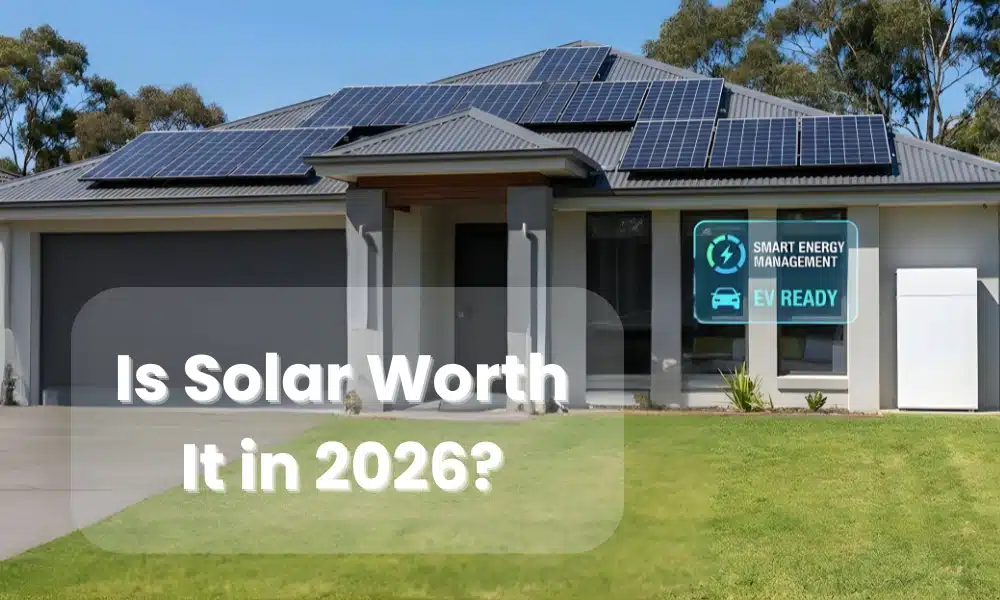
The Australian energy market is changing fast, leaving many homeowners asking: Is solar worth it in Australia in 2026? While the days of massive feed-in tariffs are gone, the financial case for rooftop solar remains incredibly strong. Electricity prices are rising, and the technology is more efficient than ever.
This guide explains why investing in solar is still the smartest move for your wallet and the planet. By shifting your focus from “selling solar power” to “saving solar power,” you can achieve total energy independence.

Is solar worth it in Australia in 2026? The shifting landscape
By 2026, the solar industry will have moved away from the “set and forget” export model. In the past, households earned money by sending excess energy back to the grid. Today, the real value lies in self-consumption—using every watt you generate to power your own appliances.
Electricity retailers continue to hike rates, with many Australians paying between 30 and 40 cents per kilowatt-hour (kWh). Meanwhile, feed-in tariffs (FiTs) have dropped to as low as 2-5 cents in most states. This gap creates a strong incentive to stay “behind the meter.”
Even with lower incentives, the question of whether solar is worth it in Australia in 2026 is answered by the “avoided cost” of grid power. Every unit of solar power you use saves you the full retail price of electricity. This remains the fastest way to pay off your system.
The rebate reality: STC reductions in 2026
The federal government’s solar “rebate,” known as Small-scale Technology Certificates (STCs), is designed to phase out by 2030. Every year on January 1st, the number of certificates a system can earn decreases.
- In 2026, the upfront discount on a 10kW solar system will be roughly $400–$500 lower than in 2025.
- The solar rebate for a typical system now covers approximately 20-25% of the total installation cost.
- Despite this reduction, the decline in solar panel prices has largely offset the loss of government support.
Waiting for “better technology” or “higher rebates” is usually a losing game. The savings on your bills from owning the system far outweigh the slight reduction in the upfront discount. If you are debating whether solar is worth it in Australia in 2026, the answer is to act sooner rather than later to lock in higher STC values.
Contact us today for up to 3 FREE quotations from residential or commercial solar firms we’ve pre-qualified and vetted for their track record of delivering Australia’s best home or business solar systems. Energy Matters has been recognised for our continued excellence in the Australian solar industry. We provide our customers with high-quality resources, insight, and access to reputable solar quotes.
Why low feed-in tariffs aren’t the dealbreaker
Many people worry that low feed-in tariffs make solar unprofitable. This is a common misconception. When you ask whether solar is worth it in Australia in 2026, you must look at your total bill reduction, not just the “solar credit” line on your statement.
The export rate is low because the grid is flooded with solar during the day. However, your retail electricity price includes “poles and wires” costs, taxes, and retailer margins. You avoid these costs by generating your own solar energy.
The “Avoided Cost” strategy
To maximise your ROI, you should run heavy appliances during peak sunlight hours. This includes:
- Setting dishwashers and washing machines to run at noon.
- Heating electric hot water tanks during the day.
- Pre-cooling or pre-heating your home with air conditioning while the sun is out.



2026: The year of the solar battery
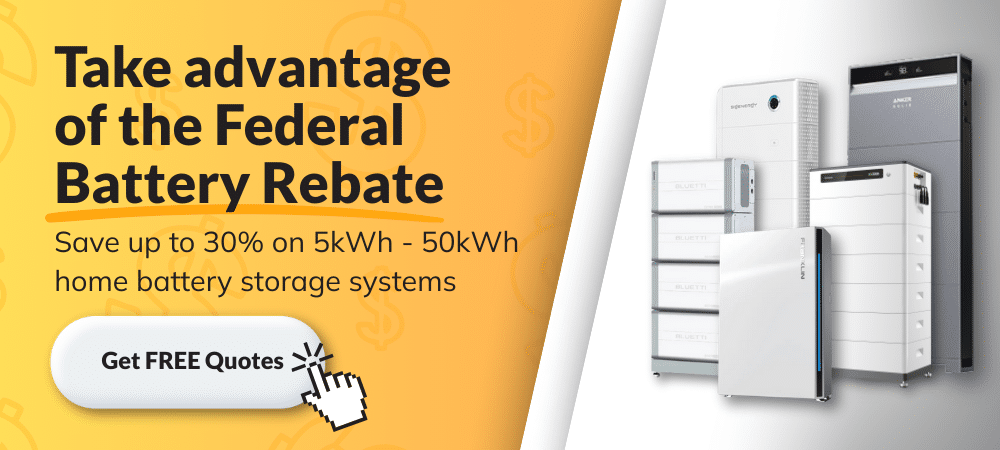
By 2026, solar batteries will have transitioned from a luxury item to a baseline expectation. With the introduction of the federal “Cheaper Home Batteries Program,” the upfront cost of storage has dropped significantly.
However, the program is scheduled for a major overhaul on May 1, 2026. After this date, the rebate factor for batteries will decline every six months rather than annually. Additionally, systems larger than 14kWh will see a “tapered” reduction in support.
If you have a high evening energy load, a battery is essential. It allows you to store your “5-cent” excess energy and use it during the “40-cent” peak evening period. This can reduce your grid reliance by up to 90%, making the investment highly lucrative.
Use Energy Matters’ easy-to-use solar power and battery storage calculator to determine the size of your solar system with storage! Our solar calculator will generate performance information and potential savings.
We can send this information to 3 of our pre-vetted, trusted local installers in your area to receive obligation-free solar quotes and take the first step toward true energy independence!

Future-proofing with EVs and VPPs
The rise of Electric Vehicles (EVs) has completely changed the maths for rooftop solar. An EV is a giant battery on wheels that requires a significant amount of electricity to charge.
Charging an EV from the grid can cost hundreds of dollars a year. Charging it from your rooftop solar is virtually free. By 2026, most new solar systems will be “EV-ready,” enabling you to charge your EV directly from your solar system. This effectively turns your solar panels into a private petrol station.
Powering up your EV with solar
If you’re thinking of buying an EV, adding an EV charger to your solar system is a smart way to “fuel” your car with clean, renewable energy.
Furthermore, Virtual Power Plants (VPPs) are now mainstream. By joining a VPP, you allow a provider to draw power from your battery to support the grid occasionally. For more information, visit our VPP offers in Australia page.
In exchange, you receive feed-in tariffs or direct monthly credits. This is a game-changer for anyone asking whether solar is worth it in Australia in 2026.

How to guarantee a fast ROI
To ensure your system pays for itself quickly, you must choose quality over the lowest price. Low-cost components often fail within five years, eroding any savings you made.
- Choose N-type solar panels: These offer better efficiency and slower degradation.
- Invest in smart monitoring: Use apps to track your production and consumption in real-time.
- Size your system correctly: A 6.6kW system was the standard, but 10kW+ is now recommended for homes with EVs or batteries.
When considering whether solar is worth it in Australia in 2026, remember that the average payback period for a well-designed 10kW system is still roughly 5 to 7 years. Given that panels are warrantied for 25 years, you are looking at nearly two decades of free electricity.
So, is solar worth it in Australia in 2026?
Absolutely. Even with lower feed-in tariffs and smaller rebates, solar power remains a smart investment. Rising electricity prices, improved batteries, and smarter energy use make solar more valuable than ever. The key is to act early and choose the right system.
Energy Matters is ready to help you unlock long-term savings, energy security, and peace of mind. Make the switch today.
Going solar with confidence
Energy Matters is here to guide you every step of the way. We help Australian home and business owners receive personalised solar quotes through our large network of high-quality solar installers. We work only with reputable solar companies with a proven track record of delivering high-quality solar systems.