






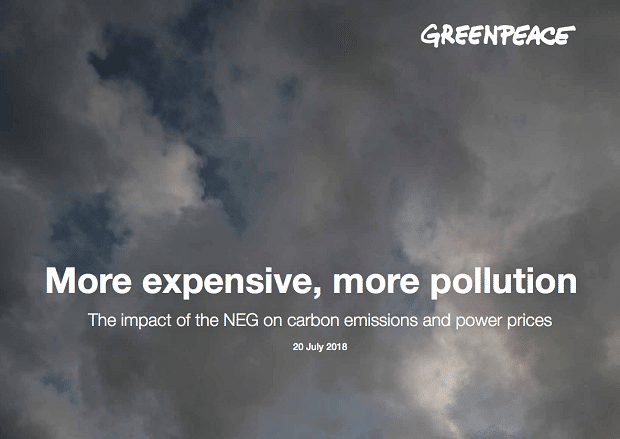
The Coalition’s National Energy Guarantee (NEG) will stunt the growth of renewable energy, raise power prices and do nothing to combat climate change, new NEG modelling shows.
In addition, the NEG in its current form would see power prices rise by around 25 per cent by 2030.
The analysis compares the impact of the NEG’s 26 per cent carbon emissions reduction target on Australia’s National Energy Market wholesale prices to a more ambitious 45 per cent target.
The report, commissioned by energy analyst Reputex for Greenpeace Australia, labels the NEG “grossly inadequate”. Under current policy, it says electricity sector emissions would more than meet the 26 per cent target proposed.
Do-nothing NEG has to be more ambitious
Reputex’s NEG modelling reveals that, in its current form, the NEG will have no impact on driving new investment in renewable energy. However, under a higher 45 per cent target, renewables would reach half of the nation’s of electricity generation by 2030, compared to 42 per cent of generation under business as usual.
On power prices, a 45 per cent target would see wholesale prices fall to around $60/MWh by 2030 as more renewable energy comes online. Under the NEG, prices would remain at a steady $80/MWh.
This is primarily due to the NEG’s stance on coal. Power prices remain higher because coal continues to dominate the system under the scheme. The NEG would also see gas become the preferred source of dispatchable power as coal plants are eventually retired.
A more ambitious target would impose limits on emissions from coal-fired generators, Reputex says. A 45 per cent emissions goal would create more investment in new large-scale renewable energy projects, driving up to 22 GW of solar and wind capacity.
NEG modelling: Ramped-up target means coal burns out sooner
The modelling figures in more than 6,600 MW of coal retiring by 2030. Specifically, these plants include Liddell, Yallourn, Tarong and Vales Point.
A range of technologies would meet the forecast growth in demand for electricity post-coal, the report states. Solar and wind power, supported by flexible battery storage and dispachable gas, would provide grid stability.
Among its findings, Reputex estimates:
- up to 35 GW of renewable energy capacity would feed into the NEM by 2030 (plus an additional 12 GW of small-scale PV, such as rooftop solar power); and
- Australia’s carbon emissions would fall to 88 metric tonnes per annum (i.e. 50% below 2005 levels).
“This report confirms that an energy system with more renewables will be not only cleaner, but cheaper than the government’s do-nothing National Energy Guarantee,” said Greenpeace Australia’s Nikola Casule.