

A new study has shown that the U.S. energy grid, with just minor upgrades to transmission lines and without any added storage capacity, could handle over 35 GW of offshore wind power capacity – enough to supply about 10 million homes with clean electricity.
That figure could double to 70 GW as wind forecasting technology improves, according to researchers from the University of Delaware and Princeton University.
The researchers have completed a first-of-its-kind simulation with PJM Interconnection, one of the country’s largest grid operators supplying 186 GW of electricity to more than 60 million people in 14 states on America’s Eastern Seaboard.
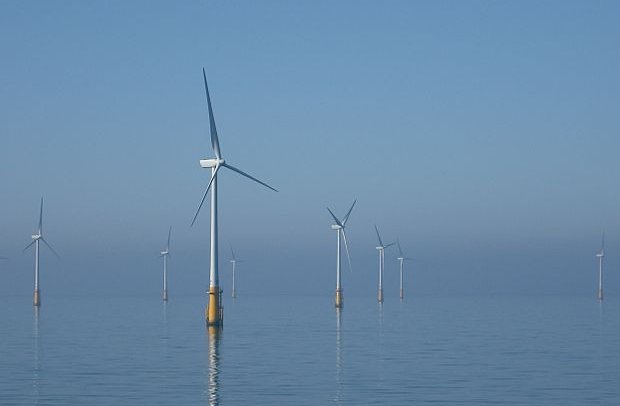
The model, called Smart-ISO, is aimed at helping PJM to integrate growing sources of naturally intermittent and variable sources of offshore wind power. It simulates how the network’s 60,000 miles of transmission lines would handle the installations of between seven and 70 GW of new offshore wind on the East Coast.
“What would you do as a grid operator if you thought it was going to be windy today and it isn’t, or if the wind storm arrives earlier than expected. We simulated the entire PJM grid, with each power plant and each wind farm in it, old and new, every five minutes,” said Cristina Archer, associate professor of physical ocean science and engineering at the University of Delaware.
Although wind energy would always require some form of back-up generation to ensure supply – known as “spinning reserve” – the Smart-ISO model revealed better management of grid infrastructure and advancements in wind power forecasting tools could overcome major variability issues.
“The uncertainty of wind will require that we develop strategies to minimize the need for spinning reserve,” said Warren Powell, professor and lead researcher at Princeton in charge of the SMART-ISO model. “Although we found that reserves were needed — 21 percent of the 70-gigawatt wind capacity — there are a number of strategies that could be investigated to better handle the variability as wind grows in the future.”
At the highest build-out level of 70 GW – a figure nearly equal to the current installed wind capacity of the whole United States – offshore wind power would provide major health and economic benefits to society, said Archer.
“We saw up to a 50 percent reduction in carbon and sulfur dioxide and up to a 40 percent reduction in nitrogen oxides emissions at the highest build-out level, a 70-gigawatt set of wind farms. Plus, the costs of electricity would go down every month except in July when air conditioning is at a peak,” Professor Archer said.
“Wind power is a very good idea—for people’s health and their wallets.”
The two-part study is published in the journal Renewable Energy – Part I : Part II