



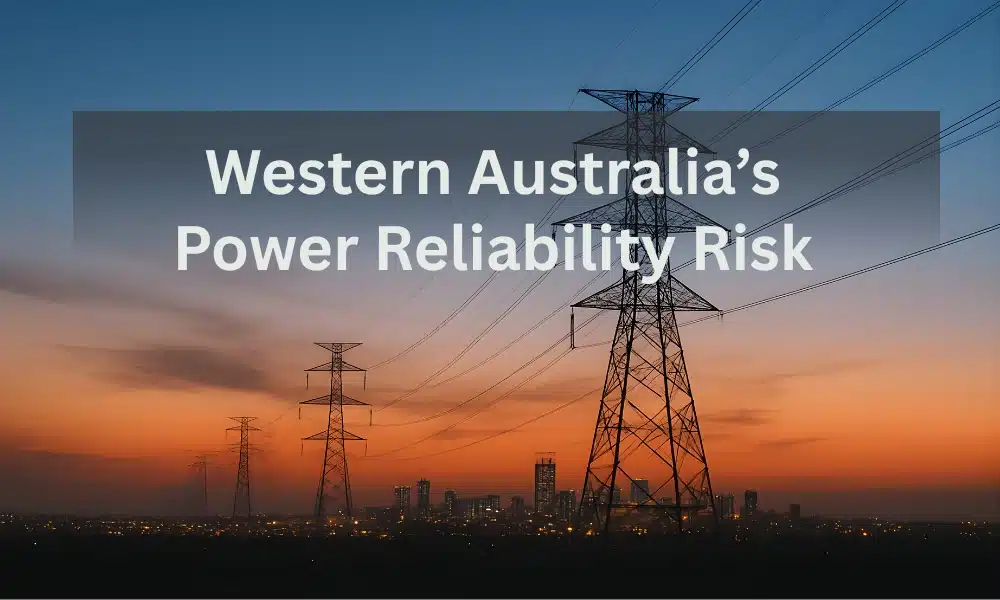
What power reliability risks lie ahead for Western Australia? WA faces a shifting mix of climate threats, retiring thermal plants, and grid transformation challenges that together change how reliably electricity reaches homes and businesses. This post breaks down the key risks, the likely impacts, and practical responses for households, businesses and policymakers. Read on and take action with Energy Matters to improve resilience and reduce your exposure to outages.
Why this matters now
Western Australia’s electricity system has seen record peaks, weather-driven outages and rapid change in generation types — making power reliability risks for Western Australia a near-term policy and household priority. AEMO’s 2025 WEM outlook flagged tight summer reserves and continuing reliability pressure.

The top power reliability risks for Western Australia
- Extreme weather and climate-driven shocks
- Heatwaves, storms, and bushfires raise demand (air-conditioning) while damaging poles, lines and substations. Western Power’s summer preparedness shows this is an ongoing stressor.
- Example: heavy but drizzly conditions caused pole-top fires and widespread outages in January 2025.
- Capacity shortfalls as thermal plants retire
- Retirement of synchronous generators reduces dispatchable capacity and system strength; AEMO warns of narrow reserve margins unless new capacity (or procurement) fills the gap.
- Network fragility and aging infrastructure
- Long rural spans of poles and wires are vulnerable to weather and vegetation — repeated faults magnify regional outage risk. Western Power’s maintenance programs are substantial but expensive and continuous.
- System strength and stability challenges with more renewables
- Rapid growth of rooftop solar and inverter-based resources can reduce system inertia, complicating frequency control and islanding responses. AEMO’s GPSRR flags minimum system load and protection system interactions as priority risks.
- Transmission constraints and project delays
- Large-scale wind, solar and battery projects depend on timely transmission upgrades. Reporting suggests some projects have stalled, raising the risk that new capacity won’t arrive when needed.
- Cybersecurity threats
- A successful cyberattack on Western Australia’s power grid could have catastrophic consequences, leading to widespread blackouts, economic disruption, and even risks to public safety.
- Protecting critical infrastructure from sophisticated cyber threats requires continuous vigilance, advanced security protocols, and robust incident response plans.
Likely impacts (who feels it, and how)
- Households: more frequent or longer outages, higher peak-time prices, and increased exposure to heat-related health risks.
- Businesses & industry: production interruptions, contract penalties, and higher hedging or back-up costs.
- Remote communities: disproportionate outage risk where single feeders serve many customers.
- Grid operators & policy makers: a need for emergency procurement, new market mechanisms, or temporary reliance on gas/backup generators.
What can households and businesses do now?
- Invest in resilience: rooftop solar paired with a battery reduces outage exposure and peak bills.
- Prepare a short-outage kit: cooling, medication, fridge strategy and communications plan.
- Shift flexible loads: use timers or smart tariffs to avoid system peaks, reducing the risk of emergency interventions.
- Consider backup for critical loads: small dedicated backup inverters or portable generators for essential equipment.




The path forward: Mitigating risks and building resilience
Addressing these power reliability risks requires a multi-pronged approach.
- Grid modernisation: Investing in smart grid technologies, including advanced sensors, automated controls, and predictive analytics, can enhance grid visibility, enable faster fault detection, and improve overall operational efficiency.
- Infrastructure hardening: Upgrading infrastructure to be more resilient against extreme weather events, such as undergrounding power lines in high-risk areas and using more robust materials, can significantly reduce outage frequency and duration.
- Diversification of energy sources: While increasing renewables, maintaining a diverse energy mix, including flexible gas-fired generation, can provide essential firming capacity and enhance grid stability.
- Cybersecurity frameworks: Implementing and continuously updating robust cybersecurity frameworks, conducting regular vulnerability assessments, and fostering a culture of cybersecurity awareness within the energy sector are vital.
- Demand-side management: Encouraging energy efficiency and implementing demand-side programs can help balance supply and demand, reducing peak loads and grid stress.
- Energy storage solutions: Implementing large-scale battery storage and other energy storage technologies can help mitigate the intermittency of renewables by storing excess energy and discharging it when needed.
Use Energy Matters’ easy-to-use solar power and battery storage calculator to determine the size of your solar system with storage! Our solar calculator will generate performance information and potential savings.
We can send this information to 3 of our pre-vetted and trusted local installers in your area to receive obligation-free solar quotes and take the first step towards true energy independence!

Key information summary
| Risk Category | Description | Impact on Reliability | Mitigation Strategies |
| Renewable intermittency | Fluctuations in solar and wind output. | Supply gaps, voltage instability. | Energy storage (batteries), flexible generation, and advanced grid controls. |
| Aging infrastructure | Deterioration of lines, substations, and equipment. | Increased faults, outages, and reduced efficiency. | Infrastructure upgrades, proactive maintenance, and smart grid technologies. |
| Extreme weather | Bushfires, cyclones, and heatwaves are impacting assets. | Physical damage, widespread outages, and increased demand. | Infrastructure hardening, undergrounding, and climate-resilient designs. |
| Cyber security | Malicious attacks on digital control systems. | Grid disruption, blackouts, data breaches. | Robust cybersecurity frameworks, continuous monitoring, and incident response. |
| Demand growth | Increasing electricity consumption from population/economic expansion. | Strain on existing capacity, potential for supply shortfalls. | Investment in new generation/transmission, demand-side management, and energy efficiency. |
| Market volatility | Price fluctuations and supply chain issues. | Affects investment in new projects and operational costs. | Diversified energy sources, long-term contracts, and regulatory stability. |
| Regulatory uncertainty | Shifting policies impacting investment and development. | Delays in project implementation, investor reluctance. | Clear, consistent policy frameworks and stakeholder engagement. |
Sources/References: Australian Energy Market Operator (AEMO) – Latest electricity reliability outlook for WA’s main grid highlights ongoing investment opportunities, 2025 General Power System Risk Review Report | Western Power – New reliability data available on Western Power website | ABC – Western Power says 39,000 properties across WA were left without electricity due to pole-top fires


Act now to strengthen WA’s energy independence
Western Australia stands at a pivotal juncture in its energy journey. Proactively addressing the inherent power reliability risks associated with its evolving grid is not just an option, but a necessity. By embracing innovative technologies, investing in robust infrastructure, and fostering strategic partnerships, WA can secure a reliable, sustainable, and resilient energy future.
Take the next step with Energy Matters — explore solar + battery quotes and resilience options today to protect your home or business from future outages.