




The electric vehicle (EV) revolution is accelerating across Australia, prompting an important question: what happens when those large lithium-ion batteries reach their ‘end-of-life’ in a car? The answer lies in the expanding field of second-life batteries in Australia. These repurposed energy storage units are not just environmentally friendly; they also provide a significant opportunity to reduce energy costs and strengthen the national power grid.
Powering up your EV with solar
If you’re thinking of buying an EV, adding an EV charger to your solar system is a smart way to “fuel” your car with clean, renewable energy.
What are second-life batteries?
Second-life batteries, or repurposed EV battery packs, are those whose performance is no longer sufficient for vehicular use but still retain meaningful capacity (often 70–80 %) for less demanding roles.
In a sense, the battery’s first life is in the vehicle; its second life is in stationary storage, grid services, solar integration, backup power, or microgrids.
Why Australia needs second-life batteries
- Renewable integration challenge: Australia is seeing surges in rooftop solar and wind; energy storage is critical to balance supply and demand.
- Waste & resource pressure: The volume of retired EV batteries will increase, and recycling alone will struggle to absorb that flow.
- Cost reduction for storage: Second-life systems generally cost less per kilowatt-hour than new batteries, making storage more accessible.
- Circular economy & emissions: Extending battery life delays mineral extraction and reduces embedded emissions per useful energy delivered.

How second-life batteries are repurposed
The conversion from an EV battery to a second-life module generally involves:
- Diagnostic testing & sorting – measuring state-of-health, residual capacity, internal resistance
- Disassembling modules/cells – separating by chemistry and condition
- Reconfiguration & packaging – regrouping cells into new modules with matching performance
- Integration & control – applying a compatible battery management system (BMS) and protective systems
- Certification & deployment – ensuring safety, compliance, and grid integration
Some systems also refurbish individual cells or use hybrid models that blend old and new cells.
Core applications for second-life batteries
Repurposed EV batteries are uniquely suited for applications where size and weight are less critical than in a vehicle, but consistent capacity is essential. They are providing affordable, reliable energy storage solutions across multiple sectors.
Residential energy storage solutions
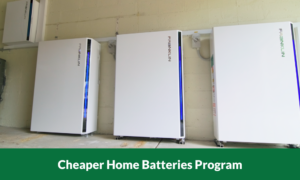
One of the most promising applications is in home solar battery energy storage. For Australian homeowners with rooftop solar PV systems, a second-life battery offers a cost-effective way to store excess daytime solar energy for use at night, drastically increasing energy self-sufficiency.
- Cost savings: These repurposed units typically cost 30-70% less than brand-new battery systems.
- Solar optimisation: They allow for greater self-consumption of renewable energy, reducing reliance on grid electricity and cutting power bills.
- Backup power: They provide resilience during grid outages, securing power for essential appliances.
Use Energy Matters’ easy-to-use solar power and battery storage calculator to determine the size of your solar system with storage! Our solar calculator will generate performance information and potential savings.
We can send this information to 3 of our pre-vetted and trusted local installers in your area to receive obligation-free solar quotes and take the first step towards true energy independence!

Commercial and industrial scale systems
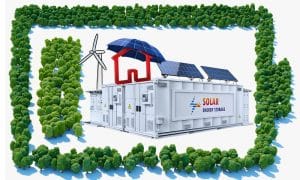
Businesses, particularly those with significant peak energy demand, can deploy repurposed batteries for commercial solar and industrial (C&I) applications. These larger installations, known as Battery Energy Storage Systems (BESS), help manage energy costs and demand.
- Peak shaving: Storing cheap off-peak power or solar energy for use during expensive peak times.
- Demand management: Reducing the costly draw on the grid during peak demand periods.
- Enhanced sustainability: Demonstrating a commitment to the circular economy and environmental stewardship.
Grid support and utility-scale projects
On a larger scale, aggregated second-life batteries can provide vital services to the electricity grid, improving stability and supporting the integration of intermittent renewable energy sources such as wind and solar farms.
- Frequency regulation: Responding quickly to balance the grid’s electricity frequency.
- Renewable firming: Storing surplus energy from utility-scale solar or wind to dispatch when the generation dips.
- Infrastructure deferral: Providing local storage solutions can defer the need for expensive upgrades to transmission and distribution infrastructure.


Challenges & risks
- Battery health assessment at scale: Inconsistent usage histories make sorting tricky.
- Diverse chemistries and BMS integration: Mismatched modules complicate control and safety.
- Warranty and bankability: Investors demand robust insurance and standardised performance guarantees.
- Regulatory uncertainty: Few standards exist today specifically for second-life battery reuse.
- End-of-life tradeoff: Eventually, even second-life units degrade and must be recycled — managing that transition is essential.
- Safety & certification: Ensuring modules conform to IEC and local grid safety standards is nontrivial.
Local trials & projects in Australia
These projects validate that second-life batteries in Australia are not just theory — it’s already being deployed.

- Relectrify / ReVolve trial: Demonstrated certified, on-grid operation of second-life systems in Australia, NZ, and Japan.
- Nissan’s Circular Economy Project: At its casting plant (NCAP), Nissan reuses retired Leaf batteries alongside solar panels — cutting CO₂ emissions and generating local storage capacity.
Sources: ARENA: Relectrify – Second-Life Battery Trial – Lessons Learnt Report | Electric Vehicle Council: Can EV batteries be recycled? | DiscoveryAlert: EV Battery Recycling vs. Second Life | GreenOz Solutions: Second-life EV battery storage


The future of energy storage in Australia
The integration of second-life batteries in Australia is set to revolutionise the energy storage landscape. As EV adoption increases, the pool of available batteries will grow, making repurposed systems an increasingly affordable and sustainable option for all Australians. This growth supports the transition to a high-renewable energy grid, delivering a stable, secure, and cleaner energy future.
This technology represents a powerful bridge between the automotive and energy sectors. By viewing old batteries as assets rather than waste, we are unlocking significant potential. Get informed about the available second-life battery options today and invest in a greener, more resilient power system for your home or business.