

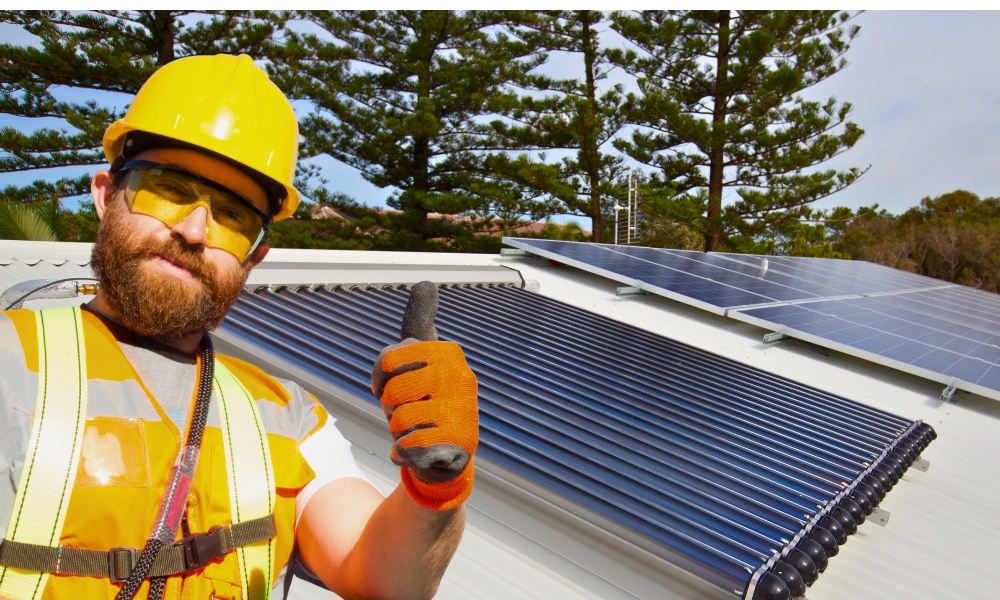
You might be surprised to learn that solar hot water without the roof tank is not only possible in Australia—it’s becoming a popular, sleek, and energy-efficient alternative to traditional rooftop systems. With newer technologies like split system solar hot water and tankless solar hot water systems, homeowners now have more flexibility without compromising on performance or savings.
If you’re ready to explore smarter solar options, Energy Matters can help you compare and install Australia’s top solar hot water system types—without the bulk of an old-school roof tank.


Understanding solar hot water system types
Traditional solar hot water systems often have a storage tank directly attached to the solar collectors on the roof. While this setup is effective, it can pose certain challenges. Factors such as roof load, visual impact, and maintenance access are common considerations.
However, advances in solar technology have led to alternative designs, especially solar hot water systems without a roof tank. These new systems provide more flexibility and overcome some limitations of their roof-mounted versions.
Popular solar hot water system types in Australia
There are several types of solar hot water systems available today. Here’s a breakdown to help you choose the right fit:
1. Split system solar hot water
One of the most popular solutions for solar hot water without a roof tank is the split system. As the name suggests, this system separates the solar collectors from the storage tank. The collectors are typically mounted on the roof to capture solar energy, while the storage tank is located at ground level or another convenient location. This separation offers several advantages:
- Reduced roof load: Eliminating the weight of a full storage tank significantly reduces stress on your roof structure.
- Enhanced aesthetics: Without a bulky tank on the roof, your home maintains a cleaner, more modern appearance.
- Easier maintenance: Ground-level tanks are generally more accessible for routine checks and maintenance.
- Freeze protection: In colder climates, locating the tank indoors can help protect it from freezing temperatures.
Ideal for: Homes that want solar benefits without roof tanks.

2. Tankless solar hot water systems
While less common for whole-house heating in Australia, the concept of tankless solar hot water systems exists. These systems aim to heat water on demand as it flows through the solar collectors, eliminating the need for a separate storage tank. However, it’s important to note the current practicalities:
- Instantaneous heating: Provides hot water almost instantly without the waiting time associated with tank reheating.
- Space saving: Eliminates the need for a bulky storage tank.
- Continuous supply: As long as there is sufficient solar energy, the hot water supply is constant.
- Current limitations: Fully tankless solar hot water systems for entire households are still developing and may require significant solar input and potentially a backup booster for consistent hot water, especially during periods of low solar irradiance. Often, systems marketed as “tankless” still incorporate a small buffer tank.
Ideal for: Smaller households or those with limited space.
3. Ground-mounted solar hot water systems
Taking the “no roof tank” concept a step further, ground-mounted solar hot water systems offer even greater flexibility. In this configuration, both the solar collectors and the storage tank are installed at ground level. This is particularly suitable for properties with limited or unsuitable roof space, or for those who prefer to keep all components easily accessible.
- Ideal for specific roofs: Perfect for flat roofs, heavily shaded roofs, or roofs with complex designs.
- Simplified installation: Ground-level installation can sometimes be simpler and less time-consuming.
- Complete accessibility: All components are readily accessible for maintenance and monitoring.
- Design flexibility: Allows for optimal positioning of collectors for maximum sun exposure, independent of roof orientation.
Ideal for: Properties with open yard space and limited roof access.


Key considerations when choosing a solar hot water system
Selecting the ideal solar hot water system types for your home depends on various factors, including your hot water usage, roof space (or lack thereof), climate, and budget.
1. Budget and rebates
- Government incentives may apply to specific systems
- Long-term energy savings help recover the upfront investment
2. Location and climate
- Areas with high sun exposure are ideal for solar-only systems
- Cooler or cloudy regions may need gas or electric boosters
3. Household size
- A 2-3 person household may suit a tankless solar hot water system
- Larger families benefit from a split system with a 300L+ tank
4. Roof vs Ground space
- Use a split system if your roof can’t bear tank weight
- Choose ground-mounted solar hot water if your roof is shaded
5. Budget and rebates
- Government incentives may apply to specific systems
- Long-term energy savings help recover the upfront investment
6. Seek expert advice
- Consult with experienced solar professionals to determine the best solution for your specific circumstances. Energy Matters’ experts can provide tailored recommendations.
Installation and maintenance
Solar hot water without the roof tank often involves a more straightforward installation process than traditional systems:
- Less structural engineering
- Easier compliance with local regulations
- Safer technician access
Maintenance tips:
- Inspect and clean collectors annually
- Check pump and controller functionality every 2–3 years
- Flush the tank periodically to remove sediment buildup
Rebates and incentives in Australia
Most states offer STCs (Small-scale Technology Certificates) that reduce the upfront cost of solar hot water systems. Some regions also provide additional rebates for low-income households or properties upgrading from electric systems.
Learn more about the solar hot water system rebates in our comprehensive guide.


Solar hot water without a roof tank is the future
Going solar doesn’t mean compromising design or convenience. With split system solar hot water, tankless systems, and ground-mounted options, Australians can enjoy eco-friendly hot water—without a tank on the roof.
Ready to upgrade your home’s energy efficiency and reduce your energy bills? Contact Energy Matters today for quotes and solar expert advice.
Let us help you choose the best solar for your lifestyle. Take the first step towards a greener future with Energy Matters!