





Stanford University engineers have utilised urea, a compound that can be derived from animal urine, to produce a super-efficient solar battery that could provide a low-cost energy storage solution.
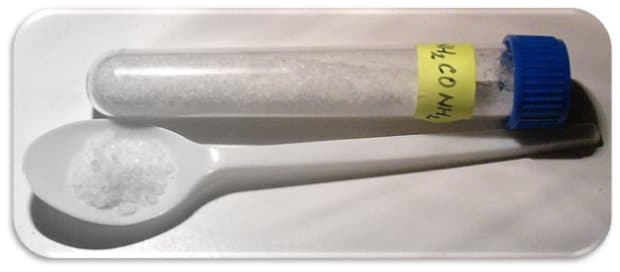
Professor Hongjie Dai, who developed the device alongside colleague Michael Angell, incorporated urea into the system’s electrolyte as it is one of the most widely used nitrogen fertilisers in the world.
With electrodes made from cheap aluminium and carbon-based graphite, the battery also has the advantage of being inflammable.
“So essentially, what you have is a battery made with some of the cheapest and most abundant materials you can find on Earth. And it actually has good performance,” said Professor Dai.
“Who would have thought you could take graphite, aluminium, urea, and actually make a battery that can cycle for a pretty long time?”
In 2015 we reported on Dai’s ground breaking aluminium-ion battery system, which charged in less than a minute and could last thousands of charge-discharge cycles. Dai’s lab collaborated with Taiwanese researchers to power a motorbike with the battery and won a 2016 R&D 100 Award.
However, the electrolyte in that system was prohibitively expensive. The new model containing the urea-based electrolyte is not only more efficient, but costs about 100 times less than the 2015 version.
The group believe the battery will provide a solution to the increasing demand for both home and grid storage of solar energy, although grid storage is a more realistic target for commercialisation because of the system’s long life cycle, low cost and high-efficiency.
On a scale known as Coulombic efficiency, the measurement of how much charge exits a battery per unit of charge it takes in during charging, the urea-based battery’s Coulombic efficiency is 99.7%
“It’s cheap. It’s efficient. Grid storage is the main goal,” said Angell.
Dai has licensed the urea battery to the company he has founded, AB Systems. He receives numerous enquiries from firms interested in developing grid-capable storage solutions. With the battery in development, he said its success now rests on the interest of companies and consumers.
“With this battery, the dream is for solar energy to be stored in every building and every home,” Dai said. “Maybe it will change everyday life. We don’t know.”
While professor Dai’s invention isn’t the first to investigate energy applications for pee, it seems to be the most practical to date.
There is one issue that should probably be pointed out – while urea can be derived from urine, commercially it is one of the compounds produced synthetically from fossil fuels using the Haber-Bosch process.