






With the financial crisis still crippling the global economy, many of the world’s governments are attempting to kick-start their countries with stimulus packages in order to avoid high levels of unemployment
Most of these stimulus packages are being paid from rapidly shrinking tax revenues that aren’t enough to cover the splurges, with the result that public borrowing is rising rapidly.
This situation means massive amounts of debt for future generations and the stimulus packages themselves are based on a short term solution to massive problems of an uncertain duration. There is little buffer for further shocks or unexpected twists and turns.
But there is another way and stimulus packages that do not require the commitment of public financial resources are receiving little consideration.
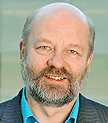
Hans-Josef Fell, MdB is Spokesperson on Energy and Technology Policy for the Green Parliamentary Group in the German Bundestag. Together with other Members of Parliament he invented and politically implemented the Renewables Energy Source Act (EEG) in 2000.
Mr Fell believes that by taking targeted regulatory measures on the markets, governments can stimulate private investments and so put in place recovery packages to invigorate the economy without incurring new debts.
Mr Fell recently published a paper explaining how feed in tariffs for renewable energy sources such as solar power and wind energy can address a range of different problems with which society is confronted; and how this has already been successfully demonstrated in Germany
Since 2000, the Renewable Energy Sources Act (EEG) has made it possible for a new sector of the economy to be built up in Germany; a renewable energy sector that is heavily dominated by small and medium-sized enterprises. This has been achieved mostly without the German government needing to dip into public coffers.
According to Mr. Fell, the Renewable Energy Sources Act has created more than 150,000 new jobs in Germany without any commitment of taxpayer’s money. In total, more than 250,000 jobs have been created in the renewable energies industry. Through the Act, the costs for the market introduction of renewable energies have been considerably lower than in other countries. For example, the average cost for the generation of power from wind energy in Germany is approximately 8 euro cents per kilowatt hour, compared with approximately 14 euro cents per kilowatt hour in the UK, even though the UK has far more wind.
The expenditure avoided in 2008 thanks to the reduced amounts of fossil and nuclear fuels that had to be purchased amounted to a total of 17 billion euros – several times the additional costs for the generation of clean power of approximately 3.2 billion euros.
While countries such as Australia are moving towards feed in tariffs, the local situation is one of a fractured system. Each state runs its own program and in many cases, a far inferior form of feed in tariff compared to Germany; leading to increased calls for a national, uniform gross feed in tariff.
Mr. Fell’s paper, describes the basic principles of the Renewable Energy Sources Act and seeks to that many of the arguments often used against feed-in tariffs are incorrect. Mr Fell maintains that compared to subsidies, tendering models or quota arrangements, the feed-in tariff model has been proving itself the superior model for the market introduction of renewable energies to the mass market.