




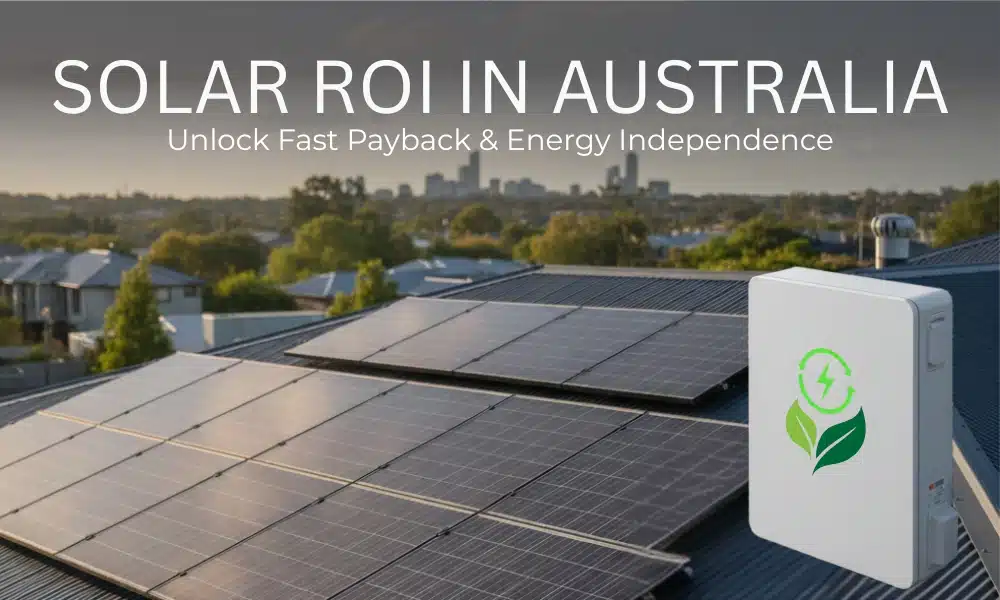
The Australian solar landscape is changing, with feed-in tariffs (FiTs) diminishing or being entirely abolished in many regions. This shift has prompted many to question the financial viability of going solar.
However, the good news is that the solar return on investment (ROI) in Australia remains strong and compelling. Focusing on self-consumption and leveraging modern technology has become the new frontier for savvy homeowners. It’s no longer about selling excess power for high returns; it’s about avoiding expensive retail electricity costs and securing a sustainable future.

The evolving solar economics
The days of generous government-mandated premium feed-in tariff schemes are essentially over. Many Australian states, including New South Wales, South Australia, and Queensland (in competitive areas), have moved to retailer-set FiTs, which can be pretty low, sometimes even near zero. This change reflects the sheer volume of solar energy now flowing into the grid during peak daylight hours, driving down wholesale prices.
Why feed-in tariffs don’t tell the whole story
Many homeowners used to depend on feed-in tariffs (FiTs) — credits for exporting excess electricity to the grid — to boost returns. But across much of Australia, FiTs have fallen sharply or vanished altogether, making export income unreliable.
What solar ROI looks like without feed-in tariffs
Even without robust FiTs, rooftop solar can deliver impressive returns, especially when system cost, electricity prices, and your consumption habits align.
| System/Scenario | Typical Payback Period | Key Assumptions/Notes |
| Residential 5–6 kW solar system | ~3–5 years | Based on 2025 costs, average household usage, and high self-consumption rates |
| 6.6 kW system (Good-sun regions) | ~4–6 years | Lower export credit, high daytime use, stable grid electricity prices |
| Well-utilised 6–7 kW system in a high-demand household | ~3–4 years | Maximised self-use; minimal export reliance |
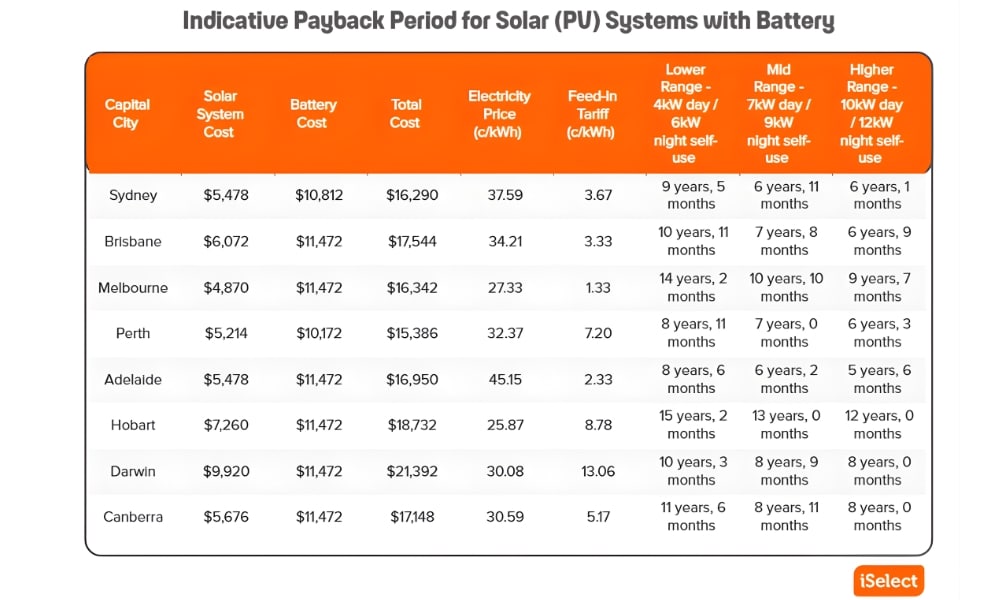
| Solar + Battery hybrid (optional) | 5–9 years (solar + battery) | Longer payback, but adds resilience and nighttime savings |
Key observations
Overall, the long-term return (25-year horizon) can reach 300–500% of the original investment.
- A 5–6 kW system typically installed today often pays for itself within 3–5 years.
- With moderate to high daytime electricity use and efficient self-consumption, many households see payback within 4–6 years.
- Systems in sunnier states or with higher electricity rates yield faster returns, even with minimal export credits.
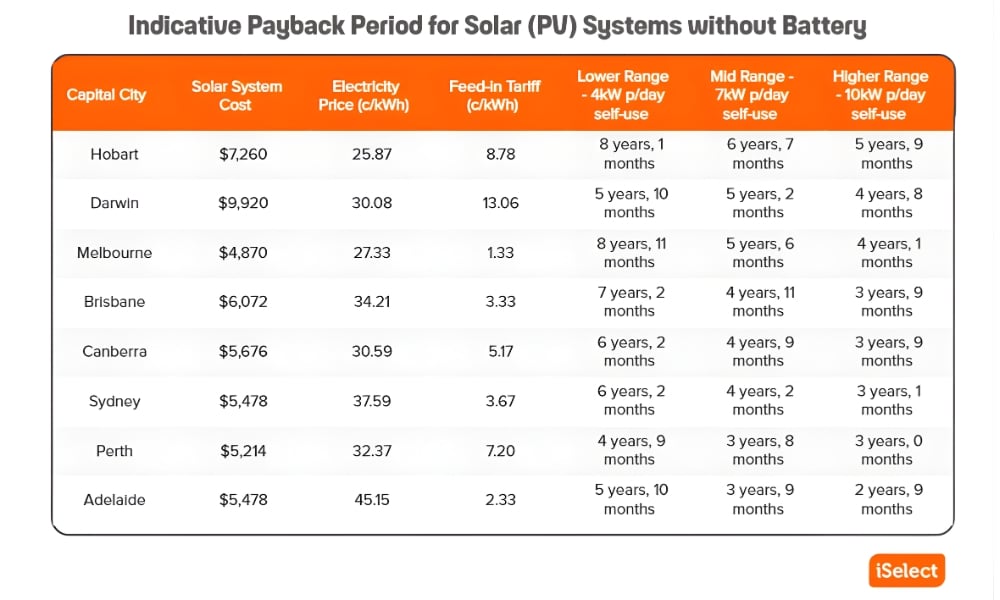
iSelect calculated the payback period for a typical 6.6kW solar (PV) system across Australia’s capital cities to give you an idea of what to expect.
Tired of overpaying for energy? Discover your best energy deal with Energy Matters. You can quickly compare top offers in your area and find the best deal for your energy needs. Our advanced tool draws data from a trusted network of retailers, so you can easily evaluate options and choose a plan that gives you more power and better savings on electricity and gas bills. Don’t settle for less—switch to a plan that suits your budget and goals with Energy Matters today!
How to maximise your solar ROI without relying on FiTs
Here are strategies to ensure you get the most out of solar, even if export tariffs are negligible.
1. Strategies for maximising self-consumption
- Run appliances during daylight hours. Use timers to run large appliances during the day when the sun is shining.
- Pool pumps: Schedule pool filtration for solar peak hours.
- Electric hot water: Use a controlled load or timer to heat water during the day.
- Shift heavy-use tasks (laundry, dishwashing, EV charging) to midday when your panels are generating.
Powering up your EV with solar
If you’re thinking of buying an electric vehicle (EV), adding an EV charger to your solar system is a smart way to “fuel” your car with clean, renewable energy.
2. Choose the right system size
- Avoid oversizing — too many panels with little daytime consumption reduces efficiency.
- Match system size to typical daytime load for best returns.
3. The game-changer: Solar battery storage
- A solar battery storage system lets you store surplus energy from the day for evening use.
- While it lengthens payback, battery + solar may still be worth it for nighttime savings or backup power.
Use Energy Matters’ easy-to-use solar power and battery storage calculator to determine the size of your solar system with storage! Our solar calculator will generate performance information and potential savings.
We can send this information to 3 of our pre-vetted and trusted local installers in your area to receive obligation-free solar quotes and take the first step towards true energy independence!

4. Account for electricity price trends
- As retail power rates rise, the value of avoided grid electricity increases — improving ROI.
- Avoid counting on export income; treat solar as a hedge against future price hikes.
5. Use high-quality solar panels and maintain them
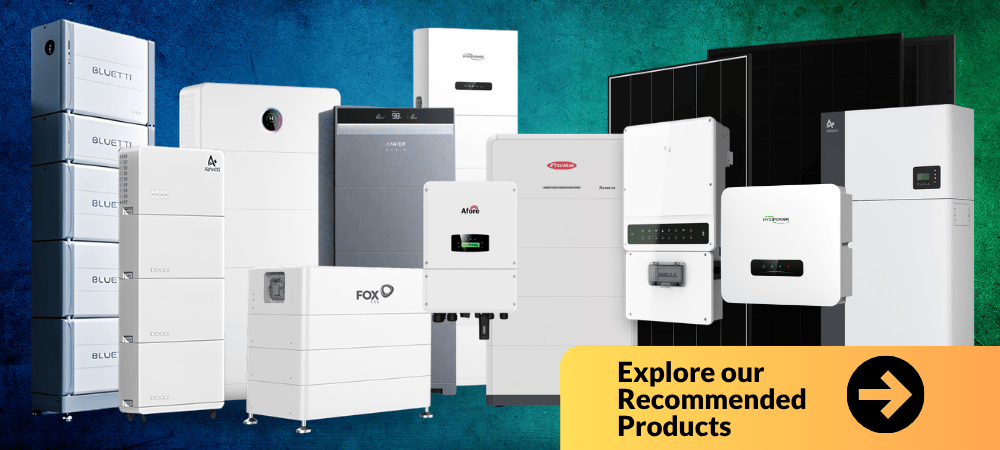
Check our page for our recommended solar panel products.
- Better quality means lower degradation over 20+ years — boosting lifetime ROI.
- Regular cleaning and inspection help maintain output and prolong system life.
6. Embrace smart energy technology
- New technologies, such as smart solar inverters and energy management systems, are vital for modern solar ROI. They efficiently control energy flow to ensure you get the most from your solar, with some systems even communicating with your appliances to activate them when there’s excess solar energy automatically. Check our page for our recommended solar inverter products.
- Participating in a Virtual Power Plant (VPP) allows your battery to be intelligently managed by a utility, providing grid support and earning you additional credits or payments. This adds a third revenue stream beyond self-consumption savings and low FiTs.


Climate benefits still count — even without FiTs
While financial ROI matters, the climate advantages of solar remain significant:
- You generate clean electricity at home, reducing reliance on fossil-fuel power and lowering your household’s carbon footprint. Use Energy Matters’ carbon footprint calculator to calculate your household and business’s direct emissions.
- Solar helps stabilise the grid by reducing demand during peak hours — especially valuable in high-demand seasons.
- Long-lasting panels (20–25 years+) continue delivering clean energy long after you recoup the cost — amplifying environmental gains.
Financially, this aligns with rising electricity prices: you lock in lower-cost energy and insulate yourself from volatility.
Common misconceptions about solar ROI
- “Without FiTs it’s not worth it.” — Wrong. ROI comes mostly from avoiding grid purchases; FiTs are a bonus.
- “Batteries always pay off.” — Not necessarily. Without heavy evening use or high rear-grid prices, battery payback can stretch out.
- “Selling excess power guarantees profit.” — With variable or low export credits, this is unreliable. Better to prioritise self-use.
Key information summary
| Factor | Description in Low FiT Environment | Impact on ROI/Payback |
| Solar self-consumption | Using solar power instead of exporting excess. | Highest impact. Saves the high retail cost of electricity. |
| Retail electricity tariffs | Often high, especially during peak evening hours (ToU). | Higher tariffs mean greater savings (avoided cost), improving ROI. |
| Feed-In Tariffs (FiTs) | Generally low, retailer-set, and in decline. | Minimal impact on ROI; treated as a small bonus/secondary saving. |
| Home battery storage | Stores daytime solar for nighttime use (peak avoidance). | Increases self-consumption dramatically, shortening overall system payback time. |
| Federal rebates (SRES) | A government rebate and incentive that reduces the upfront system cost. | Significant. Directly shortens the payback period. |
Who benefits most — and who should be cautious
Ideal candidates:
- Households with significant daytime electricity use (e.g. work-from-home, daytime water heating, EV charging).
- Homes in sunny climates or regions with high retail electricity rates.
- People planning to stay in the home long-term (10+ years), to maximise lifetime savings.
Less ideal candidates:
- Households use most of their electricity at night and are unwilling to shift their usage patterns.
- People expecting to move within a few years — shorter residence reduces the benefit window.
- Those who over-size systems relative to consumption (leading to wasted generation).
Sources/References: Department of Climate Change, Energy, the Environment and Water (DCCEEW) – How solar pays for itself and batteries reduce bills | IntuitiveCalc – Complete Guide to Solar ROI in Australia 2025 | iSelect – Solar Payback Report
A brighter future is self-powered
The economic case for installing solar in Australia, even without high feed-in tariffs, remains undeniably strong. By embracing solar self-consumption, investing strategically in battery storage, and shifting your energy usage, you can secure a great solar ROI and a fast solar panel payback period.
Take control of your energy bills and join the movement towards a sustainable energy future. Discover how much you can save and contact Energy Matters today to invest in a high-quality solar system + more, tailored for the modern Australian energy market.