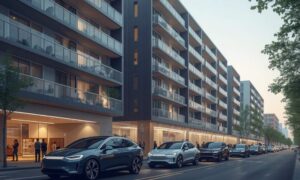






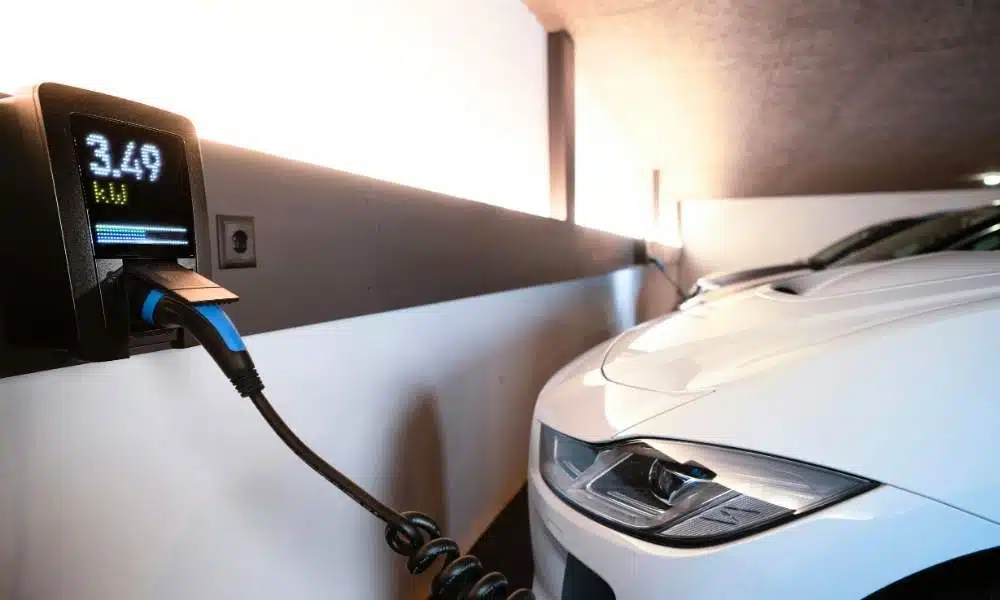
Most older apartment basements were wired for lights, lifts, and the occasional power point. Not for 20 residents arriving home at 6 pm and plugging in cars that draw more power than an entire floor once did.
That’s why so many strata committees hit the same wall. A resident asks to install a charger. The electrician looks at the switchboard. The answer becomes “maybe for one car, but not for ten.” What looks like a simple charger request is actually a building-wide electrical problem.
This is exactly the problem the EV Ready Buildings program from Energy NSW was designed to solve. And while the first major funding round was exhausted in late 2025, the pathway is still very much alive in 2026 through the EV Site Host EOI and future funding cycles or operator partnerships.
The key is understanding that this grant is not about buying chargers. It is about retrofitting the electrical spine of the building so chargers become easy, safe, and scalable.
The two-stage grant most strata committees don’t realise exists
The program works in two stages.
Stage 1: Feasibility study
The Owners Corporation pays a fixed $2,000. The NSW Government covers the rest, for a study typically worth $5,000 to $10,000. This study maps the building’s electrical capacity, car park layout, and the exact upgrades needed to support EV charging safely.
Stage 2: Installation co-funding
Once the plan is done, the grant co-funds 80% of the upgrade costs, up to $80,000 per building, for the critical “behind-the-meter” infrastructure.
This is where the real value sits.





What the grant actually pays for (the part that’s normally too expensive)
This is not a charger rebate. It covers the hard, expensive work that usually kills these projects:
- Main Switchboard (MSB) upgrades
- Heavy backbone cabling through basement parking
- A Load Management System (LMS)
- Up to four shared chargers for visitor or communal use
- 50% of the software costs (up to $1,200) for two years for billing and energy tracking
In other words, the grant pays to make the building EV-ready, not just EV-capable for one resident.
Why load management systems are the unsung hero in old basements
Without a Load Management System, multiple EVs charging at once can overload older infrastructure and trip the building.
An LMS prevents this by dynamically allocating power across vehicles depending on available capacity. No overload. No emergency switchboard upgrades later. No arguments between residents about who can charge and when.
From January 1, 2026, this became even more important. Many strata schemes are now seeing their NABERS for Apartment Buildings ratings influenced by EV energy use. If EV charging is not properly sub-metered, it can artificially drag down the building’s energy rating.
That’s why strata committees should ensure the funded LMS includes utility-grade sub-metering, so EV consumption is measured accurately and fairly.
The legal change that removed the biggest strata roadblock
Under the Strata Schemes Management Amendment (Sustainability Infrastructure) Act 2021, EV infrastructure is now classed as sustainability infrastructure in NSW.
That means the motion only requires a simple majority vote (over 50%), not the traditional 75% special resolution that used to stall these upgrades.
Many committees still don’t realise this has changed.

The 5 steps strata committees should follow
Based on the process set out by Energy NSW, the pathway is straightforward:
- Register interest through the EV Site Host EOI
- Engage an approved assessor
- Complete the feasibility study
- Develop the installation plan for the building
- Apply for co-funding when funding rounds open or partner with an operator
The feasibility study becomes the blueprint the building can use for years, even before funding is secured.
Why doing this now prevents future strata conflict
If chargers are approved one resident at a time, the building eventually hits capacity and the arguments start.
Who gets access? Who pays for upgrades? Who caused the overload?
Installing the backbone first avoids this entirely. The billing software funded by the grant also ensures every resident pays only for what they use.
Who is eligible
According to the NSW grant rules via NSW Government, this pathway is for:
- Existing Class 2 apartment buildings
- 10 or more units
- Buildings with shared parking, typically basement car parks


The strategic takeaway for strata committees
This is one of the rare cases where government funding pays for the hardest and most expensive part of the problem.
Waiting until multiple residents request chargers makes the retrofit more urgent, more political, and more expensive.
Submitting an EOI and completing the feasibility study now positions the building for the next funding round or a private operator partnership, with a ready-made plan in hand.
Energy Matters has been in the solar industry since 2005 and has helped over 40,000 Australian households in their journey to energy independence.
Complete our quick Solar Quote Quiz to receive up to 3 FREE solar quotes from trusted local installers – it’ll only take you a few minutes and is completely obligation-free.