






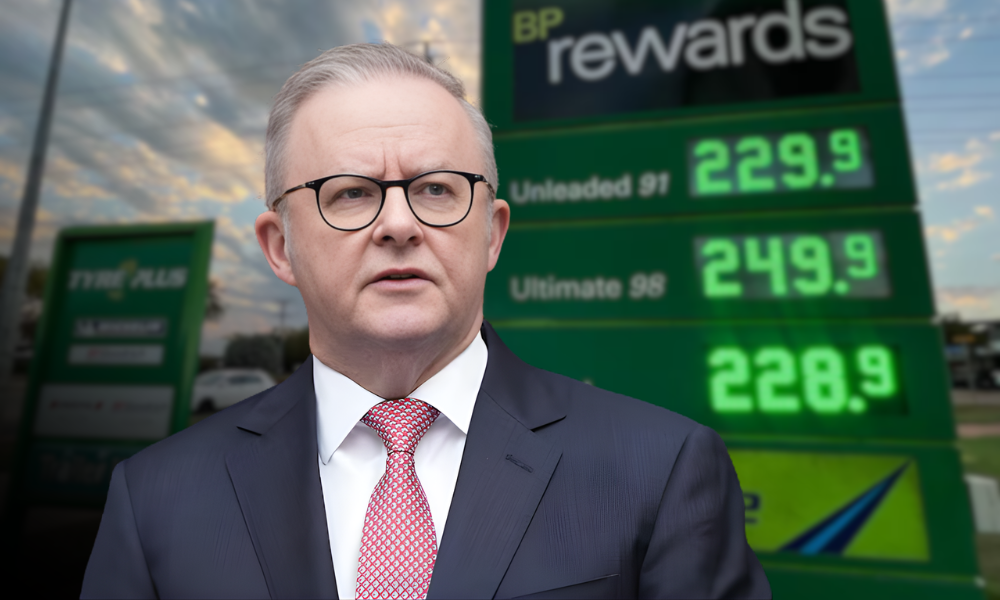
Australia is once again feeling the pressure of a global energy crisis, with rising fuel prices hitting households and businesses hard. In response, Anthony Albanese has announced a 26.3 cents per litre reduction in the fuel excise, aimed at easing cost-of-living pressures. At the same time, a coalition of energy, industry, and advocacy groups is urging governments to accelerate electrification across the economy. While these two developments may seem separate, they are closely linked. One offers immediate financial relief, while the other presents a long-term solution to the very problem driving these price spikes.
Fuel excise cuts provide short-term relief
The fuel excise cut is a familiar lever used by governments when global oil prices surge. It reduces the tax applied to petrol and diesel, lowering the price Australians pay at the bowser. Albanese said, “We are making fuel cheaper today because we understand that Australians are under serious pressure”. For many households, especially those reliant on cars for work or school runs, the savings can reach around $10 to $20 per week. It is immediate, visible relief, and in the current climate, that matters.
However, this type of intervention does not address the root cause of rising fuel costs. Australia remains heavily dependent on imported fossil fuels, which leaves households exposed to global supply disruptions and geopolitical instability. When international prices spike, Australians feel it almost instantly. A temporary tax cut may soften the blow, but it does not change the underlying reliance on volatile energy sources.




Electrification tackles the root cause
This is where electrification becomes critical. A coalition including Energy Consumers Australia, the Energy Efficiency Council, the Electric Vehicle Council, and Rewiring Australia has called on governments to “turbocharge electrification across the economy” to improve energy security and affordability. Their position is clear. “It is increasingly clear that accelerating the shift to electrification is critical to Australia’s economic and national security.”
Electrification involves replacing fossil fuel systems with electric alternatives, such as electric vehicles, heat pumps, and induction cooking. The key advantage is that electricity can be generated domestically, particularly through renewable energy sources like solar and wind. Instead of relying on imported fuels, Australians can tap into locally produced energy, which is far less exposed to global price shocks.
Why these two approaches are connected
The fuel excise cut and the electrification push are both responses to the same underlying issue, which is energy price volatility. One provides short-term relief, while the other aims to eliminate the cause of the problem altogether. Right now, Australia’s economy is only around 21.5 per cent electrified, with transport sitting at just 1.5 per cent. That leaves a significant portion of the economy tied to oil and gas markets.
| Sector | Electrified share |
|---|---|
| Economy-wide | 21.5% |
| Transport (road, rail, air, water) | 1.5% |
| Road transport (all) | 0.13% |
| Residential buildings | 53% |
| Commercial buildings | 73% |
| Industry (all) | 25.5% |
Electrification shifts that dynamic. Households with solar, batteries, and electric appliances can reduce or even eliminate their reliance on fossil fuels. That means fewer surprises when global events disrupt supply chains. Instead of reacting to price spikes, these households gain a level of control over their energy costs.


Efficiency is the hidden advantage
Beyond energy security, electrification delivers a major efficiency boost. The energy coalition highlights that electric technologies are, on average, three times more efficient than fossil fuel-based systems. This translates directly into lower energy consumption and reduced costs over time.
For example, electric vehicles are significantly cheaper to run per kilometre than petrol cars, while heat pumps can deliver the same level of comfort using a fraction of the energy of gas systems. Even everyday appliances like induction cooktops are faster and more efficient than their gas counterparts. These improvements might seem small individually, but across a household or business, they add up quickly.
The risk of relying on temporary fixes
Even if the current energy crisis eases, the structural risks remain. Supply chains take time to recover, and prices often stay elevated well after disruptions end. The energy coalition notes, “Even if the crisis ends tomorrow, it will take time for supplies to be restored and prices to normalise.” This highlights the limitations of measures like fuel excise cuts. While they provide welcome relief, they are not sustainable long-term solutions and come at a cost to government revenue.
Continuing to rely on fossil fuels means Australia will remain exposed to future shocks. Each new crisis will require another round of short-term fixes, without addressing the underlying vulnerability. Electrification, by contrast, reduces that exposure permanently by shifting energy consumption towards more stable and locally controlled sources.
What governments need to prioritise next
To accelerate this transition, the coalition has outlined several key actions. These include supporting the uptake of electric vehicles through incentives and infrastructure, helping households transition away from gas appliances, and enabling industry to electrify where feasible. There is also a strong emphasis on expanding renewable energy generation, battery storage, and grid capacity to support increased electricity demand.
Importantly, the transition must be inclusive. Renters, apartment dwellers, and low-income households often face barriers to electrification, and targeted support will be essential to ensure they are not left behind. Without this, the benefits of electrification risk being unevenly distributed.

The bottom line for Australian households
For households, the difference between these two approaches is stark. Fuel excise cuts offer temporary savings, but they do not change long-term energy costs or exposure to price volatility. Electrification, on the other hand, provides a pathway to lasting savings, greater energy independence, and improved resilience.
A home equipped with solar, battery storage, and electric appliances can significantly reduce energy bills and provide protection against future price spikes. In contrast, a household reliant on petrol and gas remains tied to global markets and ongoing uncertainty. The choice is essentially between short-term relief and long-term control.
Short-term relief vs long-term resilience
The fuel excise cut is a practical and necessary response to immediate cost pressures, and it will provide relief for many Australians. However, it should be seen as a temporary measure rather than a long-term strategy. Electrification offers a more durable solution by addressing the root causes of energy price volatility and reducing reliance on imported fuels.
The real opportunity lies in combining both approaches. Provide short-term support to households when they need it most, while accelerating the transition to electric technologies that deliver lasting benefits. Because if the past few years have shown anything, it is that energy shocks are not rare events. Electrification is how Australia can stay one step ahead.
Energy Matters is here to help you on your electrification journey. Get FREE Quotes for solar, batteries, and other renewable energy technology from local and trusted installers.