


Across this series, you’ve seen how many parts of the home have already changed. The lawn tools. The hot water system. The heating. The kitchen. The laundry. Even the pool and backup power. One by one, the systems that used to rely on fossil fuels now have electricity alternatives that fit naturally into everyday life.
In many homes, that change is already underway. Solar panels are generating electricity on the roof, and more appliances are running on it. But even as the house changes, something else lingers. Not in the walls or the wiring, but in the way energy is used day to day.
Because the final part of electrifying a home isn’t another upgrade. It’s the habits that sit quietly behind it.
The appliances are no longer the problem
For most households, the technology gap has already been solved. There are electric options for nearly everything that once relied on fossil fuels. Heating, hot water, cooking, outdoor equipment, and even backup power can now run without gas or petrol. In many cases, these systems are already in place or being adopted as older equipment reaches the end of its life.
That means the biggest barriers are no longer about availability or performance. The tools exist, and they work. What remains is how these tools are used.


Where fossil fuels still show up
At this point, fossil fuels rarely appear in obvious ways inside the home. They show up in smaller, everyday patterns instead. The quick drive to the shops. Running appliances at night when solar isn’t producing. Relying on older systems that still work, even if they’re less efficient.
None of these feel significant on their own. They’re routine, familiar, and easy to overlook.
But taken together, they’re often where most of the remaining fossil fuel use sits in an otherwise electric home.
The shift is now behavioural
At this stage, electrifying the home is less about replacing equipment and more about changing how energy is used.
That can be as simple as running appliances during the day instead of at night, or choosing alternatives for short trips that don’t require starting a petrol engine. Small adjustments in timing and routine can have a bigger impact than another upgrade.
The systems are already in place. Solar is generating power, appliances are ready to use it, and energy can be stored or shifted throughout the day.
What matters now is aligning everyday habits with how the home already works.
The home as an energy system
Once everything is electric, the house starts to behave less like a collection of appliances and more like a connected system.
Energy is generated on the roof, used throughout the day, and in some homes stored for later. Appliances, transport, and even backup power all draw from the same source.
That changes how decisions are made. It’s no longer just about what you use, but when and how you use it. Running a dryer, charging a vehicle, or filtering the pool all become part of the same flow of energy.
Instead of separate systems working in isolation, the home begins to operate as one.
What a fully electric household actually looks like
A fully electric home doesn’t feel dramatically different day to day.
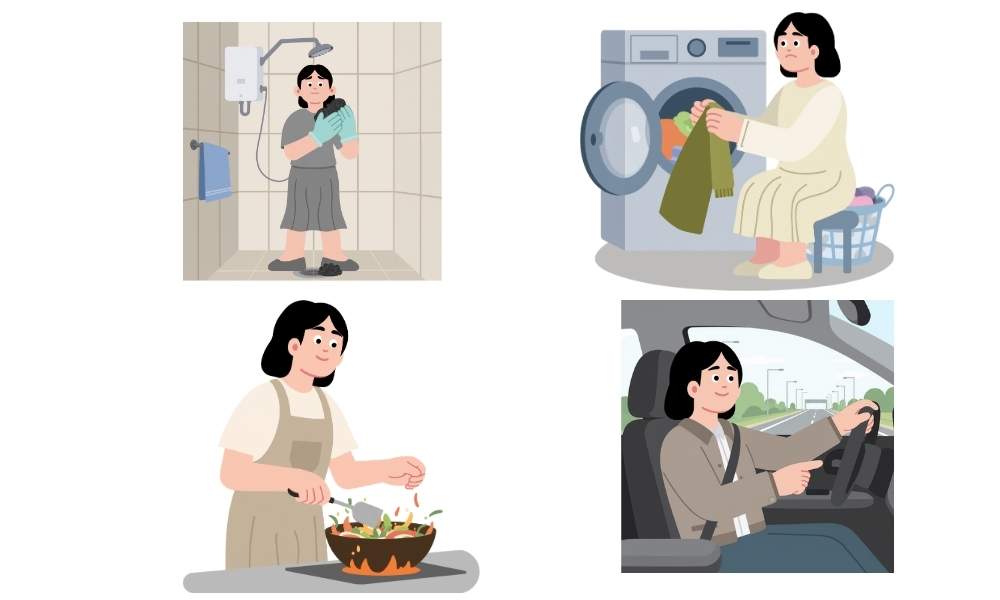
The lights turn on, the shower heats up, meals are cooked, and laundry gets done. The difference is behind the scenes. There’s no gas connection, no fuel stored in the garage, and far less reliance on petrol for everyday needs.
Energy comes from the roof, flows through the home during the day, and in some cases is stored for later use. Appliances are chosen not just for what they do, but for how efficiently they use that energy.
It’s not a single upgrade that creates this shift. It’s the gradual replacement of systems and the steady adjustment of habits until everything begins to work together.
The change happens quietly
There isn’t a single moment where a home becomes fully electric.
It happens in stages. A system gets replaced. A habit shifts. An appliance starts running at a different time of day. One small change at a time.
Individually, these decisions don’t feel significant. But together, they reshape how the home uses energy.
Over time, the reliance on fossil fuels fades, not through one big switch, but through a series of quiet adjustments that add up.
Energy Matters has been in the solar industry since 2005 and has helped over 40,000 Australian households in their journey to energy independence.
Complete our quick Solar Quote Quiz to receive up to 3 FREE solar quotes from trusted local installers – it’ll only take you a few minutes and is completely obligation-free.