
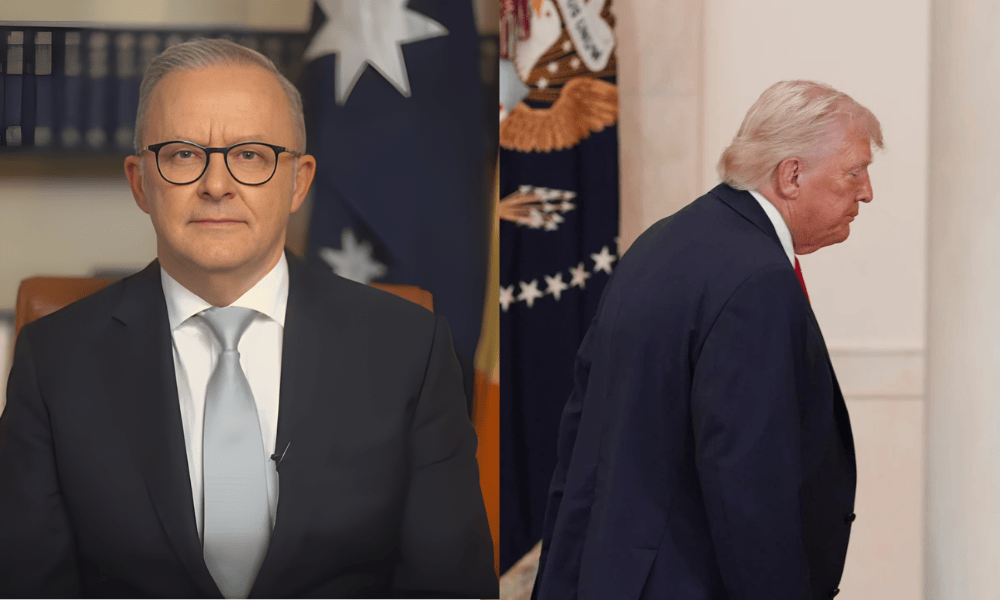
Australia is once again staring down fuel uncertainty, and while the messaging from Canberra has been calm, the underlying risks are anything but. Prime Minister Anthony Albanese1 has urged Australians to carry on as usual, attempting to steady nerves amid growing global instability. In his national address, he reinforced this stance, stating, “Australians should go about their business as usual,” while acknowledging that the situation is being closely monitored.
This is not a crisis in the traditional sense, at least not yet. There are no widespread shortages or panic buying. Instead, what Australia is experiencing is a slow tightening of supply conditions, which tends to be more dangerous because it creeps into everyday life. From rising bowser prices to whispers of service reductions at the local council level, the early signals suggest that fuel volatility is beginning to flow through the economy in subtle but meaningful ways.
The real impacts Australians are starting to feel
In the short term, the effects of global fuel instability are not dramatic, but they are building. Fuel prices are already showing signs of volatility, particularly in metropolitan areas where demand is highest. While Australians are used to price cycles, this current movement is being driven by global supply risk rather than local competition, which makes it harder to predict and manage.
There are also early operational adjustments taking place across local government and essential services. Reports suggest that some councils are considering reducing weekly garbage collections to fortnightly schedules to reduce fuel usage across their fleets. While this may sound like a minor inconvenience, it reflects a broader shift in how fuel costs are forcing organisations to rethink logistics and service delivery.
Supermarkets and supply chains are another key area of concern. Australia’s food system relies heavily on road freight, and even modest increases in diesel prices can quickly translate into higher transport costs. Over time, these costs tend to be passed on to consumers, which means grocery bills are likely to rise if conditions persist. This creates a compounding effect where fuel volatility contributes directly to cost-of-living pressures.
[metaslider id=”138351″]
What could happen over the coming months with fuel uncertainty
If global tensions continue for several weeks, as suggested by Donald Trump, the impacts will begin to shift from short-term inconvenience to medium-term economic pressure. In his address, Trump made it clear in his announcement today2 that the situation is not expected to resolve quickly, stating that the conflict could persist for “two to three weeks,” while also calling on allied nations to support efforts in the region.
This kind of messaging places additional pressure on global fuel markets. When uncertainty is prolonged, prices tend to remain elevated, and supply chains become more cautious. Businesses will start adjusting pricing structures more aggressively, particularly in sectors that rely heavily on transport, logistics, or imported goods.
In this environment, Australians can expect a gradual but noticeable increase in everyday expenses. Freight costs will rise, delivery times may extend, and some businesses may reduce service frequency to manage operating costs. These changes are unlikely to happen all at once, but rather as a steady progression that builds over time.
Why Australia remains vulnerable to fuel shocks
Australia’s fuel vulnerability is largely structural, and it has been a known issue for many years. Despite being a major energy producer, the country imports a significant portion of its refined fuels, including petrol and diesel. This means that even if crude oil is available globally, Australia still depends on international refining and shipping networks to meet domestic demand.
Geography also plays a major role in amplifying this vulnerability. Australia’s vast distances and decentralised population make road transport essential for moving goods and services. Unlike more densely populated regions, there are limited alternatives to trucking for last-mile delivery, which means fuel costs have a direct and immediate impact on the broader economy.
Another factor is the relatively low level of fuel reserves maintained domestically. Compared to many other developed nations, Australia has a smaller buffer to absorb supply disruptions. This leaves less room to manoeuvre when global events restrict supply or increase prices, making the country more sensitive to external shocks.
[metaslider id=”138379″]
How households can reduce exposure to fuel volatility
While global fuel markets are outside individual control, Australians are not powerless. There are practical steps households can take to reduce their reliance on fossil fuels and protect themselves from price fluctuations. The key is to shift from reactive behaviour to proactive energy planning.
One of the most effective strategies is electrification. This means replacing fossil fuel-based systems with electric alternatives that can be powered by renewable energy. Over time, this reduces exposure to global fuel markets and provides greater control over household energy costs.
Households can take action in several ways:
- Install rooftop solar to generate electricity locally and reduce grid reliance
- Add battery storage to store excess solar and use it when needed
- Transition to an electric vehicle to eliminate petrol usage
- Upgrade to energy-efficient appliances, including heat pumps
- Participate in virtual power plants to unlock additional value from batteries
Each of these steps contributes to reducing reliance on fossil fuels, while also improving resilience during periods of volatility.
The long-term outlook for Australia’s energy security
Situations like this highlight a critical truth. Fossil fuel dependence exposes Australia to global instability, regardless of how calm domestic messaging may be. While short-term measures can ease pressure, long-term energy security requires structural change.
Australia is uniquely positioned to lead in renewable energy. With abundant solar and wind resources, the country has the potential to generate far more energy than it consumes. Unlike imported fuel, renewable energy is local, predictable, and not subject to geopolitical disruption.
If Australia successfully transitions towards a fully renewable electricity grid, the benefits extend beyond emissions reduction. Energy prices become more stable, supply becomes more secure, and households gain greater control over their energy use. Electrification of transport and homes further strengthens this position, reducing reliance on imported fuels altogether.
The current fuel uncertainty may pass in a matter of weeks, but the lesson it reinforces is long-lasting. Energy independence is no longer just an environmental goal. It is an economic and national security priority.