




Choosing the right solar system size is not guesswork. It is a calculated decision based on how you live, what you use, and what you plan next. If you have ever asked, what size solar system suits my energy needs?, you are already on the right track.
In Australia, solar is no longer a luxury. It is a practical way to cut bills, hedge against rising prices, and gain energy independence. But sizing it correctly is where the real value lies.
Understanding your energy usage first
Before talking kilowatts, you need to understand your energy habits. Your electricity bill is your best starting point.
Look for:
- Your average daily usage in kWh
- Seasonal differences, especially summer versus winter
- Peak usage times, such as evenings
For context:
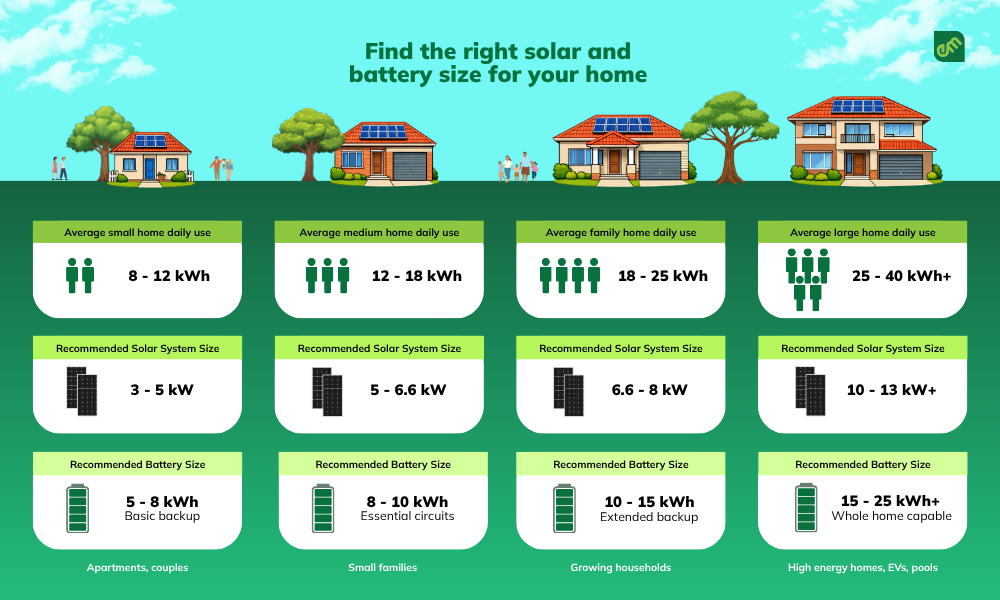
- A small household may use 10 to 15 kWh per day
- A typical family home may use 20 to 30 kWh per day
- Homes with pools, EVs, or ducted air con can exceed 40 kWh per day
This number drives your solar system size.
How solar system size works in Australia
Solar systems are measured in kilowatts, often written as kW. This refers to the system’s generation capacity, not what it produces daily.
In Australia, a rough guide is:
- 1 kW of solar produces about 4 kWh per day on average
So:
- A 6.6kW solar system produces around 24 to 27 kWh per day
- A 10kW system can produce 40 kWh or more per day
Production depends on:
- Location and sun hours
- Panel orientation and tilt
- Shading and weather
Melbourne, for example, produces less than Brisbane, but still delivers strong returns.
Typical solar system sizes and what they suit
Here is a simplified guide to common system sizes in Australia:
| System Size | Daily Output | Best For |
| 3kW | 10 to 12 kWh | Small homes, low usage |
| 5kW | 18 to 22 kWh | Couples or small families |
| 6.6kW solar | 24 to 27 kWh | Most Australian households |
| 10kW | 35 to 45 kWh | Larger homes, high usage |
| 13kW+ | 50+ kWh | EVs, all-electric homes |
The 6.6kW solar system remains the sweet spot. It balances cost, output, and rebate value under Australia’s STC scheme.
Factors that affect your ideal system size
1. Your daily electricity consumption
This is the biggest factor. Your system should aim to offset most, or all, of your daytime usage.
2. Feed-in tariff Australia rates
Exporting excess solar is less valuable than using it yourself.
Feed-in tariffs in Australia are low, often between 3 to 10 cents per kWh. Compare that to grid electricity at 25 to 40 cents per kWh.
That means:
- Self-consumption = maximum savings
- Exporting = nice bonus, not the goal
3. Roof space and orientation
Not every roof is equal.
Ideal conditions include:
- North-facing panels
- Minimal shading
- Enough space for future expansion
East and west roofs still perform well and can improve morning and afternoon generation.
4. Future energy plans
This is where many people undersize their system.
Consider:
- Electric vehicles
- Switching from gas to electric
- Adding a pool or spa
- Installing a battery
If any of these are on your radar, go bigger now.
How to calculate the right solar system size
Here is a simple method you can use:
- Find your daily usage in kWh
- Divide by average solar production (around 4 kWh per kW)
- Add a buffer for future growth
Example:
- Daily usage: 25 kWh
- Calculation: 25 ÷ 4 = 6.25 kW
- Recommended system: 6.6kW or larger
If you plan to electrify your home, consider jumping to 8kW or 10kW.
Battery sizing and how it fits in
Battery sizing is just as important as solar system size.
A battery stores excess solar energy for use at night or during blackouts.
Typical battery sizes
| Battery Size | What It Covers |
| 5 kWh | Essentials only |
| 10 kWh | Evening usage |
| 15 to 20 kWh | Most households overnight |
| 20+ kWh | Whole home backup potential |
Key considerations for battery sizing
- Match it to your overnight usage
- Consider blackout protection needs
- Factor in solar generation during the day
A common pairing is:
- 6.6kW solar + 10 to 15 kWh battery
Larger homes may benefit from:
- 10kW solar + 20 kWh battery
Should you go bigger than you need for your solar system?
In most cases, yes.
Oversizing your solar system can be a smart move in Australia due to falling panel costs.
Benefits include:
- Greater bill reduction
- Faster payback period
- Future-proofing your home
- More flexibility with battery upgrades
The main limitations are:
- Roof space
- Network export limits
- Upfront budget
Inverter sizing and export limits
Your inverter converts solar energy into usable electricity. It also limits how much power your system can deliver at once.
In Australia:
- A 6.6kW solar system typically uses a 5kW inverter
- This is allowed due to panel oversizing rules
Export limits also apply:
- Many networks cap exports at 5kW per phase
- Some areas allow flexible or dynamic exports
This means your system may produce more than you can export, making self-consumption even more important.
Real-world example: sizing a solar system
Let’s say you are a Melbourne household with:
- Daily usage: 22 kWh
- Electric cooking and heating
- Plans to buy an EV
Recommended setup:
- 8 to 10kW solar system
- 10 to 15 kWh battery
Why?
- Covers current usage
- Supports future electrification
- Reduces reliance on the grid
Common mistakes to avoid
- Undersizing your system: You will outgrow it quickly
- Ignoring future needs: EVs and electrification are coming fast
- Focusing on feed-in tariffs: They are too low to rely on
- Skipping battery planning: Even if you install it later, plan for it now
The role of rebates and payback
Australia still offers strong incentives through STCs. These reduce upfront costs and improve ROI.
Typical payback periods:
- 3 to 5 years for solar
- 5 to 10 years with batteries
Adding a battery increases upfront cost, but also increases energy independence and protection against price rises.
So, what size solar system suits my energy needs?
The answer is simple, but personal.
It depends on:
- How much energy you use
- When you use it
- What your future looks like
For most Australian households, a 6.6kW solar system is the baseline. But many homes are now moving towards 8kW, 10kW, or larger systems to stay ahead of rising demand.
The key takeaway is this:
Do not size your system for today. Size it for where your home is heading.
Ready to get the right system?
Every home is different, and the best way to get it right is with tailored advice.
Get FREE Quotes for Solar + More
Energy Matters has been helping Australians since 2005. We connect you with trusted, local installers who understand your needs and your area.