


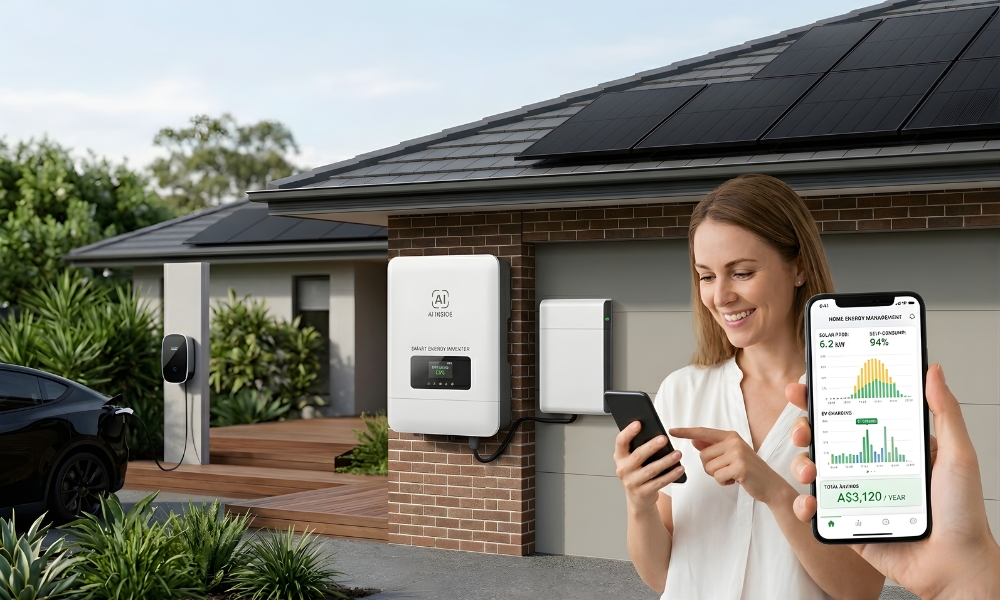
Australian homeowners are generating more solar power than ever before, yet many are still paying high electricity bills. The gap between smart home energy management and old-school solar setups is widening fast. AI inverters now learn your home’s habits, predict energy use, and shift loads automatically. The result? Some households are cutting grid power costs by up to 50%. This guide breaks down how it works and what it means for your energy bill.
What is Smart Home Energy Management?
Smart home energy management is a system that controls how your home uses, stores, and exports solar power. It goes beyond just having solar panels on your roof.
A basic solar system generates power and sends any excess to the grid. A smart energy management system does far more. It tracks your consumption in real time, forecasts your solar generation, and decides the smartest way to use every kilowatt-hour.
Key components of a smart home energy management system include:
- A solar inverter (traditional or AI-powered)
- A home battery storage
- Smart meters and monitoring software
- Home automation links to appliances, EV chargers, and HVAC
- A cloud-connected app or control hub
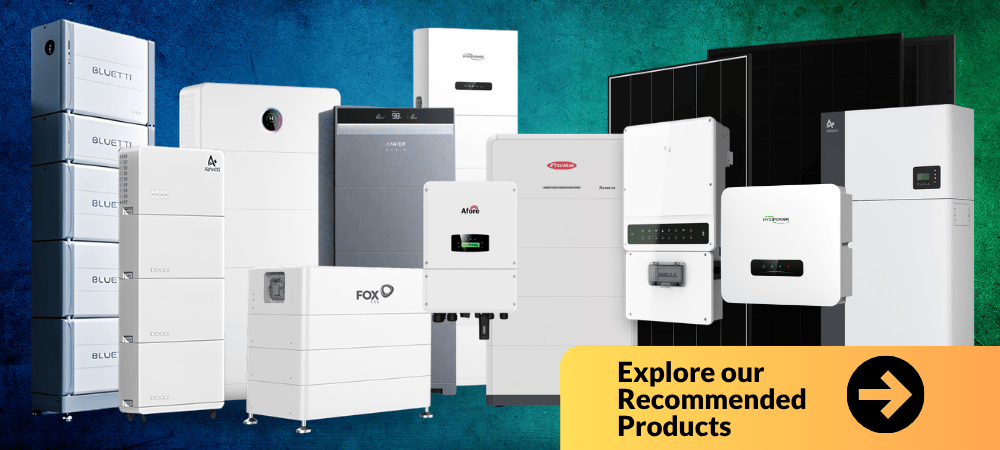
When these parts work together, your home stops being a passive energy consumer. It becomes an active participant in the flow of energy. Check our page for our recommended solar products.


AI inverters: The brain behind Smart Home Energy Management
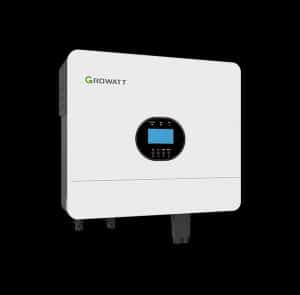
Traditional inverters do one job: convert DC power from your panels into AC power for your home. They do this job well, but they have no memory, no awareness of price signals, and no ability to adapt.
AI inverters are different. They use machine learning to build a profile of your home. Over time, they learn when you run the washing machine, when you get home from work, and when your hot water system kicks in.
Here is what AI inverters can do that standard inverters cannot:
- Predict solar generation based on weather forecasts
- Shift high-energy appliances to peak solar hours
- Decide when to charge or discharge your battery
- Respond to time-of-use tariffs and feed-in tariff windows
- Detect faults and optimise panel performance automatically
Brands now offer AI-assisted inverter platforms for the Australian residential market. These systems are becoming the standard for new solar installations paired with home batteries. Check our page for our recommended inverter products.
How AI inverters are doubling solar savings
The average Australian household with a standard 6.6kW solar system saves around $1,200 to $1,500 per year on electricity. Homes with AI-powered smart energy management are reporting savings of $2,000 to $3,000 per year or more.
How does an AI inverter close that gap?
1. Smarter battery charging and discharging
Without AI, a home battery charges when the sun shines and discharges at night. Simple. But it ignores tomorrow’s weather, upcoming peak tariff periods, and whether you actually need that stored power.
An AI inverter checks the Bureau of Meteorology forecast overnight. If tomorrow is cloudy, it holds battery charge from today. If tomorrow is sunny, it draws from the grid at the cheapest overnight rate to top up and saves the solar for midday when export prices drop.
Use Energy Matters’ easy-to-use solar power and battery storage calculator to determine the size of your solar system with storage! Our solar calculator will generate performance information and potential savings.
We can send this information to 3 of our pre-vetted, trusted local installers in your area to receive obligation-free solar quotes and take the first step toward true energy independence!

2. Time-of-use tariff optimisation
Many Australian energy retailers now offer time-of-use tariffs. Peak periods, usually 3 pm to 9 pm, can cost three to four times the off-peak rate. An AI inverter schedules your energy use around these windows without you lifting a finger.
3. Appliance load scheduling
Smart home energy management connects your inverter to smart plugs, electric vehicle (EV) chargers, pool pumps, and hot water systems. The inverter schedules these loads to run when solar output is highest.
Powering up your EV with solar
If you’re thinking of buying an EV, adding an EV charger to your solar system is a smart way to “fuel” your car with clean, renewable energy.
4. Feed-in tariff maximisation
Feed-in tariffs in Australia have dropped significantly over the past few years, but smart management can still make export worthwhile. AI inverters store excess power in the battery and export it during peak feed-in periods when rates are highest.
Some states, including those with supported Virtual Power Plant programs (VPP), pay households premium rates to export electricity at specific times. An AI inverter handles this automatically.
Smart Home Energy Management: Feature comparison table
| Feature | Standard Solar Inverter | AI Smart Inverter |
| Real-time monitoring | Basic | Advanced with app integration |
| Battery charge management | Fixed schedule | Dynamic, weather-aware |
| Time-of-use tariff response | None | Automatic, real-time |
| Appliance scheduling | None | Integrated via smart home hub |
| Feed-in tariff optimisation | None | AI-scheduled export windows |
| Fault detection | Basic alerts | Predictive diagnostics |
| EV charging integration | Not available | Full integration available |
| Annual savings potential | $1,200–$1,500 | $2,000–$3,000+ |
| Grid interaction | Passive export only | Active buy/sell/store decisions |
What AI inverters need to work properly
Getting the most from smart home energy management depends on a few practical factors.
- A home battery — AI inverters need storage to act on their decisions. Without a battery, most AI features have a limited effect.
- A compatible smart meter — many Australian networks have rolled out smart meters, but check with your distributor.
- A reliable internet connection — cloud connectivity lets your inverter access weather data, tariff feeds, and remote updates.
- The right tariff — time-of-use or demand tariffs unlock the full benefit. Ask your retailer what is available in your area.
If you are unsure what is compatible with your home, request free quotes for solar and battery systems from Energy Matters. Our team can assess your setup and recommend the right combination of AI inverter and battery.
Is Smart Home Energy Management worth the upfront cost? An AI inverter typically costs $500 to $1,500 more than a standard inverter. A home battery adds between $8,000 and $15,000, depending on capacity. The total system cost is higher, but so is the return.
With federal and state government incentives available through the Small-scale Renewable Energy Scheme, the upfront cost of solar and batteries has dropped significantly. Many households in states with battery rebate schemes are seeing payback periods of 6 to 8 years for a full smart home energy system.
How to get started with Smart Home Energy Management in Australia
If you already have solar panels, upgrading to an AI inverter may be simpler than you think. Many can replace an existing inverter without changing your panels or wiring.
- Check your current inverter brand and age — most AI inverters are compatible with major panel brands
- Review your electricity tariff — switching to time-of-use can unlock savings before you change any hardware
- Get a home energy audit — identify your biggest loads and when they run
- Get solar quotes from accredited installers — Energy Matters works with Solar Accreditation Australia (SAA)-accredited professionals across Australia
- Consider a battery at the same time — bundled installations save on labour costs
Talk to Energy Matters today and get a no-obligation quote. Our solar specialists will match you with the right AI inverter and smart energy system for your home and budget.
Smart home energy management has moved from a premium add-on to a smart financial decision. AI inverters are at the core of this shift. They learn, adapt, and act on your behalf — cutting bills, maximising solar use, and responding to market pricing in real time. If you are serious about getting the most from solar in Australia, an AI inverter is no longer optional. Contact Energy Matters to find the right system for your home.
Sources and References:
- Bureau of Meteorology — Solar Radiation Data
- Clean Energy Regulator — Small-scale Renewable Energy Scheme