





Used electric vehicle sales more than doubled in Australia between February and March 2026, jumping from 3,176 to 7,557 units in a single month (Pickles Auctions, April 2026). Fuel prices are doing what years of incentives struggled to achieve: pushing mainstream households into the used EV market for the first time.
Most of these buyers are not in the inner city. In FY2024, 61% of EVERY sales went to outer metropolitan, regional, and rural residents, according to the Electric Vehicle Council. The market has moved well beyond the suburbs, but the content written to help buyers navigate it has not kept up.
Rural and regional buyers face a different set of decisions when buying a used EV. Range requirements, charging infrastructure, road conditions, and towing needs all look different depending on where you live. This piece works through what those differences actually mean in practice.
The range question is easier than you think
Range anxiety is the first concern among rural buyers. The good news is that it is also the most solvable one.
Second-generation used EVs are a fundamentally different proposition from the first-generation vehicles that filled the cheap end of the market a few years ago. A 2019 MG Zx EV delivers around 260km or a real-world range. A Hyundai Kona Electric from the same year delivers up to 480km on a full charge. A Nissan Leaf ZE1 sits around 270-300km depending on conditions.
ANU research found that 93% of remote community residents could complete regular trips to their nearest service hub town on even lower-range EVs without needing to recharge en route. For most rural households, a second-get used EV covers daily driving and the trip to town without any charging infrastructure beyond a home outlet.
Battery degradation in second-gen vehicles is significantly better than that of first-generation chemistry. Australian EV owner community data shows Hyundai Kona and Tesla Model 3s retaining 85-90% of their original capacity at high kilometres. A Kona with 150,000km on the clock is still a very usable vehicle for regional driving.
The honest question for a rural buyer is not whether the range covers daily use, because it almost certainly does. The question is whether it covers your longest regular trip without needing a public fast charge. That depends on which vehicle you choose and which charger standard it uses.
The charging port trap hiding in the affordable end of the market
This is the most underreported issue in the second-gen used EV market, and it matters significantly more for rural buyers than city ones.
The natural entry point for budget-conscious buyers is the MG ZS EV at $18,500 to $22,000 or the Nissan Leaf ZE1 from around $25,000. Both are genuinely capable vehicles with a real-world range that suits regional driving. Both are widely recommended in used EV guides.
Both also use CHAdeMO, the fast-charging standard developed by Japanese manufacturers in the early 2010s that is now being phased out of new infrastructure. The 2019 to 2021 MGZS EV and every Nissan Leaf ZE1 were among the last vehicles sold in the country fitted with this connector, according to the Australian Electric Vehicle Association.
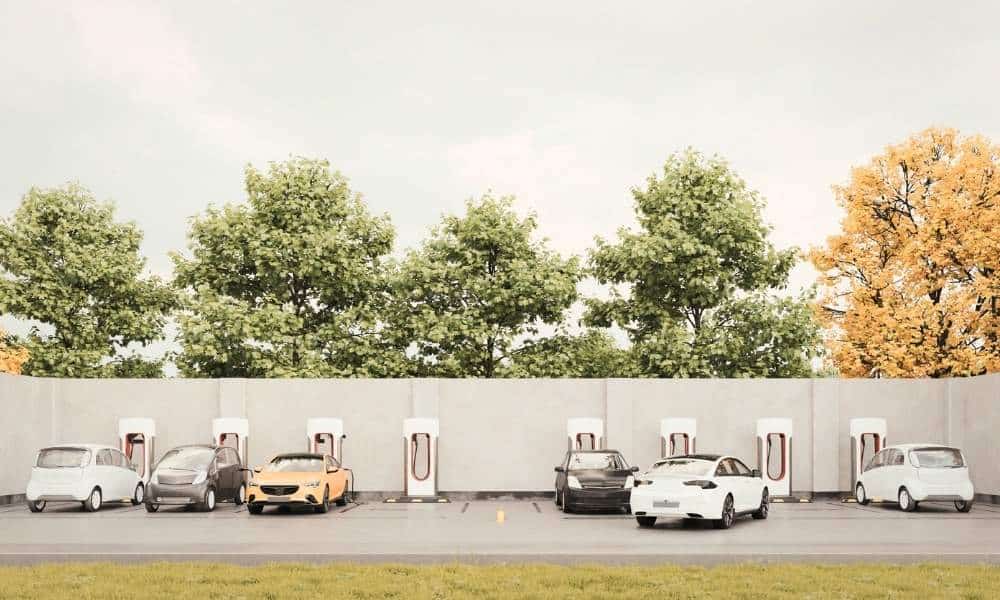
New fast chargers being rolled out across regional New South Wales (NSW) and other states under government programs are CCS compatible. Most are not CHAdeMO compatible. The charging network being built right now is being built for the next wave of vehicles, not for some of the most popular and affordable second-gen used EVs on the market today.
The vehicles that avoid this problem are slightly more expensive but not dramatically so. The Hyundai Kona Electric from 2019 onwards uses CCS, as does the NG ZS EV from 2022 onwards and the Tesla Model 3.
For a rural buyer who plans to charge almost entirely at home on solar, the CHAdeMO limitation may never surface in daily life. For a buyer who occasionally needs to travel beyond home-charge range on routers where a public top-up might be needed, it’s worth knowing before committing to a purchase.
Towing: the rural dealbreaker most guides never mention
Urban buyer guides rarely cover towing because most city buyers never tow anything. For a rural household that pulls a trailer, a boat, a horse float, or farm equipment, towing capacity can eliminate most of the affordable used EV field in a single conversation.
Almost all second-gen used EVs in the $18,000 to $30,000 range carry a zero tow rating. The MG ZS EV across most of its used model years, the Nissan Leaf ZE1, early Hyundai Kona models, and the Tesla Model 3 standard range are all in this category.
For a household where towing is a regular requirement, the realistic options with meaningful tow ratings begin at higher price points. The Hyundai Ioniq 5 carries a 1,600kg tow rating and starts from around $35,000 in the used market. Newer models with tow ratings are beginning to enter the used market as early buyers upgrade, but availability is still limited, and prices reflect that.
Now, the practical answer is a two-vehicle approach: a used EV for daily driving and the existing petrol or diesel vehicle retained specifically for towing duties. The fuel savings on daily driving alone make the economics work.




Ground clearance and road conditions
Hatchback-style second-gen used EVs, including the Nissan Leaf ZE1 and Tesla Model 3, sit low to the ground. For those who regularly use unsealed roads, access tracks, creek crossings, or farm entries, ground clearance is a genuine operational consideration that a test drive on suburban streets will not reveal. SUV-bodied second-gen EVs offer better clearance meaningfully.
If your regular driving includes anything beyond sealed roads, body style deserves as much attention as range and price.
Home charging and the solar advantage
The majority of rural EV owners charge almost entirely at home. Public infrastructure matters mainly for longer intercity trips, not for the daily and weekly driving that makes up most of a household’s kilometres.
A standard 10-amp household outlet charges most second-gen EVs overnight for typical daily distances. No callbox installation is required for moderate use, which removes a high upfront cost.
Those with rooftop solar, home charging changes the running cost close to zero during daylight hours. A second-gen EV with 300km of real-world range, charged from the roof during the day, covers a rural household’s daily and weekly driving at near-zero fuel cost. The solar system that was already reducing power bills becomes a fuel source for the car as well.
More than 70% of EV owners in Australia report saving over 60% on fuel costs compared to their previous petrol vehicle. For a solar household in regional Australia, the savings go further because the energy source is already on the roof.
A practical checklist for rural second-gen buyers
Before committing to any purchase, work through these points:
- Charging port type: CCS or CHAdeMO. Check which standard the specific vehicle uses and confirm compatibility with fast chargers on your key regional routes before purchase.
- Tow rating: Confirm in writing if towing us any part of your regular use. Zero tow rating is not negotiable for some rural households.
- Body style and ground clearance: Physically assess clearance against the worst road surface on your regular routes.
- Battery state of health report: Ask for one and map the resulting real-world range against your longest regular trip.
- 12V auxiliary battery: The most common cause of EV breakdowns in Australia. Confirm when it was last replaced on any vehicle over 4 years old.
- Nearest service centre: Identify the closest EV-familiar mechanic or dealer service centre before purchase.
The second-gen market is ready for regional Australia
The second-gen used EV market offers something the first-gen market never could: genuine range, reliable battery chemistry, and price points that are starting to make sense for mainstream rural households.
The risks that remain are specific and avoidable. Buying a CHAdeMO vehicle without understanding the regional charging implications is avoidable. Buying a vehicle with no tow rating when towing is part of regular life is avoidable. Choosing a low-clearance hatchback for roads that need an SUV is avoidable.
A rural buyer who works through those questions before purchase can find a used EV that covers daily driving on solar at near-zero cost, handles regular regional trips without range anxiety, and delivers the fuel savings that are driving the current surge in used EV demand.
Energy Matters has been in the solar industry since 2005 and has helped over 40,000 Australian households in their journey to energy independence.
Complete our quick Solar Quote Quiz to receive up to 3 FREE solar quotes from trusted local installers – it’ll only take you a few minutes and is completely obligation-free.