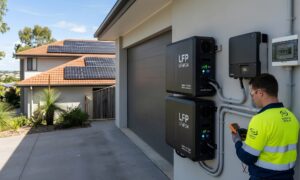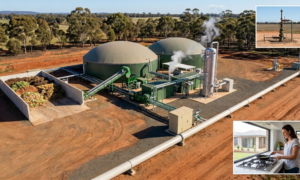







Solar is thriving in the Australian summer even as soaring temperatures cause traditional coal and gas plants to fail. The Australia Institute’s (AI) Twitter feed records each time a coal or gas facility trips and goes offline in extreme heat events. Multiple breakdowns are noted in January 2018 alone, as many facilities both old and new feel the heat. These gas and coal fails mean renewables are becoming more important to maintain base load.
Unlike solar, coal and gas plants are not equipped to deal with the increasingly punishing heat of Australian summers. An AI report from December 2017 even recommends “heat safe’”firming power to back up national coal and gas plants with renewables.
It suggests dispatchable solar thermal with battery storage to provide evening support. Additional PV would reduce peak demand on hot days.
Solar power reaches peak capacity during heatwaves, providing 24/7 dispatchable energy with backup from solar batteries.
Why solar thrives as coal fails
According to AI, solar power is proven to prevent far worse disruption and load-shedding during extreme heat events.
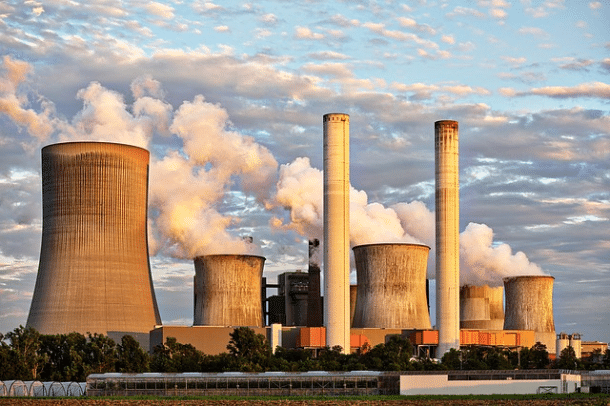
Gas and coal-fired power stations, however, tend to overheat and trip as temperatures rise.
That’s because thermal electricity generation, including coal and combined cycle gas, needs cooling to function. Cooling is more difficult during a heatwave, with many power stations struggling to reach full capacity or even stay online.
The record-breaking heatwave of February 2017 saw major outages in South Australia as the grid failed to cope with peak demand.
The Australian Energy Market Operator (AEMO) issued a heatwave warning early in January 2018, urging electricity providers to call on backup plans.
Meanwhile, Tesla’s big battery proved its worth in South Australia in December, delivery 100 MW into the national grid in record time.
It took just 140 milliseconds for the world’s biggest lithium-ion battery to respond when a major coal-fired power plant failed.
Twitter record of coal and gas plant breakdown
The ‘Gas and Coal Watch’ on the AI’s Twitter feed monitors breakdowns at the nation’s fossil fuel plants.
These breakdowns can mean hundreds of megawatts of power dropped from the grid in minutes. Recent failures include:
- The Eraring coal-fired power station in Penrith tripped on January 7, dropping around 275 megawatts in 10 minutes.
- Victoria’s Loy Yang A coal-fired power station has already tripped eight times this month (January 2018).
- Kogan Creek, Australia’s second-newest coal power plant, has broken down twice this month.
- Victoria’s Loy Yang Unit 2 plus Yallourn Units 1 and 3 were offline at the same time this month.
- NSW’s new Tallawarra gas plant has failed twice this month.