





A project in the US, featuring a team of Australian PV scientists, has successfully explored the viability of “ultra-efficient” solar flow batteries, providing an exceptionally long-lasting solution to store and distribute renewable electricity. The most prominent feature is that the technology can produce, store and then distribute electricity created from the sun in one central device.
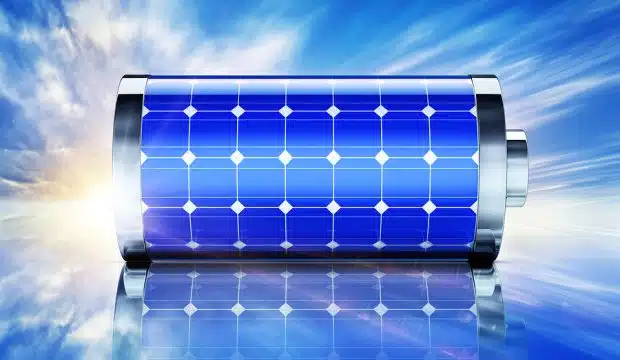
As reported by Renew Economy, chemists situated in Song Jin Lab (University of Wisconsin-Madison) announced that silicon solar cells had enabled the new device to combine with sophisticated materials and specialised chemical parts to create the perfect balance of storage and production.
How do these PV systems work?
Using the existing benefits of PV cells, the systems convert sunlight into electricity, but can do so with the added advantage of ‘flow batteries’. These units consist of tanks full of chemicals that carry the ability to generate electricity and refuel themselves using the cells.
The project has so far allowed for a new record in efficiency, hitting 20 per cent as the latest accomplishment. This beats all current solar panels on the commercial market and is even 40 per cent more efficient than last record holders.
Back on Aussie shores, the University of New South Wales worked alongside the Song Jin Lab, as well as researchers from the University of Sydney, Utah State University, City University of Hong Kong, and King Abdullah University of Science and Technology.
What can we expect for future solar flow batteries?
The downside is that these solar flow batteries aren’t likely to hit the commercial market for several years. However, they still have the capability of creating highly efficient energy storage and generation for essentials like lighting, mobile phones and household usage (once made available).
Australia’s very own Professor Anita Ho Baillie from the University of Sydney, alongside Jianghui Zheng from New South Wales created the perovskite-silicon cells that incorporated an added layer of protection on the surface. These were then distributed to Wisconsin for further experimentation.
The current goal is to combine the two materials together to successfully create higher and higher efficiency and stabilise the overall technology, said Li.
“Thanks to a good match between solar cells and the flow battery, the winning device maintained a high efficiency over hundreds of hours and hundreds of charge-discharge cycles while retaining most of its capacity,” the report said.