




Solar power has shattered all predictions in the last two decades to become the cheapest form of energy in most parts of the world – and Australia has played a significant role in making that happen.
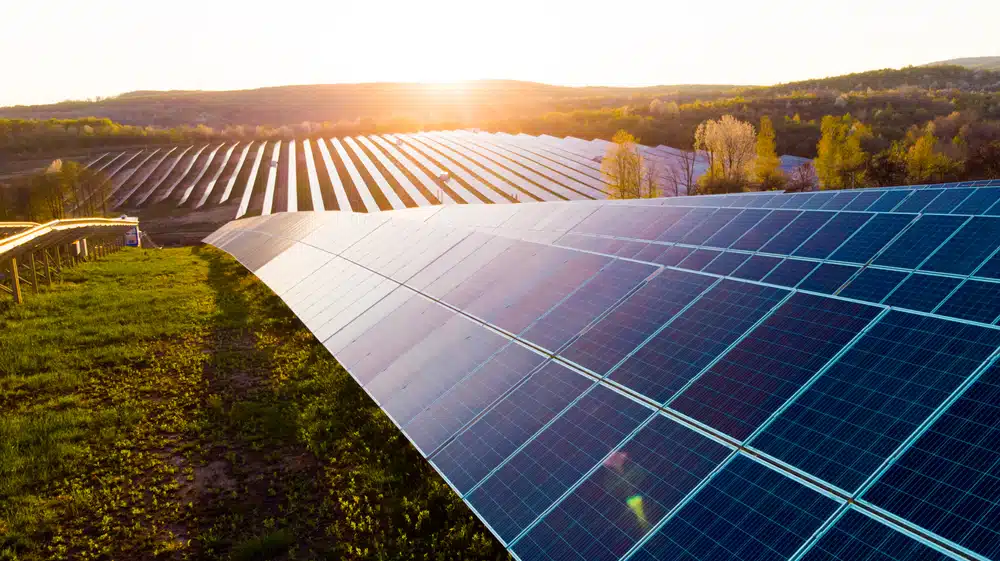
There are multiple forms of renewable sources being used worldwide, including on-shore and off-shore wind turbines, hydroelectricity dams and experimental technologies, including geothermal and hydrogen.
The International Energy Agency has already called the race, declaring that energy from the sun has beaten all of those other forms of green energy and fossil fuels to become the cheapest form of power in history.
Flashback to the year 2000, and it was a different story coming from the IEA. The agency predicted that 18 gigawatts of photovoltaic capacity would be installed by 2020. That achievement was notched up in a single year alone. Global grid-connected capacity reached 580.1 GW at the end of 2019.
Head of solar analysis at BloombergNEF Jenny Chase said advancements in technology and reduced costs have led to widespread uptake of solar, making forecast modelling systems “completely underestimated”.
“Every time you double producing capacity, you reduce the cost of PV by 28 per cent,” she said.
“We’ve got to the point where solar is the cheapest source of energy in the world in most places.”
While around two-thirds of all panels are manufactured in China, it isn’t just the Asian powerhouse that is the catalyst for renewable energy becoming affordable. Australia has played a significant role as well.
How Australia sparked the solar boom
The first panel was invented by French physicist Edmund Becquerel back in 1839, and 50 years later, American inventor Charles Fritz created the first working selenium cell – the precursor to the silicon cells we use today.
Bell Labs created the first silicon cell in the 1950s, and an oil shortage in the 1970s prompted the western world to look at solar solutions as an alternative energy source.
During this period, a young engineering professor named Martin Green, working out of the University of New South Wales, began work at Bell Labs. The list of achievements Green and his team achieved were significant:
- They beat six NASA contractors to increase the voltage on early cells
- The team broke the world efficiency record in 1983
- These records continued to pile up, as Green and his team broke the efficiency record 30 times over the next 38 years
- They built the first cell to break the 20 per cent conversion rate, which was previously thought impossible
- The team would go-ahead to break the 25 per cent conversion rate in 2008
- In 2015 Green and his team designed and built the world’s most efficient cell, with a 40.6 conversion rate.
So while China predominantly produces these more affordable panels that deliver greater efficiencies, it has been an Australian engineer behind the technology advances that have exceeded all expectations.
Get a quick solar quotes or call us today on 1800 EMATTERS. You can also email our friendly team for expert, obligation-free advice.