











Uncategorized

DoD To Roll Out 3 Gigawatts Of Renewables By 2025
The US Department of Defense has set a goal of deploying 3 gigawatts of renewable energy capacity at the nation’s Army, Navy and Air Force installations.



The US Department of Defense has set a goal of deploying 3 gigawatts of renewable energy capacity at the nation’s Army, Navy and Air Force installations.

As part of its green initiatives, eBay has installed a 665 kilowatt (kW) solar panel array on the rooftop of its Topaz data center in Utah.

For the fourth year running, Energy Matters will be exhibiting solar energy solutions at the Agfest Field Days in Tasmania.

Virginia reports on Australia’s top solar postcodes, a solar powered reactor for creating hydrogen currently undergoing testing, AGL dumps on small-scale solar energy (again) and the development of solar cells thinner than spider silk.

The Australian Competition and Consumer Commission (ACCC) is reportedly looking into claims by the Greens that AGL, Origin and TRUenergy are using their position to stymie the roll-out of competing wind and solar power projects.

New York City will triple its production of solar power by installing rooftop photovoltaic systems on 10 public buildings in an effort to cut carbon emissions and meet energy efficiency targets under the city’s PlaNYC 2030 plan.

The US Energy Department’s National Renewable Energy Laboratory (NREL) has released a report on the impact of the Treasury Department’s 1603 grant program.
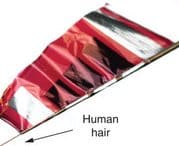
Researchers have developed flexible, stretchable polymer-based solar cells on plastic foil substrates thinner than spider silk and able to generate 10 watts per gram.
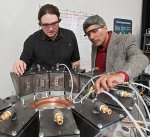
Hydrogen as a clean fuel is particularly alluring, but to split hydrogen from water is incredibly energy intensive. Using fossil fuels as the source of energy would defeat much of the purpose of hydrogen fuel, so researchers have turned to renewable sources.
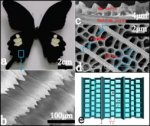
New solar collection devices for use in creating green fuels may be based on existing designs in nature provided by butterflies.