

Researchers have discovered a very simple way to make high quality graphene – zap it in a microwave oven for just a couple of seconds.
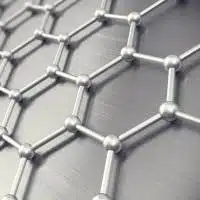
Graphene is a form of carbon arranged in a honeycomb- shaped lattice just one atom thick. It’s of particular interest in relation to renewable energy as it is the best conductor of electricity and could be used to create the next generation of solar cells and energy storage.
Graphene is sourced from graphite and is usually created by an exfoliation process using chemicals to “peel” off the layers. However, exposure to oxygen during the process also creates graphene oxide; which is non-conducting. Removing the oxygen has been a significant challenge for 20 years, but it’s a problem that may now have been solved by two research teams approaching the issue in different ways.
In the first, Rutger University researchers found that by baking the exfoliated graphene oxide for just one or two seconds in a 1,000-watt microwave oven, virtually all of the oxygen from graphene oxide can be eliminated.
Manish Chhowalla, professor and associate chair in the Department of Materials Science and Engineering in Rutgers’ School of Engineering, said the discovery is a major advance.
“This simple microwave treatment leads to exceptionally high quality graphene with properties approaching those in pristine graphene,” he stated.
The team’s discovery has been documented in a study published in the journal Science.
It’s not the first time microwave cookery has been utilised in developing renewable energy related materials.
In 2012 and 2013, we reported on engineers at Oregon State University and University of Utah having developed methods of using microwave heating in the synthesis of CTZS (copper, zinc, tin) solar cells.
The other recent graphene related breakthrough came from chemists at Friedrich-Alexander-Universiät Erlangen-Nürnberg (FAU). The researchers state they have succeeded in producing defect-free graphene directly from graphite. The low-cost method involves using an additive; benzonitrile
“Based on this discovery we can expect to see major advancements in terms of the applications of this type of graphene which is produced using wet chemical exfoliation,” says Dr. Andreas Hirsch from the Chair of Organic Chemistry II.
The FAU team’s work has been published in the journal Nature Communications.
Top Right Image Credit: BigStock