






The world’s first example of battery technology to use only hydronium ions as the charge carrier has been developed by scientists at Oregon State University (OSU) College of Science in the USA.
Hydronium is the common name for the aqueous cation (positively charged ion) H3O+, produced by adding a proton to a water molecule.
The development provides opportunities for high-power stationary energy storage applications, such as for solar batteries and as a source of standby or emergency power.
As the hydronium battery doesn’t use metals such as lithium or aluminium, it could mean a more sustainable approach to battery technology.
“It’s not going to power electric cars,” said Xiulei Ji, assistant professor of chemistry at OSU. “But it does provide an opportunity for battery researchers to go in a new direction as they look for new alternatives for energy storage, particularly for stationary grid storage.”
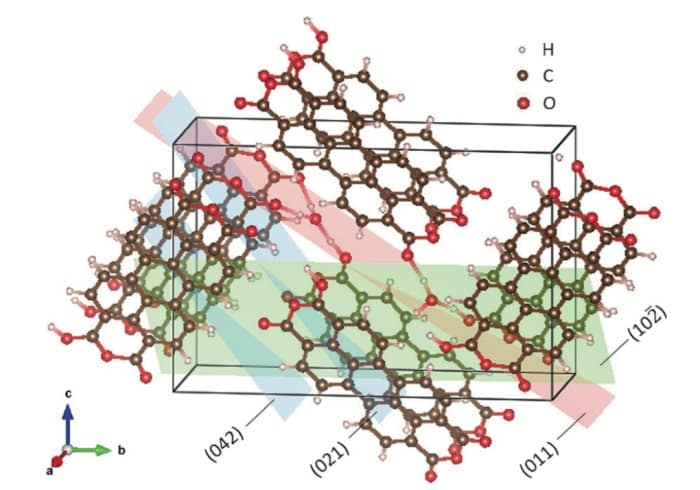
Professor Ji and his team have demonstrated hydronium ions can be reversibly stored in an electrode material consisting of perylenetetracarboxylic dianhydridem, or PTCDA; an organic dye molecule and an organic semiconductor. PTCDA has attracted significant interest for its semiconductor properties.
The main industrial use of PTCDA to date has been as a precursor to Rylene dyes. These dyes and derivatives have been use to make various optical devices and in the production of some dye-sensitized solar cells (DSSCs).
“This PTCDA material has a lot of internal space between its molecule constituents so it provides an opportunity for storing big ions and good capacity,” says Professor Ji.
The hydronium battery uses dilute sulfuric acid as the electrolyte, which is renewable, cheap and easy to produce. Spent sulphuric acid and other sulphate compounds are becoming an increasingly important source of sulphur dioxide for further sulphuric acid manufacture.
The researchers have noted hydronium ions migrate through the electrode structure with comparatively low “friction,” which results in high power attributes.
Professor Ji states the development is a “paradigm-shifting opportunity” for more sustainable batteries
The work of Professor Li and his colleagues on hydronium battery development has been published in the journal Angewandte Chemie International Edition.